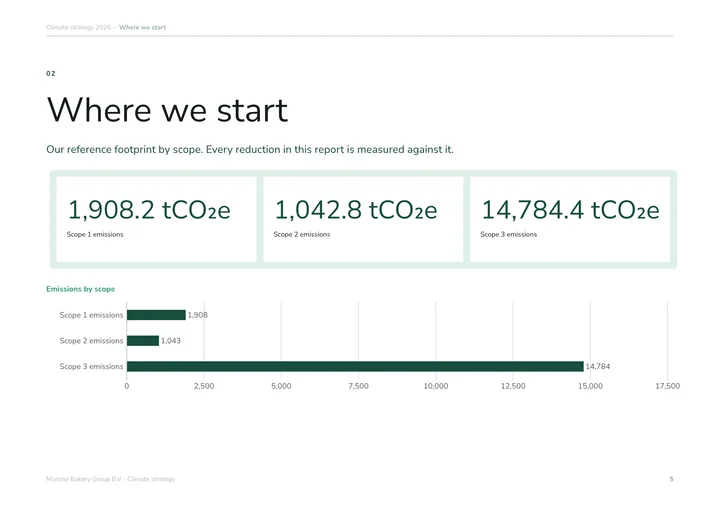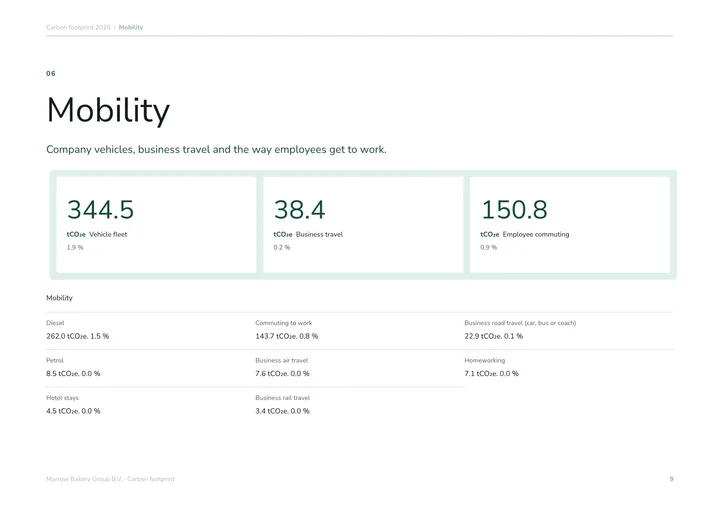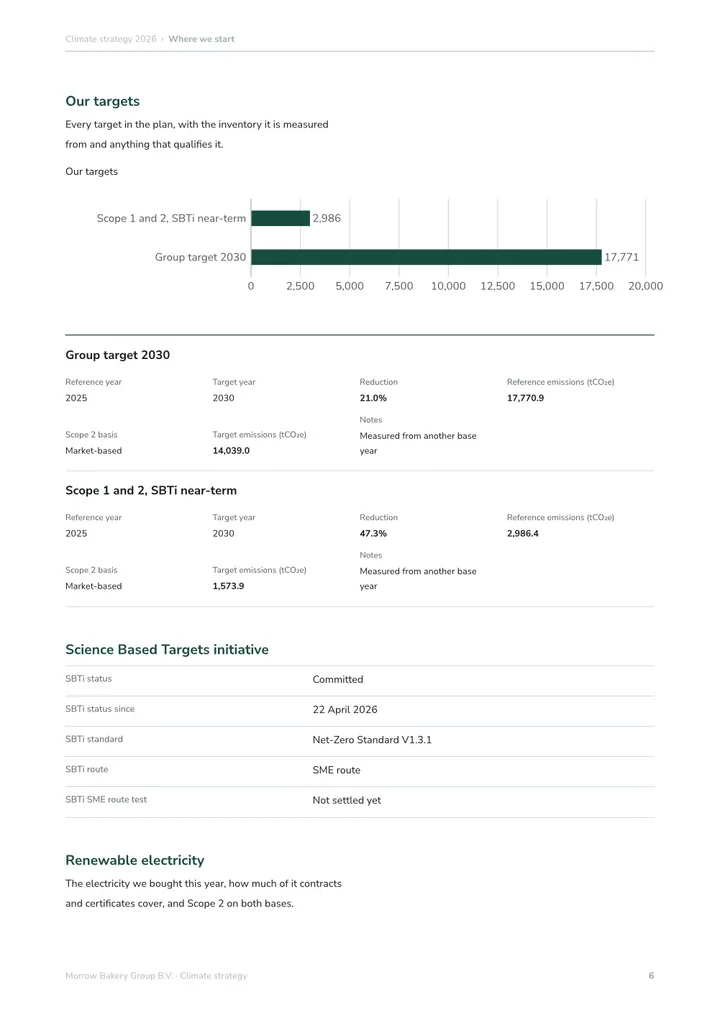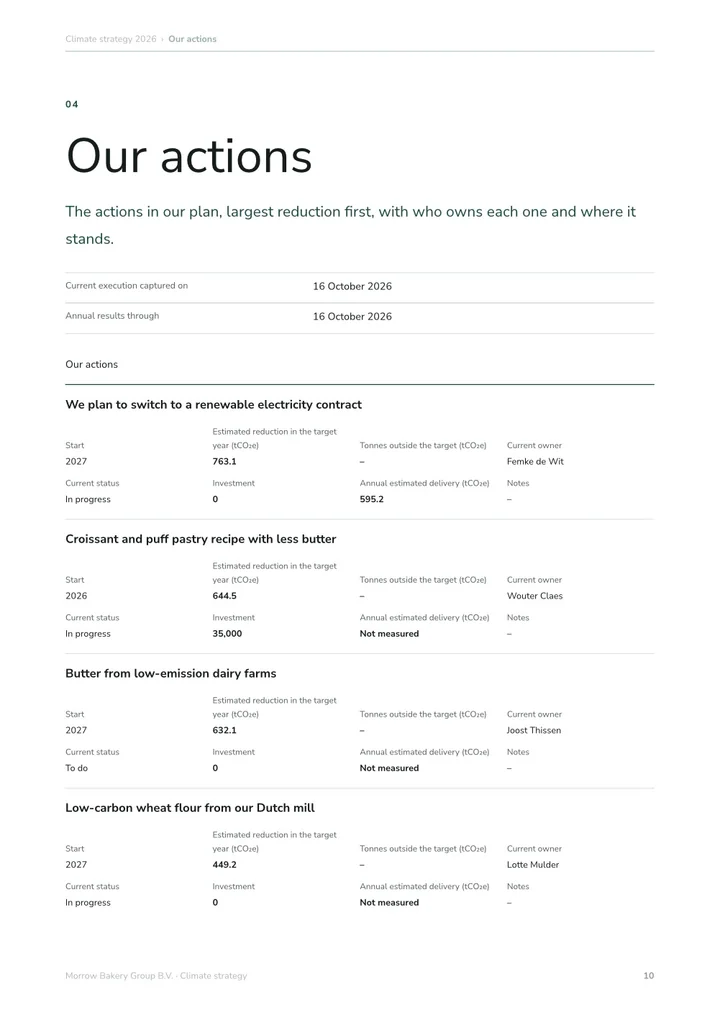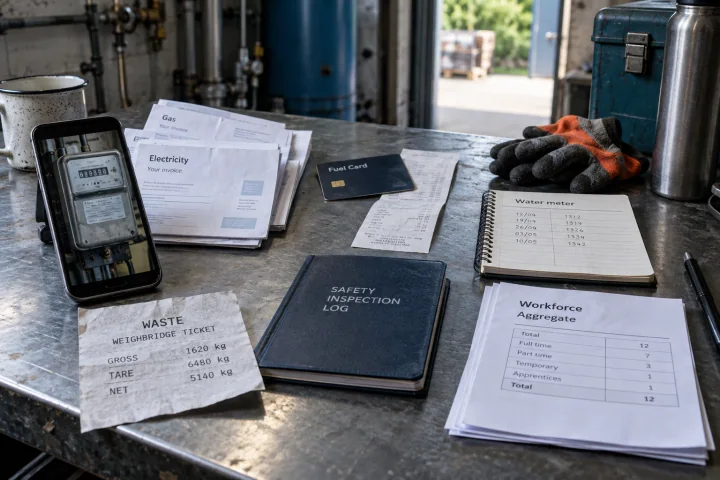
Collect a traceable record for each applicable topic: disclosure reference, site, period, value, unit, source, owner and review state. Use the downloadable register to organise collection, then check the completed report against the official standard.
Company and reporting boundary
Use this as a preparation checklist, then match the final disclosures to the standard and scope you selected. It is not a substitute for the standard’s applicability rules.
- Company details and the reporting year.
- Entities, premises and activities included.
- Contact person and internal approver.
- Recipient, deadline and requested output.
Environmental records
Collect source records before working on a narrative. Keep site and period details with each number.
- Electricity and heating bills, with units and meter periods.
- Fuel purchase or consumption records.
- Water bills or meter readings where relevant.
- Waste records, including units and disposal information.
- Relevant operating permits and environmental records.
- The version and source of any emission factors used.
People and governance records
Ask the record owner for an aggregate that is suitable for reporting. Avoid putting unnecessary personal records in a shared collection folder.
- Workforce totals and the counting method.
- Training and workplace health and safety records.
- Relevant policies and responsibility owners.
- Records needed to substantiate governance disclosures.
- A reviewer for sensitive or externally shared information.
Quality checks before sharing
A simple evidence register can use seven columns: topic, period, value, unit, source, owner and review status. Keep a separate note for exceptions.
- No overlapping or missing periods in totals.
- Units consistent and conversions recorded.
- Missing, zero and not applicable clearly distinguished.
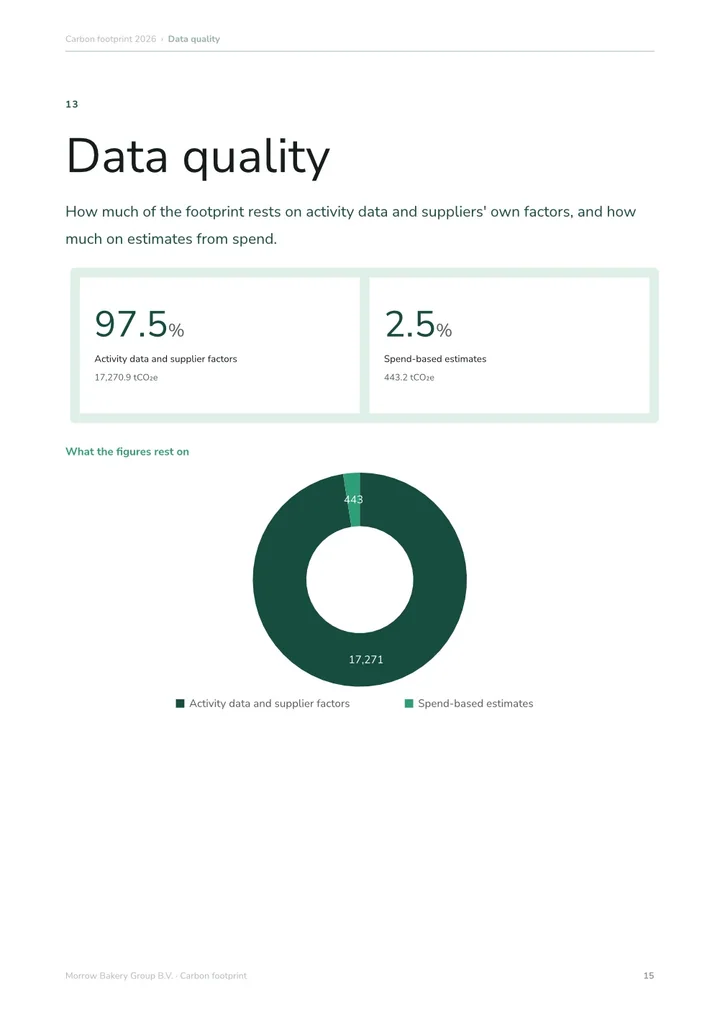
- Estimates identified with their method.
- Report checked against the selected standard.
- Sharing permissions and exported pages reviewed.
Use the Basic disclosures as a collection map
The following map summarises collection starting points under the 2025 recommendation. It is not a complete list of datapoints. Read the individual applicability conditions and add the Comprehensive disclosures where your selected scope requires them.
| Reference | Collection starting point |
|---|---|
| B1 · Reporting basis | Entity, period, module, company records, sites and reporting boundary |
| B2 · Practices and policies | Approved policies, existing practices, plans and responsible owners |
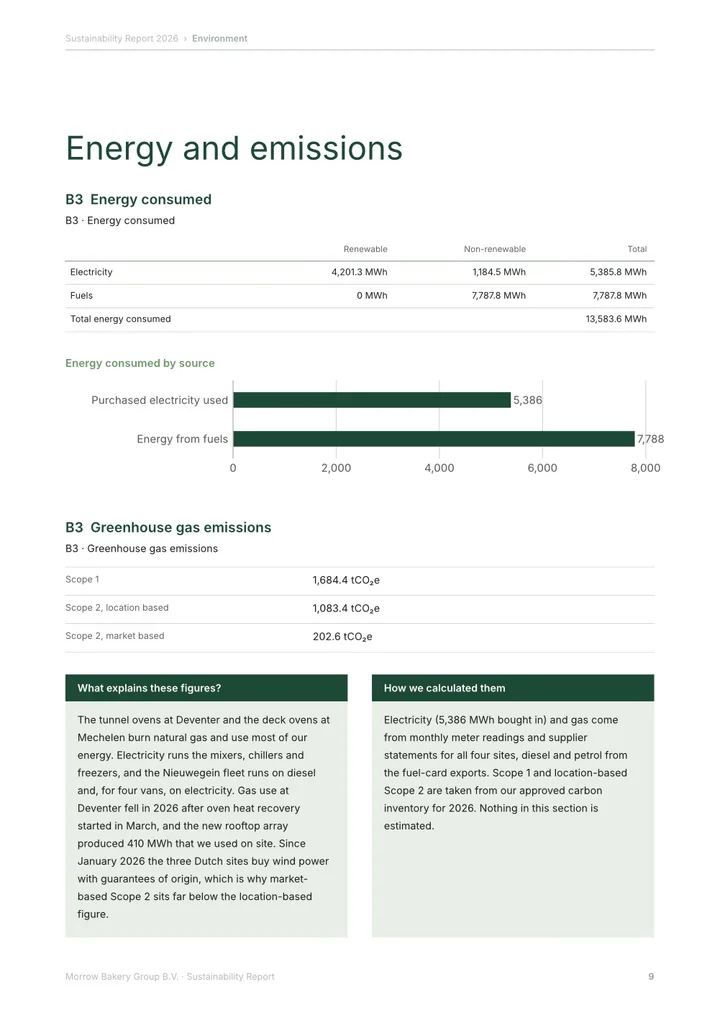
| B3 · Energy and emissions | Electricity and fuel records, calculation boundary and factor sources |
| B4 · Pollution | Applicable pollutant reporting and environmental management records |
| B5 · Biodiversity | Site locations and evidence about sensitive areas |
| B6 · Water | Withdrawal records, site water-stress context and relevant consumption data |
| B7 · Resources and waste | Waste quantities and treatment; materials and circular practices where relevant |
| B8 · Workforce | Aggregate workforce figures and required breakdowns |
| B9 · Health and safety | Recorded work accidents and work-related fatalities |
| B10 · Pay and training | Applicable remuneration, collective bargaining and training information |
| B11 · Business conduct | Corruption or bribery convictions and fines |
Resolve duplicate bills before adding up the year
A corrected invoice should replace the original amount for the same meter and period. Keep both document identifiers in the audit trail and identify which one is included. Otherwise a folder with all invoices can still produce an overstated total.
Check coverage by meter and period. Twelve files do not automatically mean twelve months: one may cover a quarter, another may be a correction. Record the actual start and end dates and investigate gaps or overlaps before calculating an annual total.
- Match the site and meter to the reporting boundary.
- Separate electricity, gas, transport fuel and other energy types.
- Use consumption units rather than invoice prices.
- Document conversions, allocation methods and estimates.
- Have a reviewer check exceptions as well as the final sum.
Use review states that say what happens next
Use Missing when the evidence has not been obtained, Collected when the source exists, Needs review when the calculation or interpretation is unresolved, and Reviewed after an identified reviewer checks it. Record not applicable with the reason for that conclusion.
For shared records, enter a document identifier or an internal link rather than personal details. The public report can contain an aggregate and an explanation without exposing the whole underlying file. Before delivery, review both the information and who can access the evidence.
Sources and scope
- EFRAG: digital template, example and explanatory notes
- European Commission: 2025 VSME recommendation and standard
These resources explain a preparation workflow. Check your selected standard and recipient requirements before sharing your report.
 Joost ThissenFounder