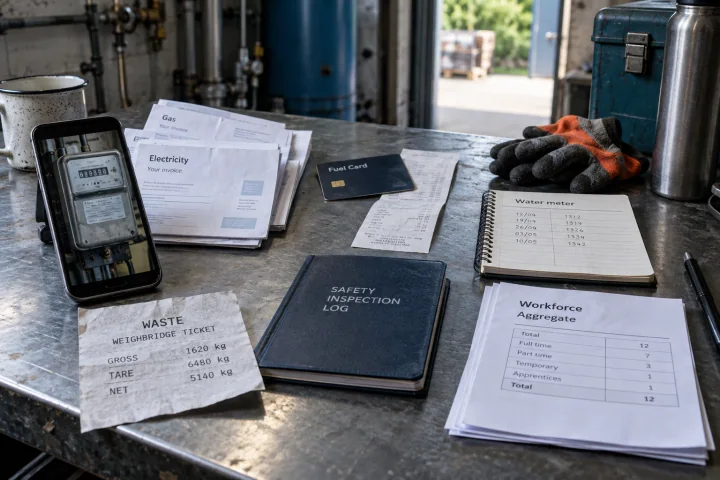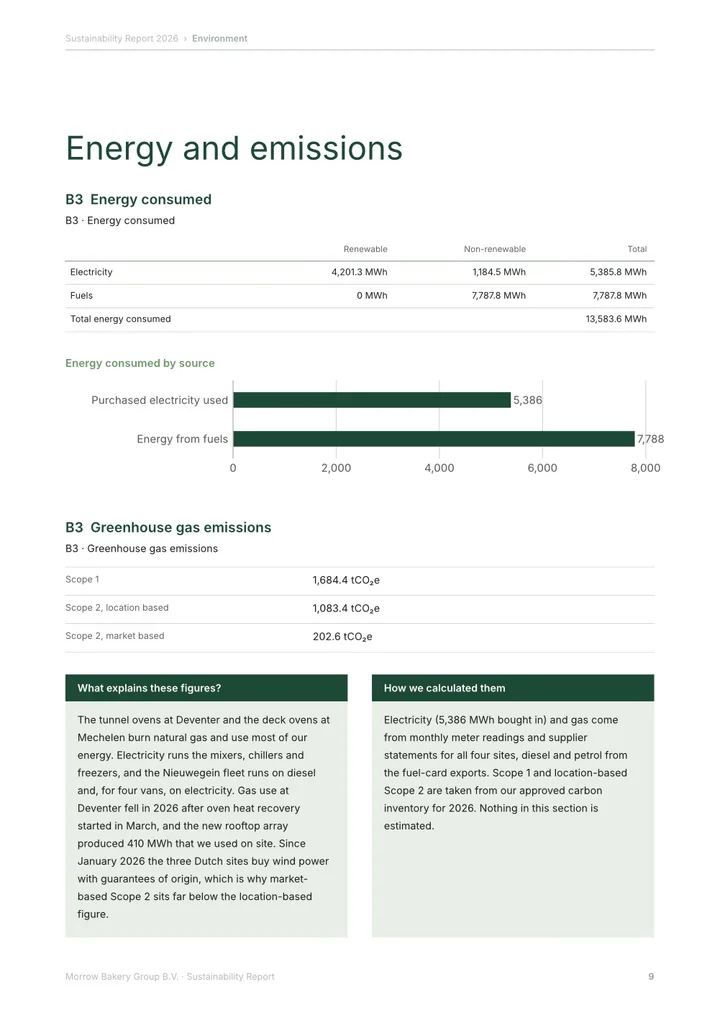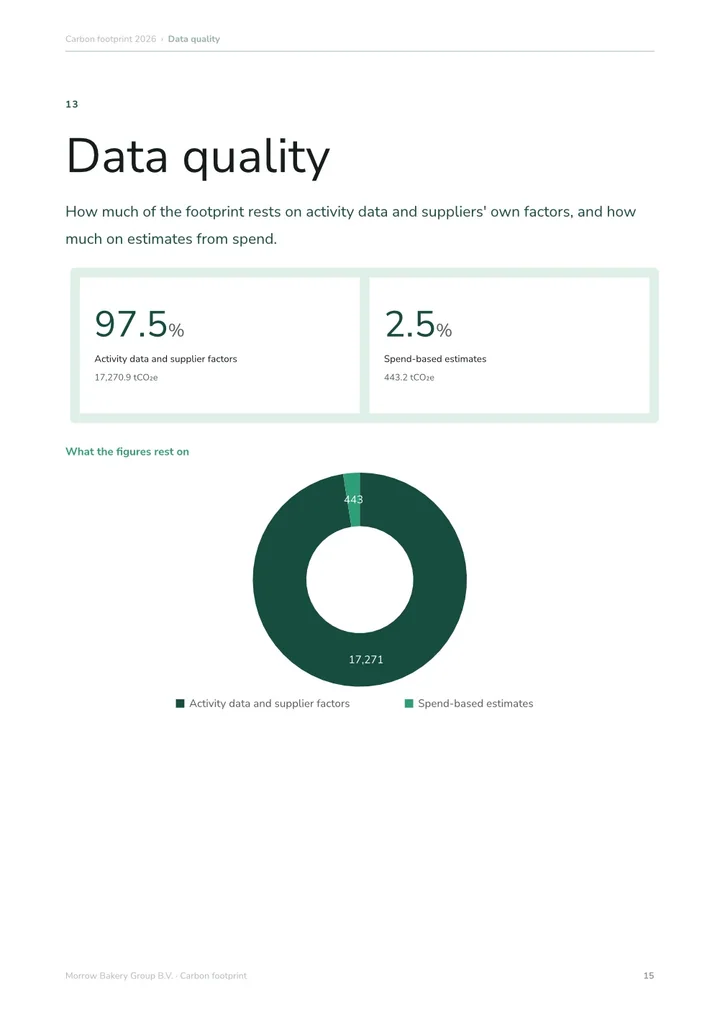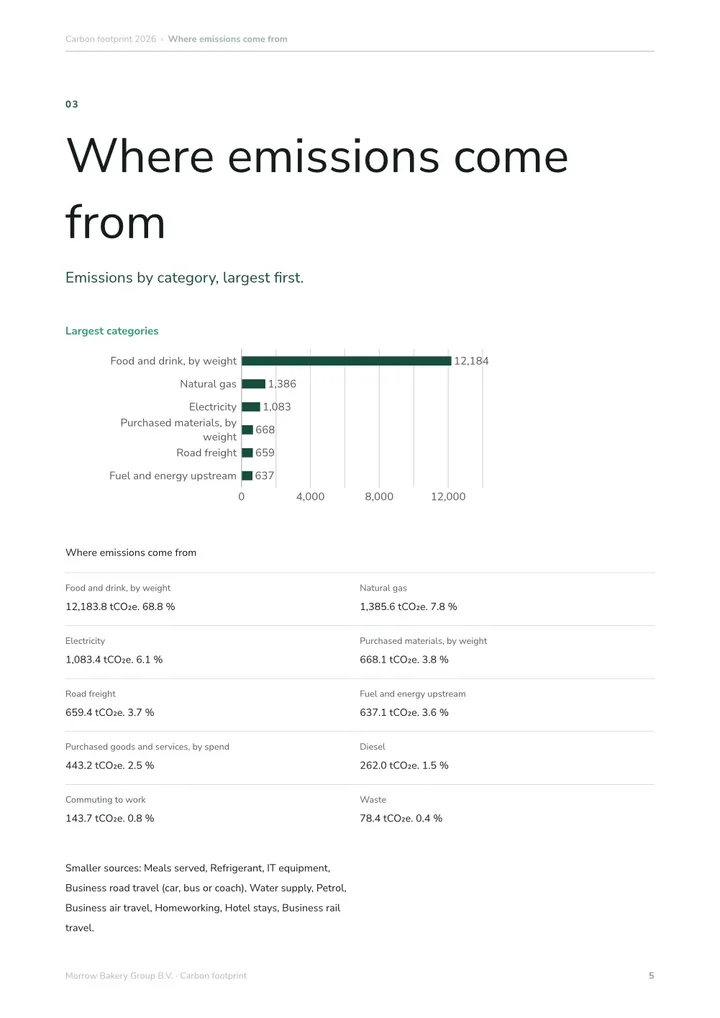
Confirm the period, boundary, units and intended use, then map every customer question to an answer, evidence source and owner. Send the reviewed information with a clear account of what remains open. A reusable report can help, but it may not answer every question.
Clarify what the reader needs
Save the original request and confirm the reporting period, deadline, company boundary and intended use. If a question is ambiguous, ask for clarification before allocating work. For example, “energy use” might refer to purchased electricity, fuels, or a combined total.
Prepare a response register
Create a line for each question with its owner, source and review status. Group repeated questions so colleagues are not asked for the same record twice.
- Use a named owner for each answer.
- Keep the unit and reporting period visible.
- Explain what is estimated or unavailable.
- Review commercially sensitive information before sharing.
- Agree who can answer follow-up questions.
Offer a reusable report where it helps
A structured report can save work when several recipients ask similar questions. Explain which parts answer the request and identify any remaining gaps. Greener Ahead supports collecting answers and sharing a report with selected recipients. Review permissions before sending a link.
Keep legal scope distinct from practical cooperation
A reporting standard does not mean that every question from a customer or bank has the same legal basis. Requirements may depend on the purpose of the request, applicable rules and contractual arrangements. Refer to the relevant official text and obtain suitable advice before relying on a right to refuse information.
A useful reply can simply state the period and boundary of your report, offer the relevant information and ask the recipient to explain any remaining requirements.
Map questions without promising more than you know
Keep the customer’s wording beside your interpretation. If “carbon emissions” has no scope or period, do not silently substitute an electricity figure. Ask which emissions scopes and reporting basis are expected. When two customers ask the same question with different boundaries, keep separate answers even if they use some of the same evidence.
| Customer question | Possible reference | Clarification or evidence |
|---|---|---|
| Annual energy use? | B3 | All energy or electricity only? Confirm period and units. |
| How many employees? | B8 | Confirm counting basis and date or period. |
| Workplace accident figures? | B9 | Check the definition and reviewed safety records. |
| Do you have a sustainability policy? | B2; C2 where relevant | Provide the approved policy and explain what it covers. |
| Product carbon footprint? | Separate product-level request | A company-level report does not establish a product footprint. |
Use a clear covering reply
Adapt this wording after reviewing your actual information. Replace every bracketed field and remove any sentence that is not true. The text offers a practical response; it does not assert a legal right to refuse additional information.
- Thank you for your request. Our attached information covers [entity and sites] for [period], prepared using [reporting basis].
- The response register maps your questions to the relevant sections and evidence references.
- The following points remain open: [question, reason and proposed next step]. Please confirm [specific ambiguity].
- Please let us know whether this meets the intended use and required format. [Named contact] can coordinate any follow-up.
Share the answer and keep control of the evidence
Keep a delivery record with the recipient, date, report version and any permitted supporting files. Sharing a final report does not necessarily require sharing every invoice or personnel record used to prepare it.
If a customer asks for a different period, a different entity or product-level information, treat it as a new scope decision. Confirm the work before reusing a number that looks similar. Record the answer to that clarification in the response register so the next colleague does not have to repeat the discussion.
Sources and scope
These resources explain a preparation workflow. Check your selected standard and recipient requirements before sharing your report.
 Joost ThissenFounder