This fictional example traces two sites’ purchased electricity from quarterly records to 48,000 kWh, or 48 MWh. The workbook includes formulas and a correction trail. It demonstrates one preparation task, not a complete VSME report or a verified carbon footprint.
An illustrative example, with a clear boundary
Imagine Example Bakery, a fictional business with two premises, preparing information for the calendar year 2025. Its evidence register records 48,000 kWh of purchased electricity across those premises, reconciled to twelve months of bills. These figures are invented for this explanation.
A useful report excerpt states the company, period, premises, unit, source and review status together. “Purchased electricity: 48,000 kWh; two premises; calendar year 2025; reconciled to supplier bills” gives the reader more context than an unexplained number.
What the excerpt does not establish
Electricity consumption alone is not a carbon footprint. An emissions result needs an appropriate calculation method, factors, boundaries and review. This example is not a completed VSME report, a customer report or an assurance statement. The downloadable excerpt is an educational example, not an export from a customer workspace.
Choose a design that helps the reader
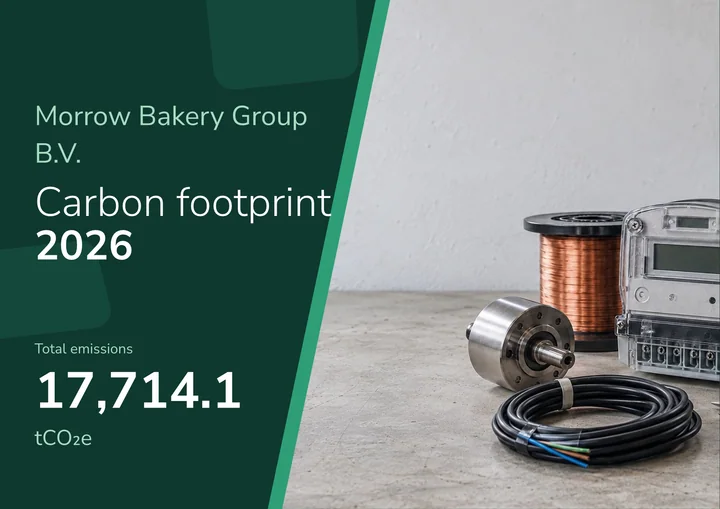
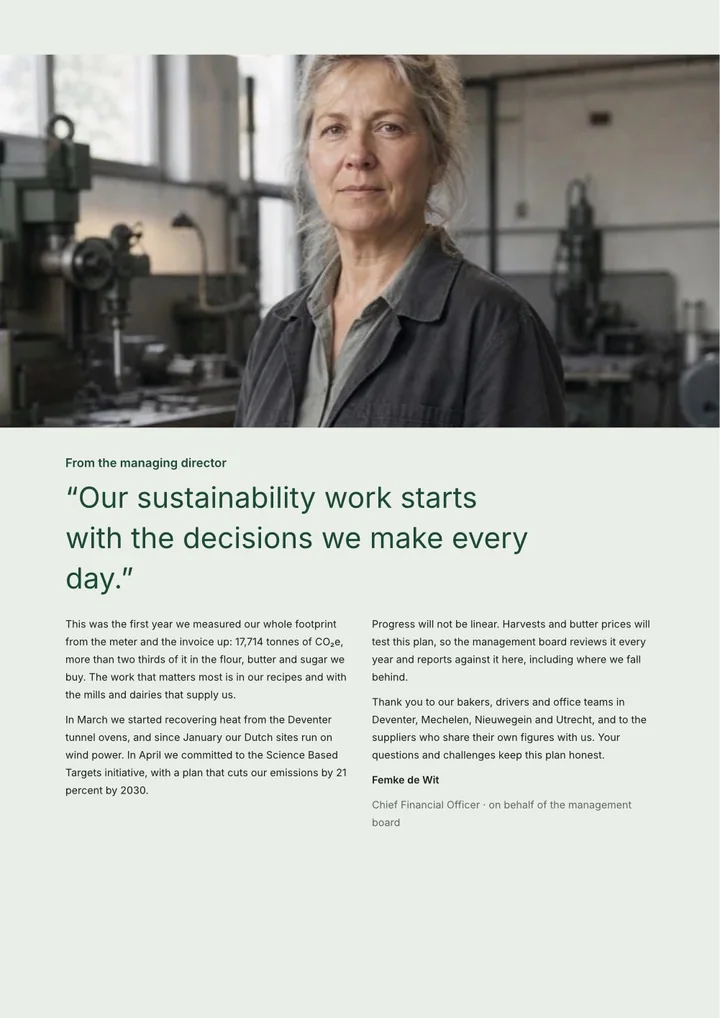
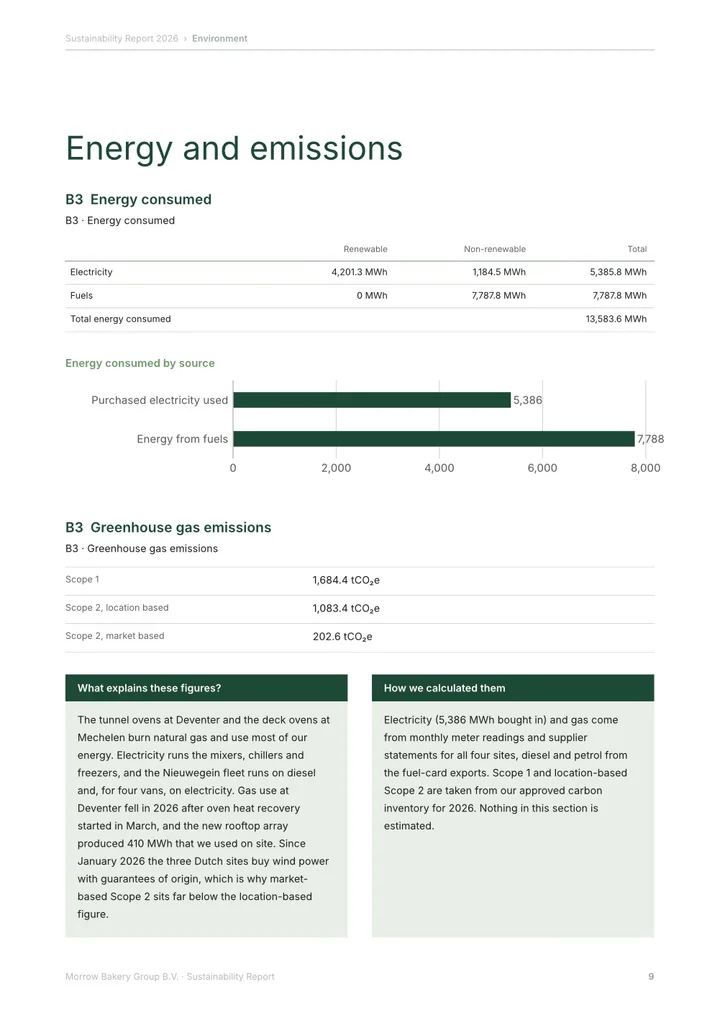
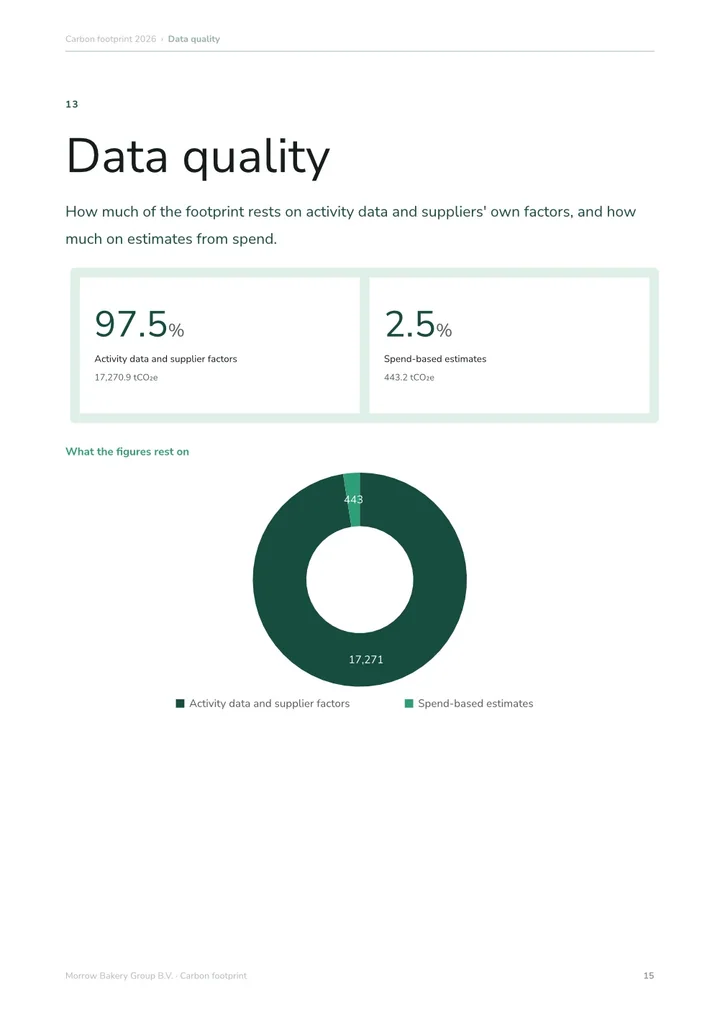
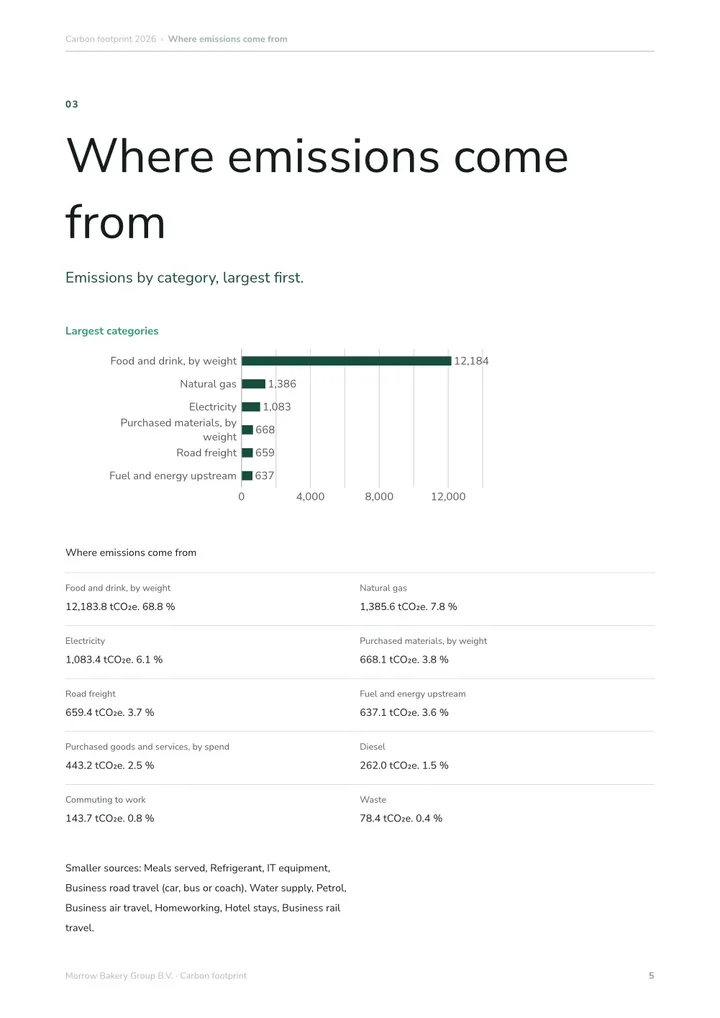
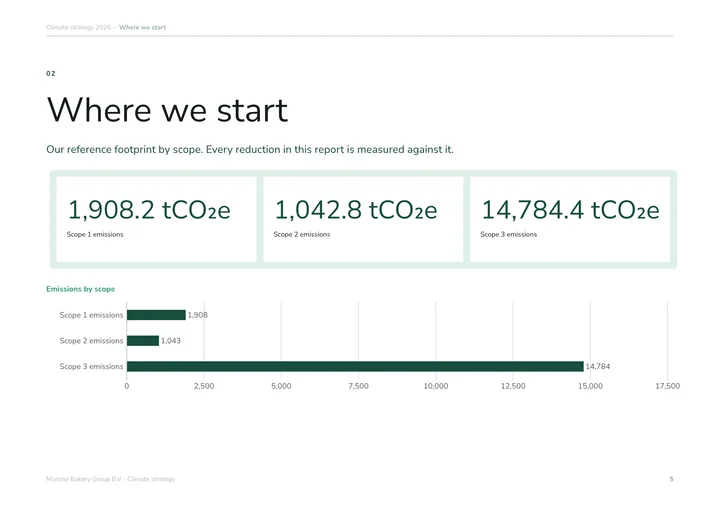
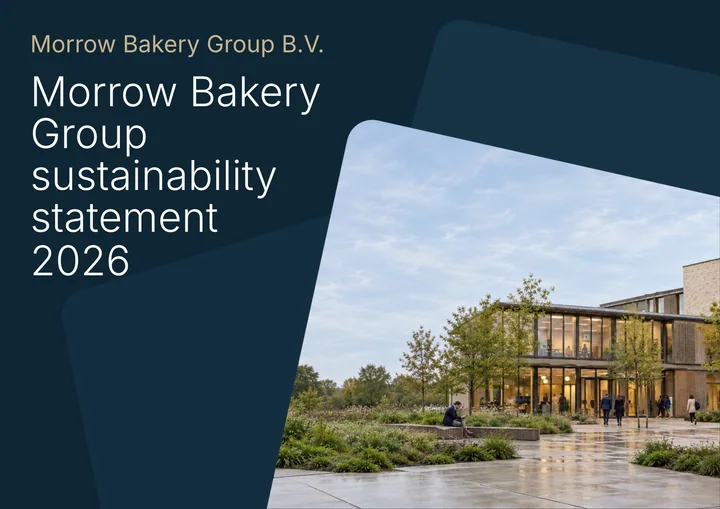
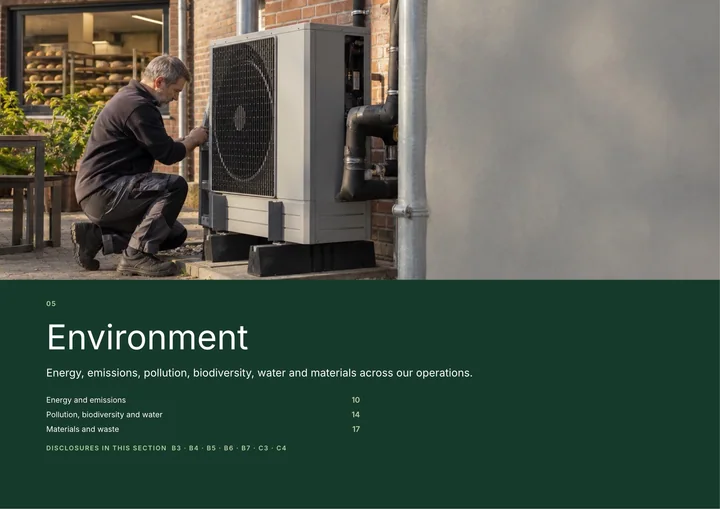
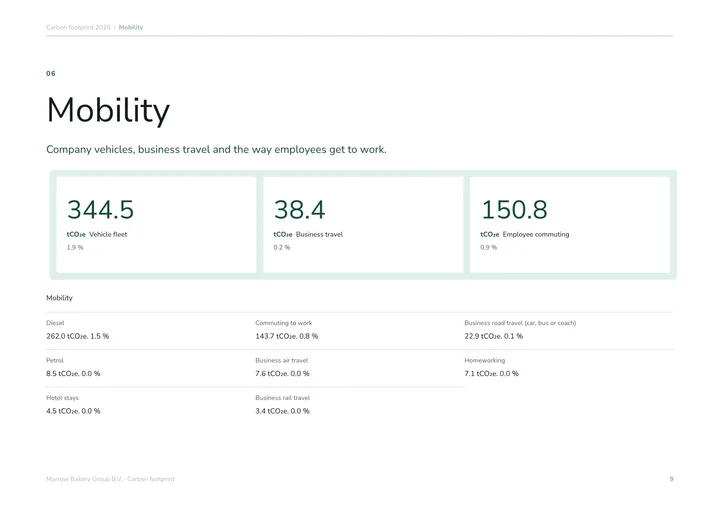
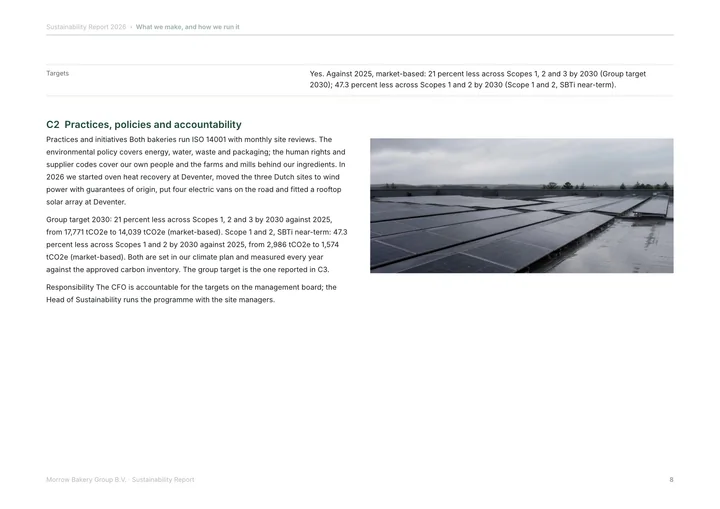
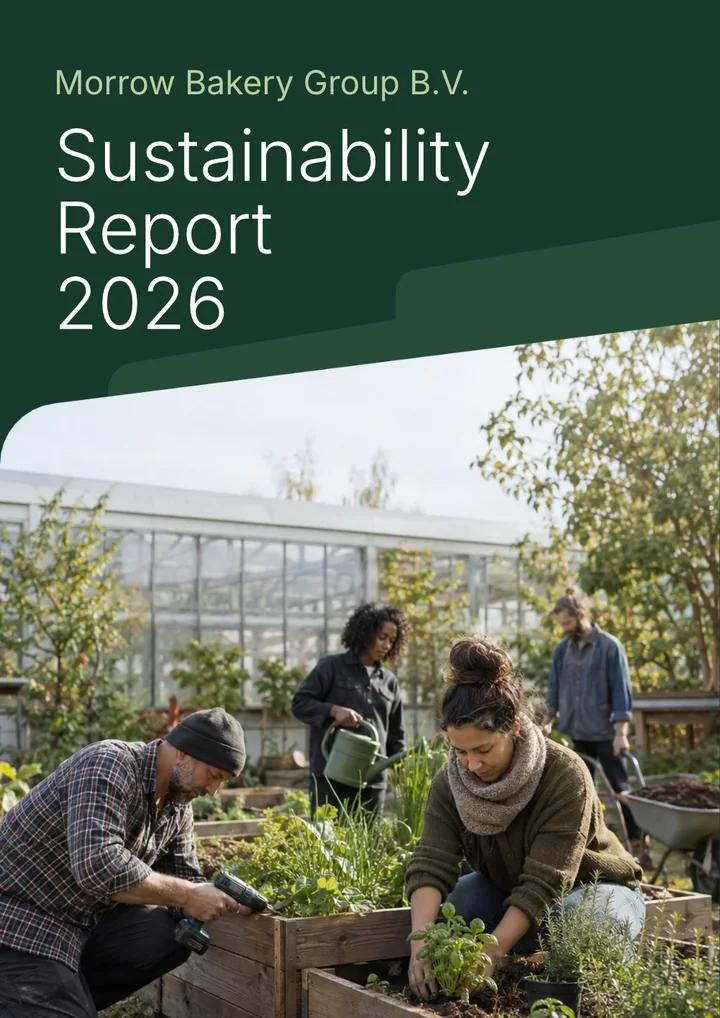
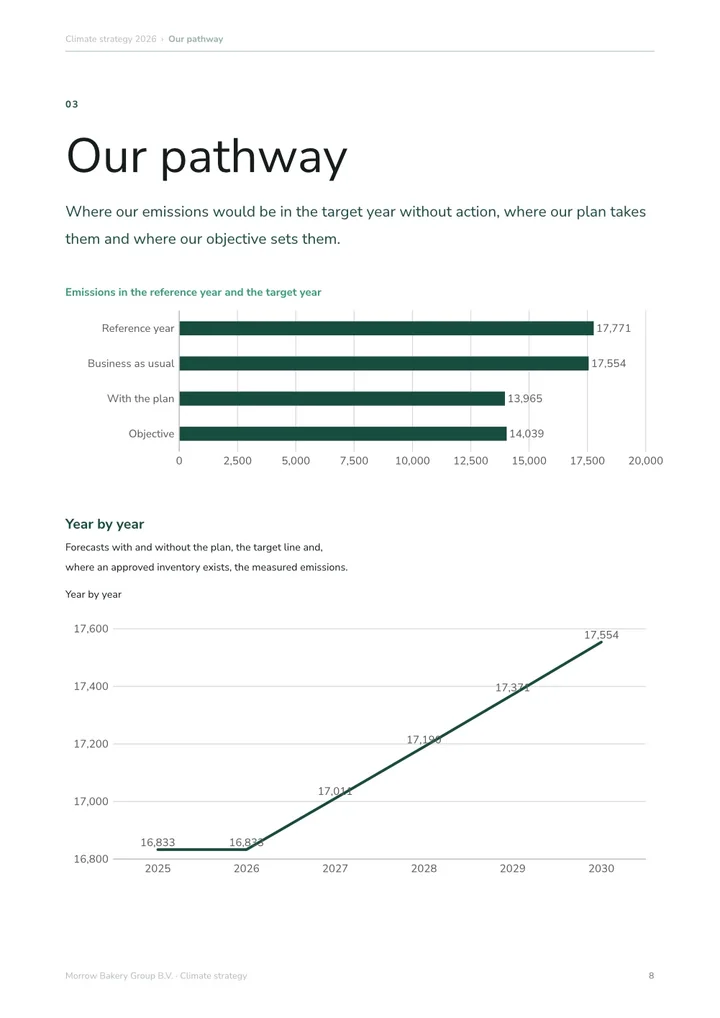
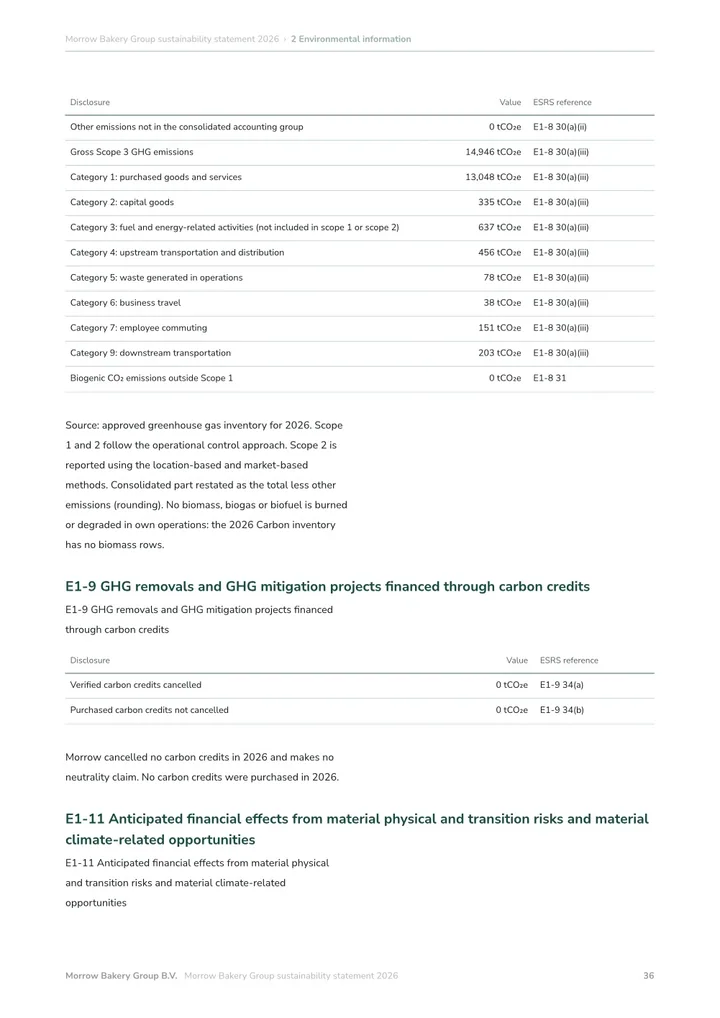
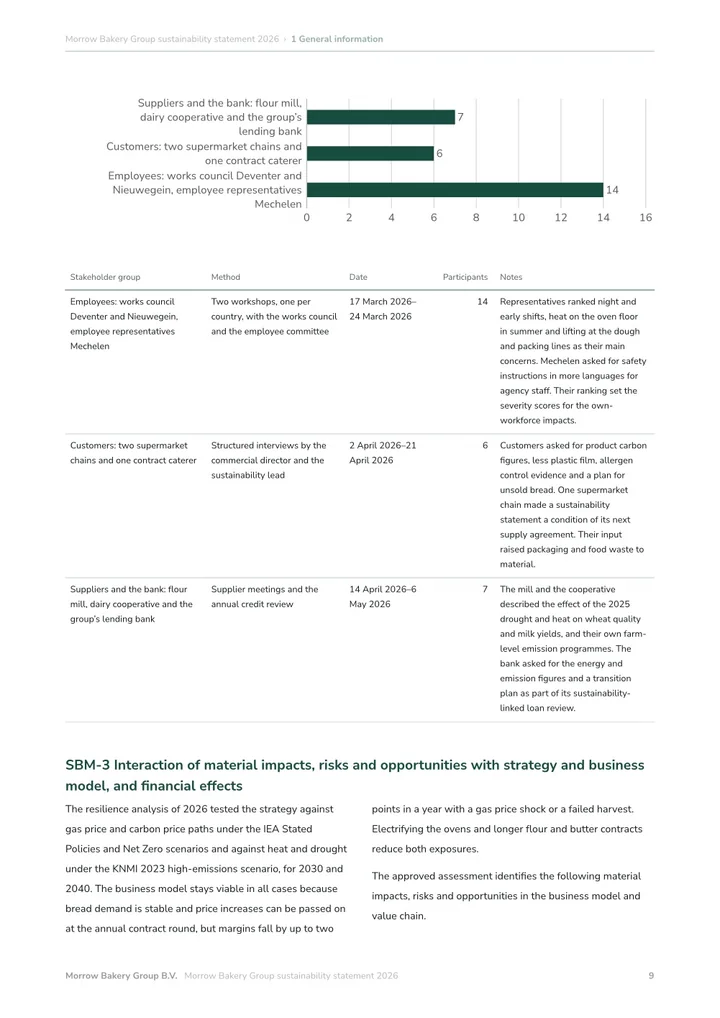
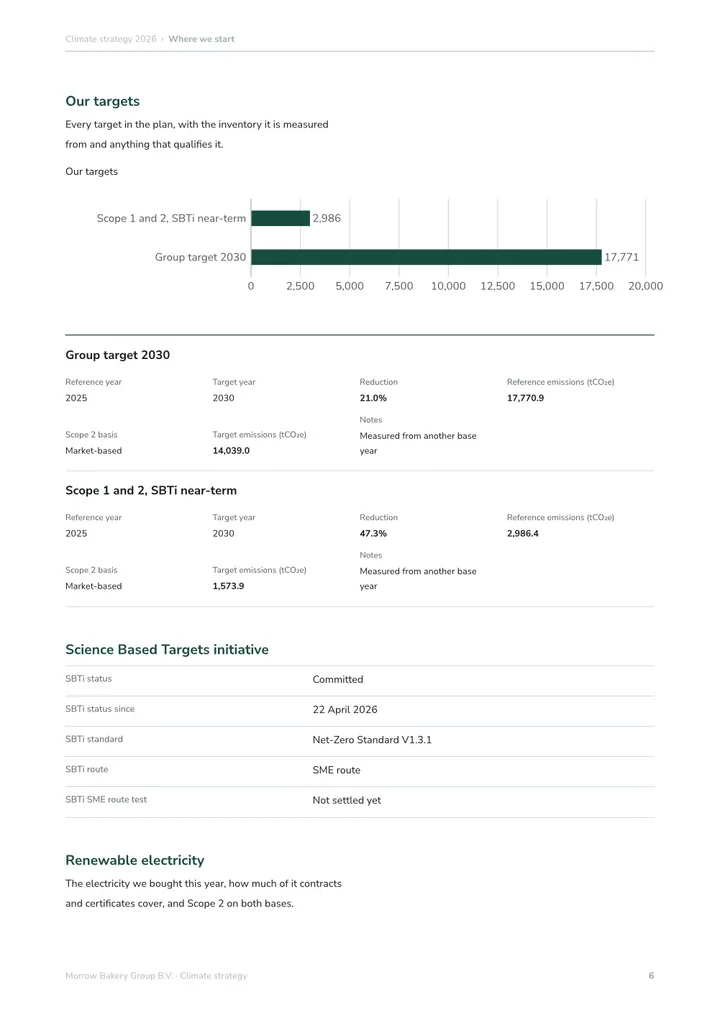
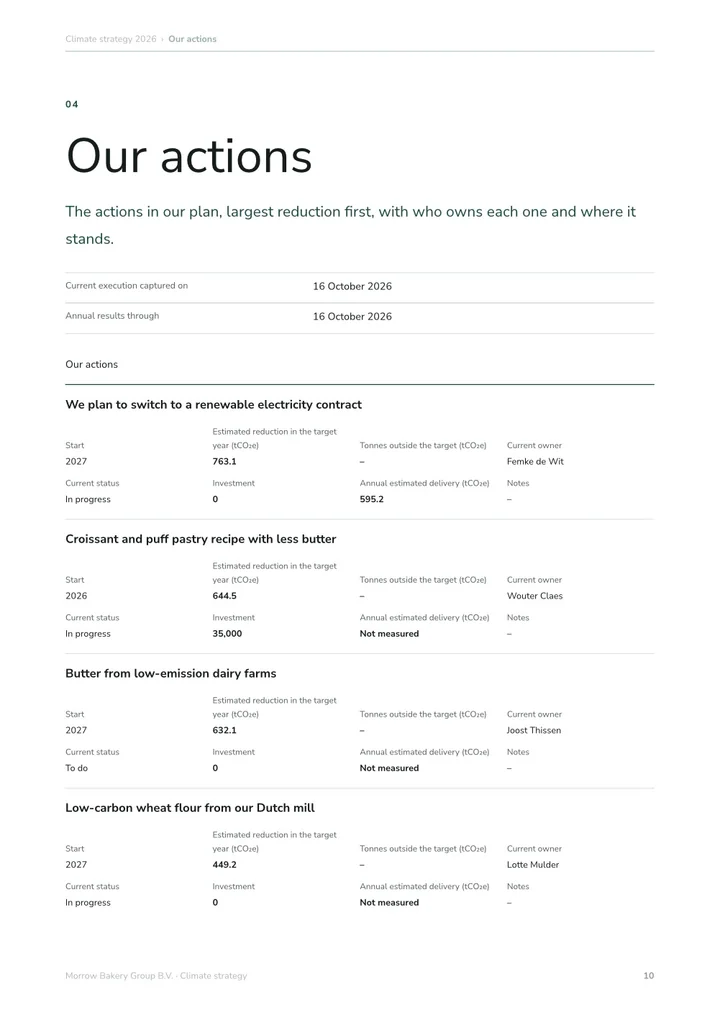
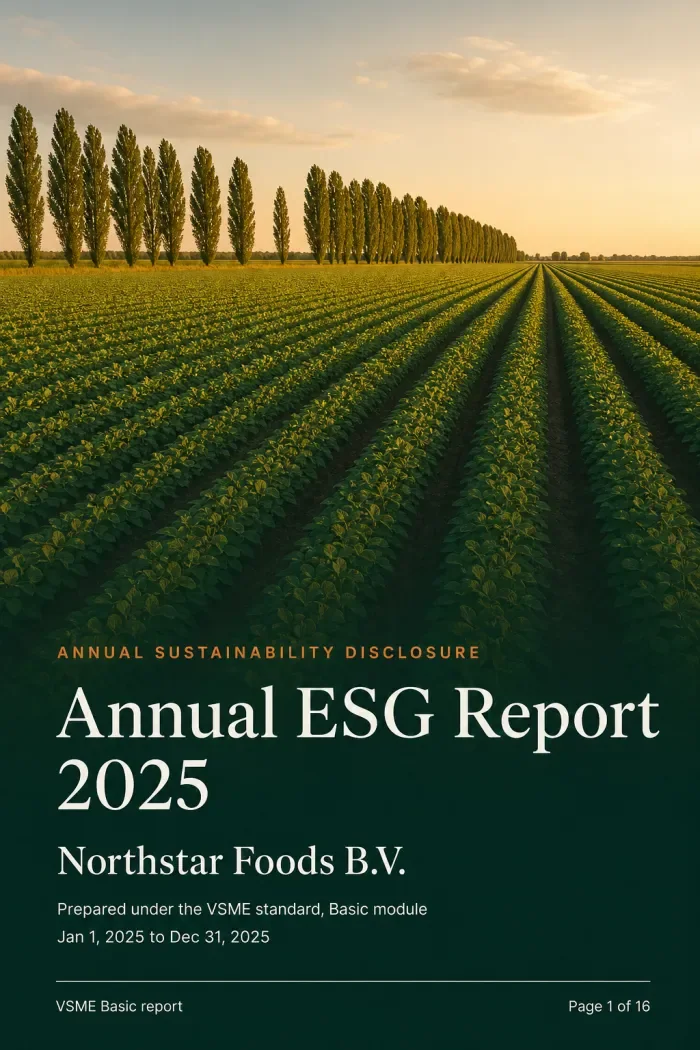
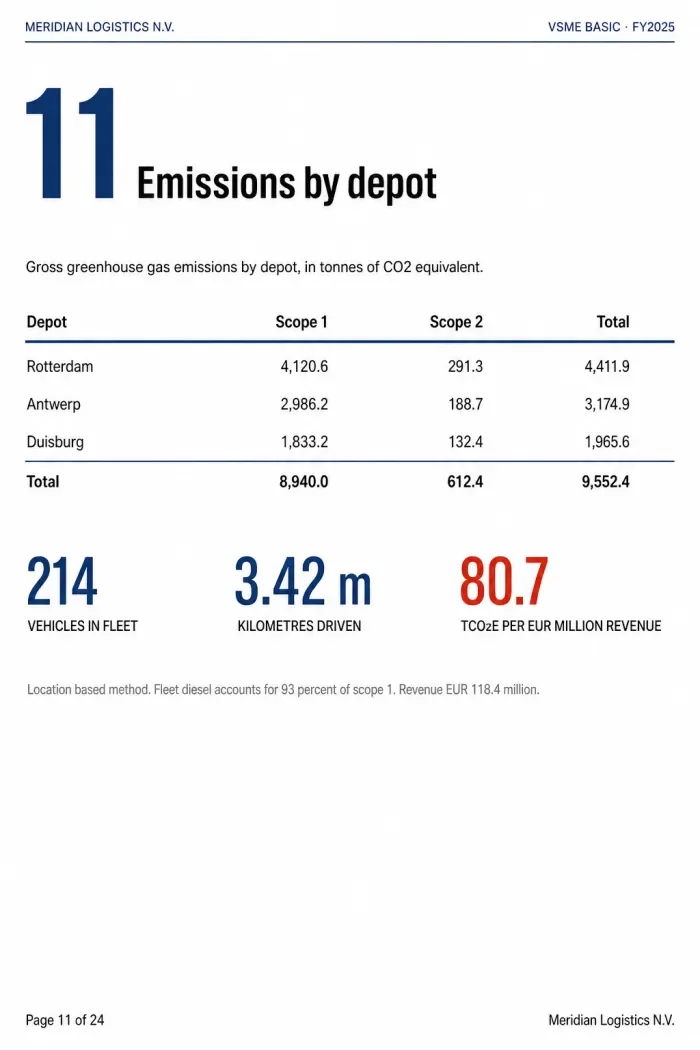
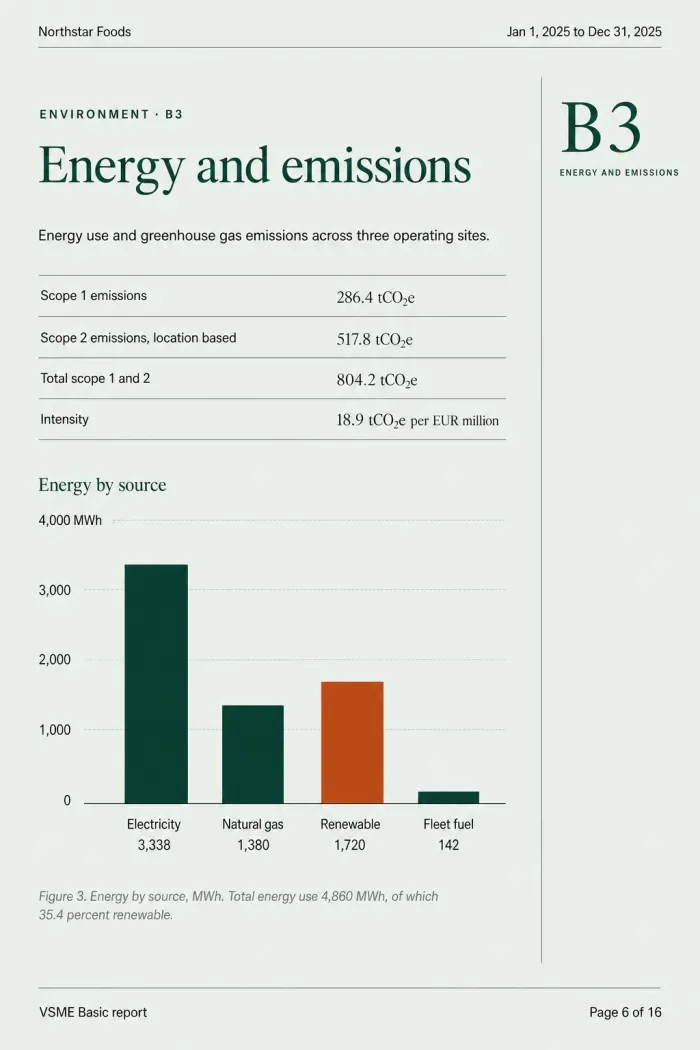
The report-design images below are the same public examples shown on our marketing site. They illustrate layout choices, not evidence of a customer’s sustainability performance. Keep labels, period information and units readable at the size of the final document.
Review the complete report
Before sharing, check the document against the scope and standard version you chose. Make sure source figures agree with the final tables, explanations make sense without the collection screen, and the recipient has access only to the intended information.
For a full official worked example and digital template, use the EFRAG resources below. Our preparation guide and checklist help you organise your own inputs.
Reconcile the source records
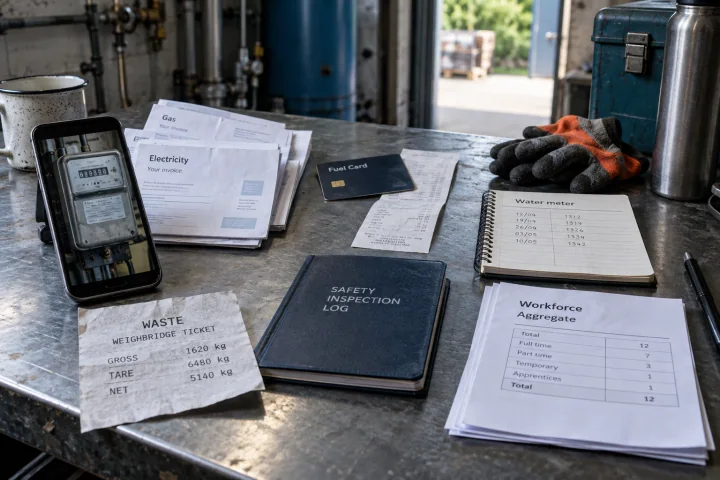
The fictional bakery and shop each have four non-overlapping quarterly records for 2025. The bakery’s original second-quarter record showed 8,000 kWh. A correction replaced it with 7,000 kWh. Keep the original in the record trail but exclude it from the annual total.
The bakery’s included records total 30,000 kWh and the shop’s total 18,000 kWh. The workbook totals only the rows marked for inclusion. Its correction comparison shows the 8,000 kWh overstatement that would result from adding the superseded record as well.
| Period | Bakery kWh | Shop kWh |
|---|---|---|
| January–March | 8,000 | 4,000 |
| April–June | 7,000 (corrected) | 4,500 |
| July–September | 7,000 | 4,500 |
| October–December | 8,000 | 5,000 |
| Annual included total | 30,000 | 18,000 |
Convert the unit without changing the meaning
Add the included site totals: 30,000 + 18,000 = 48,000 kWh. Divide by 1,000 to express the same electricity quantity as 48 MWh. The 2025 recommendation’s B3 paragraph 29 uses MWh for energy reporting.
Purchased electricity is only one part of the energy picture. If the company also uses gas or vehicle fuel, those records need their own treatment before describing a number as total energy. The example leaves them outside its deliberately narrow calculation.
Why there is no emissions factor in this example
An energy amount is not an emissions result. To calculate emissions, select an appropriate factor with a documented geography, year, method, unit and source, and establish the relevant inventory boundary. Do not choose a convenient number from another country or a different reporting method.
For example, multiplying kWh by a factor expressed in kg CO₂e per kWh gives kilograms, which must be divided by 1,000 to obtain tonnes. That unit relationship alone does not validate the factor. B3 paragraph 30 addresses Scope 1 and location-based Scope 2 emissions; a purchased-electricity worksheet does not cover all of those requirements.
Write a statement the evidence can support
Example wording: “Purchased electricity was 48 MWh for the bakery and shop for 1 January–31 December 2025. The figure uses eight included quarterly records; the corrected second-quarter bakery record replaces its original. This excerpt does not report total energy or greenhouse gas emissions.”
Before using equivalent wording for your business, review the actual sources and periods. The fictional records here demonstrate the method. They are not customer evidence, an assurance opinion or proof that a full report complies with the standard.
Sources and scope
- EFRAG: digital template, example and explanatory notes
- European Commission: 2025 VSME recommendation and standard
These resources explain a preparation workflow. Check your selected standard and recipient requirements before sharing your report.
 Joost ThissenFounder