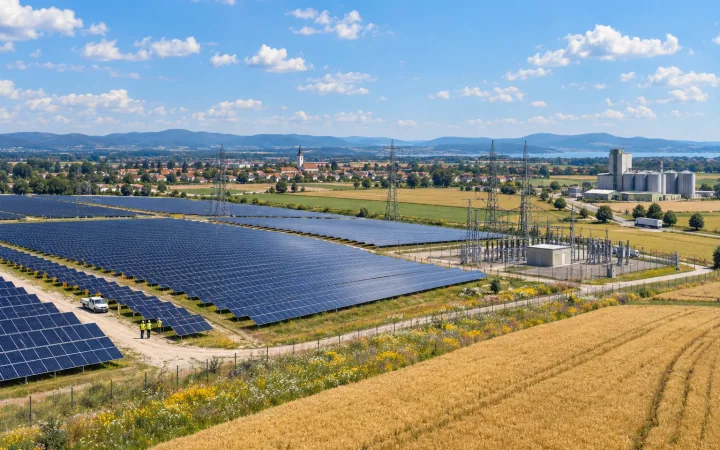
In June 2026 solar generated 52 TWh in the European Union, a quarter of all electricity, and for the first time in any month it passed 25 percent. It was also the largest single source of power in the bloc that month, which has now happened three times in history: June 2025, May 2026 and June 2026.
The month in one table
| Source | Share of EU electricity, June 2026 |
|---|---|
| Solar | 25% |
| Nuclear | 21% |
| Gas | 15% |
| Wind | 14% |
| Hydro | 12% |
| Coal | 8% |
The previous record was 47 TWh, or 23 percent, set one month earlier. Five years ago, in June 2021, solar produced 21 TWh and 10 percent. Germany reached 36 percent for the month, Spain passed a third for the first time at 34 percent, and Poland reached 24 percent.
Solar's rise has been truly stratospheric, beating prediction after prediction. In just a few years solar has gone from a small player to an essential part of Europe's power system.
That is Chris Rosslowe, senior analyst at the energy think tank Ember, whose monthly data this is.
Why this shows up in your report
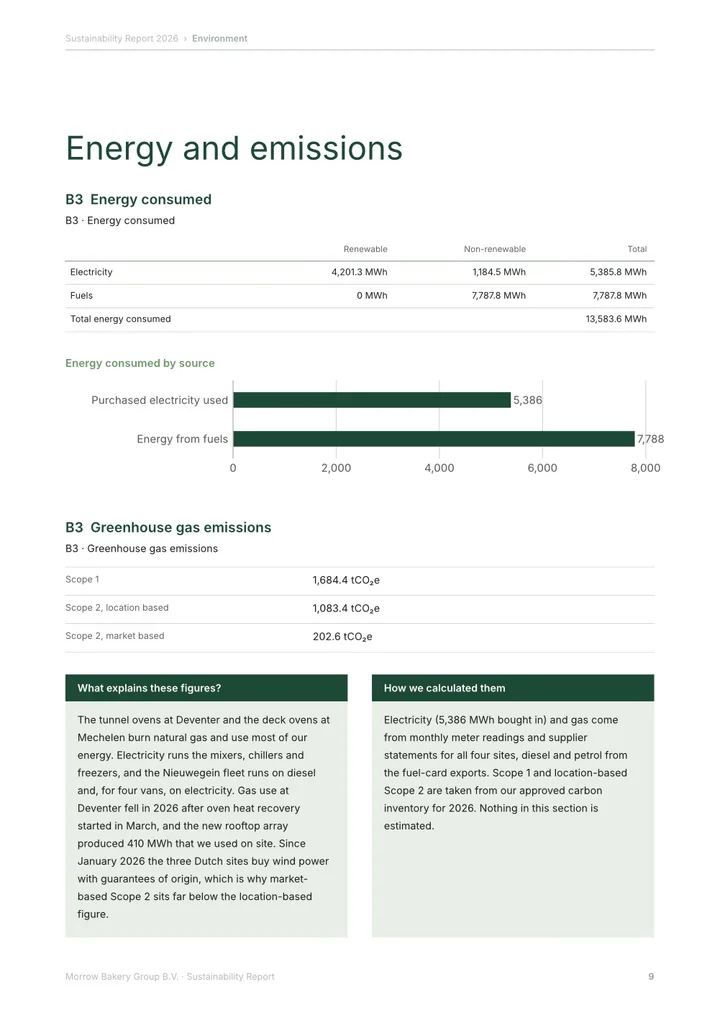
Location-based Scope 2 is your electricity consumption multiplied by the average emission factor of the grid you are on. You do not control that factor. It moves when the generation mix moves, and the generation mix is moving quickly.
So a bakery that used exactly the same kilowatt-hours in 2026 as in 2021 will report a smaller Scope 2 figure, without having done anything. This is real, it is not cheating, and it is worth saying out loud in the report rather than letting a reader assume you cut consumption.
Three things to get right
- Use the factor set for the year you are reporting. Last year's factor does not describe this year's grid, and in a grid changing this fast the error is not small.
- Say which method you used. Location-based and market-based answer different questions. If you hold a certified renewable contract, report both and label them.
- Separate the two stories. A falling number can come from a cleaner grid, from using less, or from both. A reader who cannot tell which will assume the least flattering one.
The good news underneath all of this is simple. The single biggest line in most small companies' footprints is getting smaller each year for reasons entirely outside their control. The work is to show what you did on top of that.
 Joost Thissen