VSME is the EU’s voluntary sustainability reporting standard, with a Basic and a Comprehensive module. To prepare a report, start with a reporting brief: the recipient, purpose, period, entities, standard version and intended output. Then choose your module and collect the evidence for its applicable disclosures. A request for selected ESG figures and a complete VSME report are different deliverables.
What is VSME?
VSME, the Voluntary Sustainability Reporting Standard for non-listed SMEs, is the EU’s voluntary standard for companies that do not have to report under the mandatory rules. EFRAG developed it, and the European Commission recommended it in July 2025. It has a Basic and a Comprehensive module and organises environmental, social and governance information so that a company can prepare a consistent account of its activities.
A useful report begins with a practical question: who needs the information, and what decision will it help them make? A bank reviewing a business and a customer reviewing a supplier may need different details. Keep a clear reporting period and company boundary so both can interpret the figures.
Start with the request you received
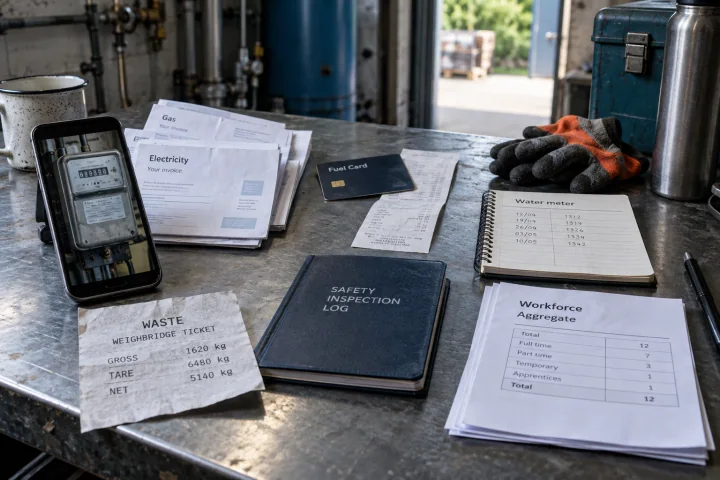
For example, imagine a small packaging supplier receives a spreadsheet asking about electricity, employees and workplace accidents. Before allocating the work, record the requested year, deadline, recipient and evidence requirements. Compare the questions with the reporting standard you intend to use.
- Identify the entities and sites covered.
- Assign each question to someone who can check the source.
- Record missing information rather than replacing it with a guess.
- Keep evidence beside the answer and review before sharing.
Choose and name the standard version
This resource uses the Basic and Comprehensive terminology in the 2025 VSME recommendation. European reporting rules are evolving. The Commission adopted a further voluntary-standard delegated act in July 2026; adoption, entry into force and application dates are different milestones.
Name the exact version used in your report. Check the official instrument and any recipient requirements before treating a newer framework as applicable. A software workflow does not replace this review.
From information to a report
In Greener Ahead, the workflow moves from company profile to scope, answers, report design and sharing. Start with what you already know, send requests for the gaps, and review the finished document as a whole. The software is useful when the same facts need to serve several readers and the work needs to continue next year.
Turn the first conversation into a reporting brief
Before opening a disclosure questionnaire, ask the recipient what they will do with the information. A purchasing team may be onboarding a supplier; a lender may be assessing a specific exposure. Save the original request so that later changes can be traced.
Write one sentence for the purpose, then record the reporting dates, legal entity and included sites. A brand name alone may hide several companies. Record whether subsidiaries are included and ask the finance owner to check the relationship to the financial reporting boundary.
| Decision | Example answer |
|---|---|
| Reader and purpose | Customer procurement team, annual supplier review |
| Period | 1 January–31 December 2025 |
| Boundary | One legal entity; bakery and shop; no subsidiaries |
| Basis | 2025 Recommendation (EU) 2025/1710; module to be confirmed |
| Output | Report plus mapping to the original customer questions |
| Approval | Finance lead reviews figures; director approves release |
Separate three decisions that are often mixed together
First decide which entities and period the information covers. Next choose the reporting basis and module. Finally decide which files and supporting records the recipient needs. These choices affect one another, but they answer different questions.
For the 2025 recommendation, Annex I paragraphs 5–6 explain the relationship between the modules, while B1 paragraph 24 specifies the basis for preparation. Record those choices explicitly. If you supply only a selection of figures, describe it as a response or excerpt rather than implying that you completed the whole standard.
- Boundary: whose activities and which dates are included?
- Module: which applicable disclosures will be prepared?
- Delivery: report, spreadsheet, supporting evidence or another agreed format?
What should you do when information is missing?
Create an open issue with an owner, a missing period or record, and a next action. For example: “Shop electricity, November 2025: obtain the corrected supplier bill; finance owner; review before release.” This is more useful than an empty cell that nobody owns.
Keep measured zero, not applicable, estimated and missing as distinct states. An estimate needs an explanation of the inputs and method. A reporting tool cannot make an unsupported value reliable simply by placing it in a finished document.
Sources and scope
- European Commission: 2025 VSME recommendation and standard
- Commission: July 2026 voluntary-standard delegated act
These resources explain a preparation workflow. Check your selected standard and recipient requirements before sharing your report.
 Joost ThissenFounder