Your bank asks because EU banking guidelines require it to measure climate and environmental risk in its loans from 2026. Most questions map to the VSME standard: energy and emissions, targets, climate risk at your sites, workforce and governance. Prepare a VSME report once, send it, and add only the loan-specific figures the bank still needs.
Why your bank is asking now
European banks have to identify, measure and manage environmental, social and governance risk in their loan books. The EBA Guidelines on the management of ESG risks (EBA/GL/2025/01) apply from 11 January 2026, and at the latest from 11 January 2027 for small and non-complex banks. To meet them, a bank needs information from the companies it lends to: how exposed they are to climate change, and how they will cope with the move to a low-carbon economy.
That makes the questionnaire the bank’s obligation, not yours. Whether your company falls under the CSRD does not change it. A bank can ask at a new loan, at a renewal or at the annual credit review, and the answers can feed into how it assesses the loan.
What a typical questionnaire asks
Questionnaires differ per bank, but most ask about the same handful of topics. The environmental questions usually come first and take the most work.
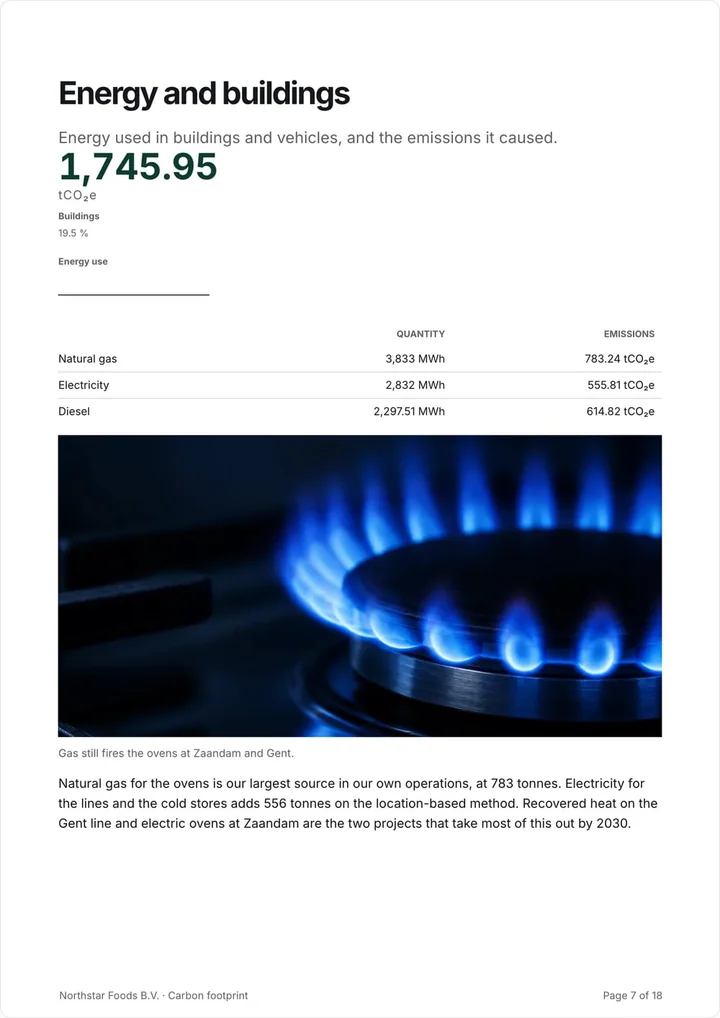
- Energy use and where it comes from: electricity, gas, fuel and the share of renewable energy.
- Greenhouse gas emissions, usually Scope 1 and 2 and sometimes Scope 3.
- Reduction targets or a transition plan.
- Physical climate risk at your sites, such as flooding, heat or drought.
- Revenue from sectors such as fossil fuels.
- Environmental certificates or a management system.
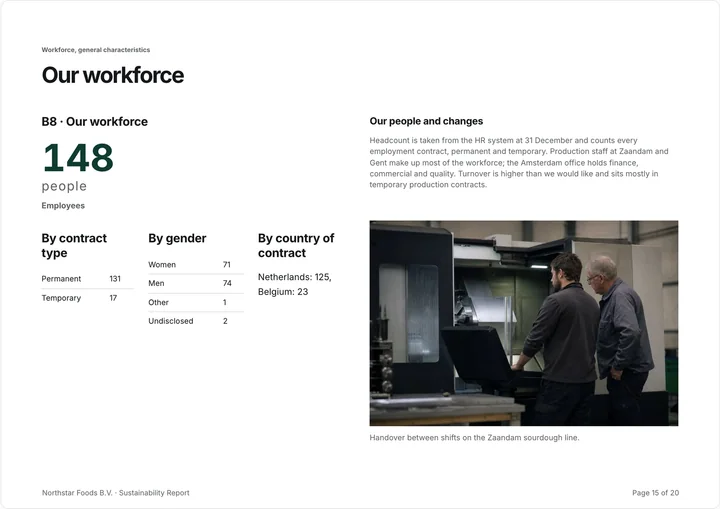
- Workforce figures, work accidents and convictions for corruption.
The voluntary standard is what banks are told to use
When the Commission recommended the VSME standard in July 2025 (Recommendation (EU) 2025/1710), it asked companies and financial institutions to limit their information requests to smaller companies to what the standard covers, as far as possible. Banking groups have taken that up: the German Sparkassen, for example, point business customers to the VSME as the way to answer the many questionnaires they receive.
The value chain cap that limits what a reporting customer may ask does not apply to banks; they follow their own supervisory rules. In practice, though, a VSME report answers most of a bank questionnaire, and many banks accept it as the starting point.
Answer once, then reuse it
Prepare a VSME report with the Basic module, and add the Comprehensive disclosures banks ask about most: reduction targets (C3), climate risks (C4) and revenue from certain sectors (C8). If your bank wants Scope 3 or a full carbon footprint, calculate it once and keep it with the report. Send the same report to your bank, your customers and tenders, and update it each year with your annual accounts.
In Greener Ahead the VSME report is €995 per year and Carbon accounting, which calculates your Scope 1, 2 and 3 footprint, is €1,495 per year, both with unlimited users. You can try them free for 14 days without a card. Check the pricing page for current details.
Where each bank question is answered
Use this map to find the answer in your report before you start a new spreadsheet. Disclosure codes follow the VSME standard; check them against the version you report on.
| Bank question | VSME disclosure | Note |
|---|---|---|
| How much energy do you use, and from which sources? | B3 | Electricity, gas and fuel in MWh, with the renewable share |
| What are your greenhouse gas emissions? | B3 | Scope 1 and location-based Scope 2; Scope 3 needs a carbon footprint |
| Do you have reduction targets or a transition plan? | C3 | Comprehensive module |
| Are your sites exposed to floods, heat or drought? | C4 | Comprehensive module; list the sites and hazards |
| Do you earn revenue from fossil fuels or other listed sectors? | C8 | Comprehensive module |
| Do you have an environmental certificate or policy? | B2 | Describe practices and policies; attach the certificate |
| How many employees do you have, and how many accidents? | B8, B9 | Use the same counting basis as your annual accounts |
| Any convictions or fines for corruption or bribery? | B11 | State the number and amount, or that there were none |
Questions to settle with your bank
A short call or email often saves a full questionnaire. Ask before you start filling in the bank’s own form.
- Will the bank accept a VSME report instead of, or alongside, its questionnaire?
- Which questions are about the company, and which about the specific loan or asset?
- Which financial year and entities should the answers cover?
- In what format should you deliver: the bank’s portal, a spreadsheet or a PDF?
- How often will the bank ask again, and when is the next credit review?
Information only the loan can provide
Some questions are about what the bank finances rather than about your company. A mortgage or property loan can need the building’s energy performance certificate. Equipment finance can need the energy use of the machine you buy. A green loan needs evidence of how the money is used. Keep these with the loan file, not in your company report.
Sources and scope
- EBA: Guidelines on the management of ESG risks (EBA/GL/2025/01)
- European Commission: 2025 VSME recommendation and standard
- Sparkasse: voluntary sustainability reports for SMEs
These resources explain a preparation workflow. Check your selected standard and recipient requirements before sharing your report.
 Joost ThissenFounder