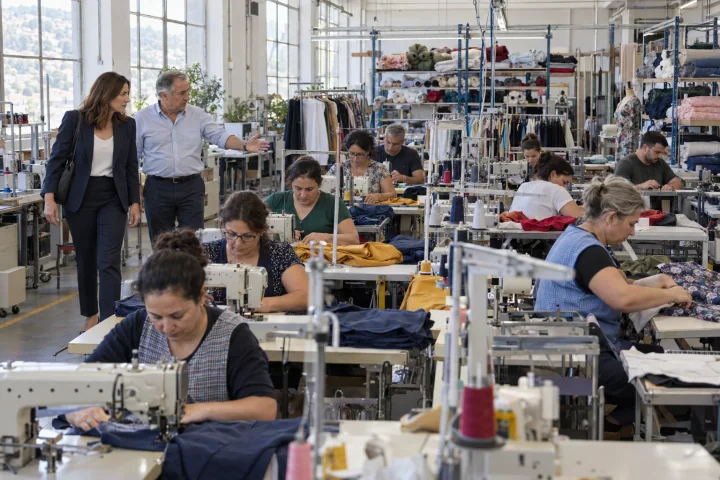
After the 2026 Omnibus changes, the CSDDD applies to EU companies with more than 5,000 employees and €1.5 billion turnover, and non-EU companies with €1.5 billion turnover in the EU, from 26 July 2029. They must carry out risk-based due diligence on human rights and environmental impacts in their chain of business partners. Questions to partners with fewer than 5,000 employees are limited to what cannot be obtained otherwise, but suppliers will still get codes of conduct, contract clauses and questionnaires.
What the CSDDD is now
The Corporate Sustainability Due Diligence Directive, Directive (EU) 2024/1760, requires large companies to find, prevent and address adverse human rights and environmental impacts in their own operations, their subsidiaries and their chain of business partners. In February 2026 the Omnibus I package, Directive (EU) 2026/470, cut it back sharply. Member States must transpose it by 26 July 2028, and companies apply it from 26 July 2029.
Who is in scope
EU companies with more than 5,000 employees and more than €1.5 billion worldwide net turnover, and non-EU companies with more than €1.5 billion net turnover in the EU. That is roughly 70% fewer companies than the original text. Almost every other company is not in scope itself, but many are suppliers to one that is, and that is where they will feel it.
What in-scope companies must do
Due diligence is now explicitly risk-based.
- Build due diligence into their policies and risk management, with a code of conduct.
- Run a scoping exercise based on reasonably available information, then assess in depth where adverse impacts are most likely and most severe.
- Prevent or mitigate those impacts, end actual ones and provide remediation, using contractual assurances from business partners and checks that they are kept.
- Run a complaints procedure that people affected, unions and civil society organisations can use.
- Monitor whether the measures work and report on due diligence each year.
What changed in 2026
Omnibus I removed the obligation to adopt a climate transition plan under the CSDDD, removed the duty to end business relationships as a last resort, dropped the EU-wide civil liability regime and left it to national law, and capped fines at 3% of worldwide net turnover. Information requests to business partners with fewer than 5,000 employees are only allowed when the information cannot reasonably be obtained another way, and must be targeted, reasonable and proportionate. National laws that already exist, such as France’s duty of vigilance and Germany’s Supply Chain Act, continue to apply until they are aligned.
What suppliers will be asked
Expect a supplier code of conduct to sign, contract clauses on human rights and the environment, a questionnaire about your policies, your own suppliers and your sites, and occasionally an audit. Questions cluster on forced and child labour, health and safety, working hours and wages, pollution and, for some sectors, deforestation. Under the 2026 rules the questions should be fewer and more targeted, but they will not disappear: your customer still has to show it assessed its chain.
How to prepare as a supplier
A supplier that can show the following answers most questionnaires once and reuses the answers: written policies on human rights, health and safety, the environment and anti-corruption; a code of conduct for its own suppliers with a simple overview of where they are and what risks they carry; a way for workers and others to raise concerns; and figures on accidents, training and emissions. A VSME report bundles much of this in a format customers recognise.
Doing it in Greener Ahead
Greener Ahead does not carry out due diligence audits. Sustainability reporting in Greener Ahead prepares a VSME report with your policies, workforce figures and business conduct in one place, ready to share with customers, for €995 per year. Carbon accounting lets you send your own suppliers requests that they answer in a portal of their own, for €1,495 per year. Both have unlimited users and a free 14-day trial without a card. Check the pricing page for current details.
The CSDDD at a glance
The main rules after Directive (EU) 2026/470.
| Rule | What it means |
|---|---|
| Who | EU companies with more than 5,000 employees and €1.5 billion turnover; non-EU companies with €1.5 billion EU turnover |
| When | National law by 26 July 2028; companies apply it from 26 July 2029 |
| Approach | Scoping on reasonably available information, then the most likely and severe impacts |
| Smaller partners | Questions to partners under 5,000 employees only when the information cannot be obtained otherwise |
| Climate transition plan | No longer required under the CSDDD |
| Fines | Up to 3% of worldwide net turnover |
| Civil liability | Left to national law |
What a supplier should have ready
These cover most due diligence questionnaires.
- Written policies on human rights, health and safety, the environment and anti-corruption, approved by management.
- A code of conduct for your own suppliers, and a list of them by country and product.
- A way for workers and others to raise concerns confidentially.
- Accident, training and emissions figures for the last two years.
- One person who owns customer questionnaires and keeps the answers.
Sources and scope
- EUR-Lex: Directive (EU) 2024/1760 on corporate sustainability due diligence
- EUR-Lex: Directive (EU) 2026/470 amending the sustainability reporting and due diligence directives
- European Parliament Legislative Train: Omnibus I on CSRD and CSDDD
These resources explain a preparation workflow. Check your selected standard and recipient requirements before sharing your report.
 Joost ThissenFounder