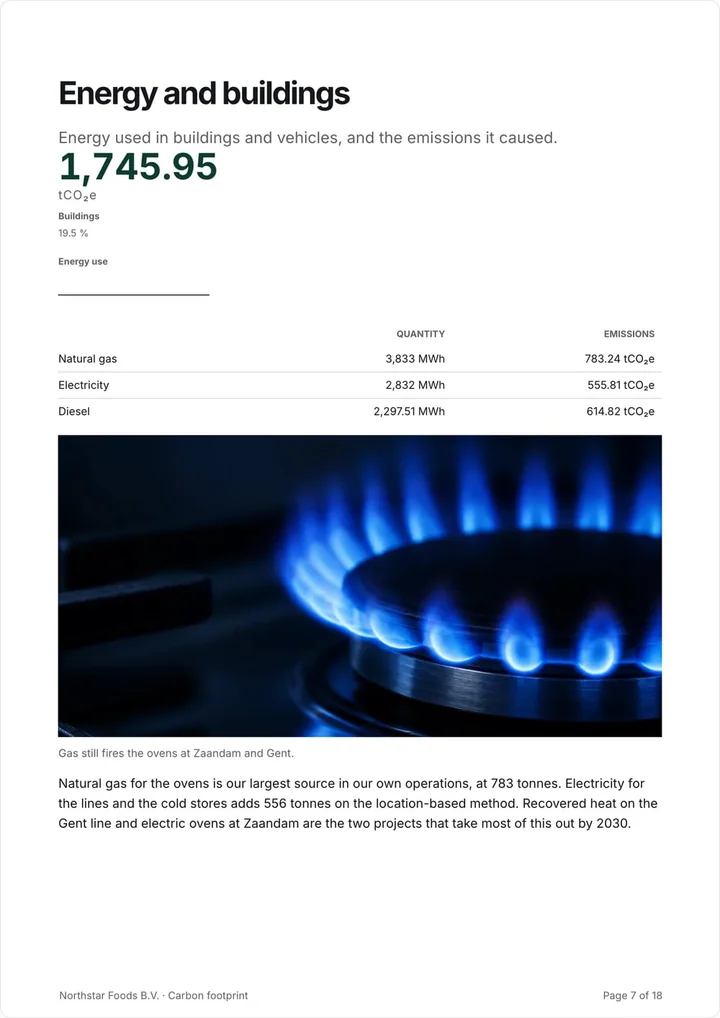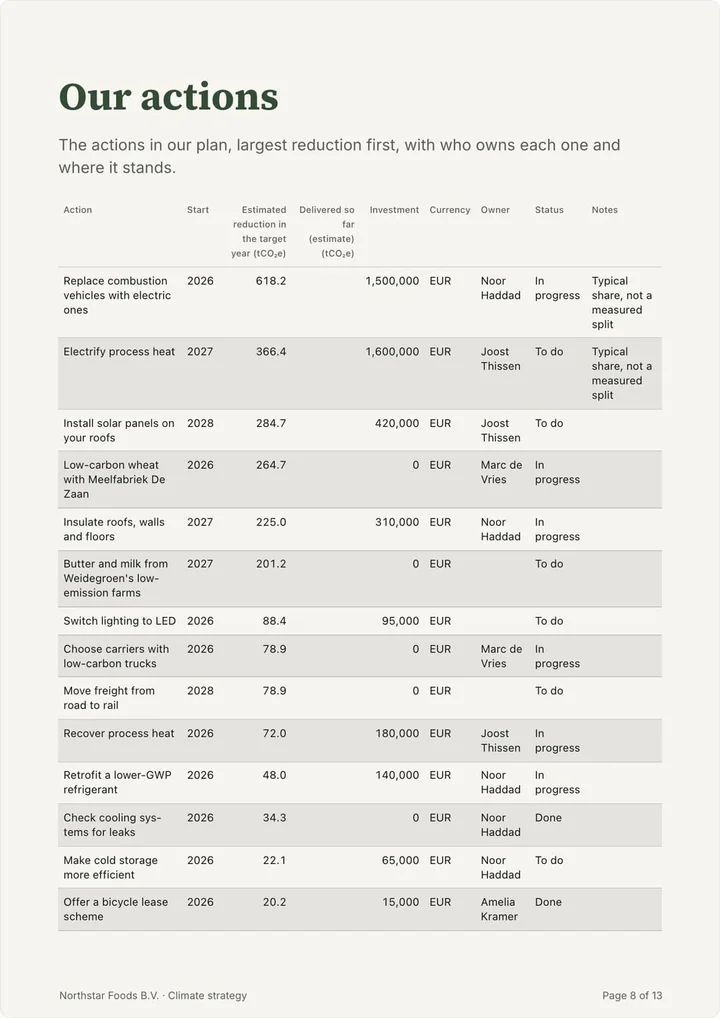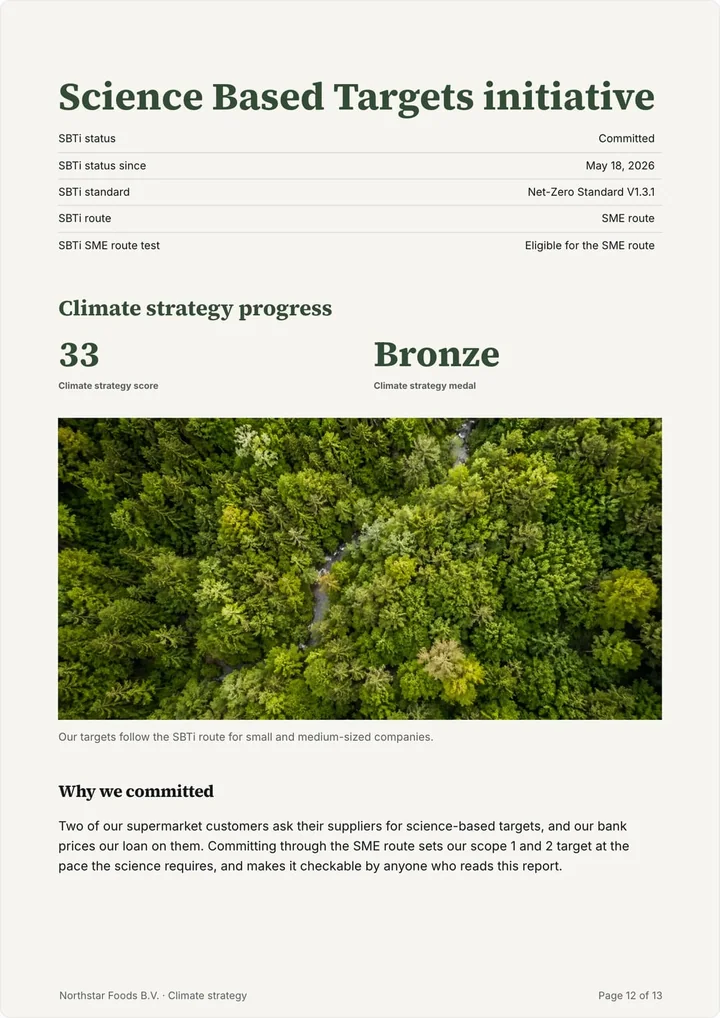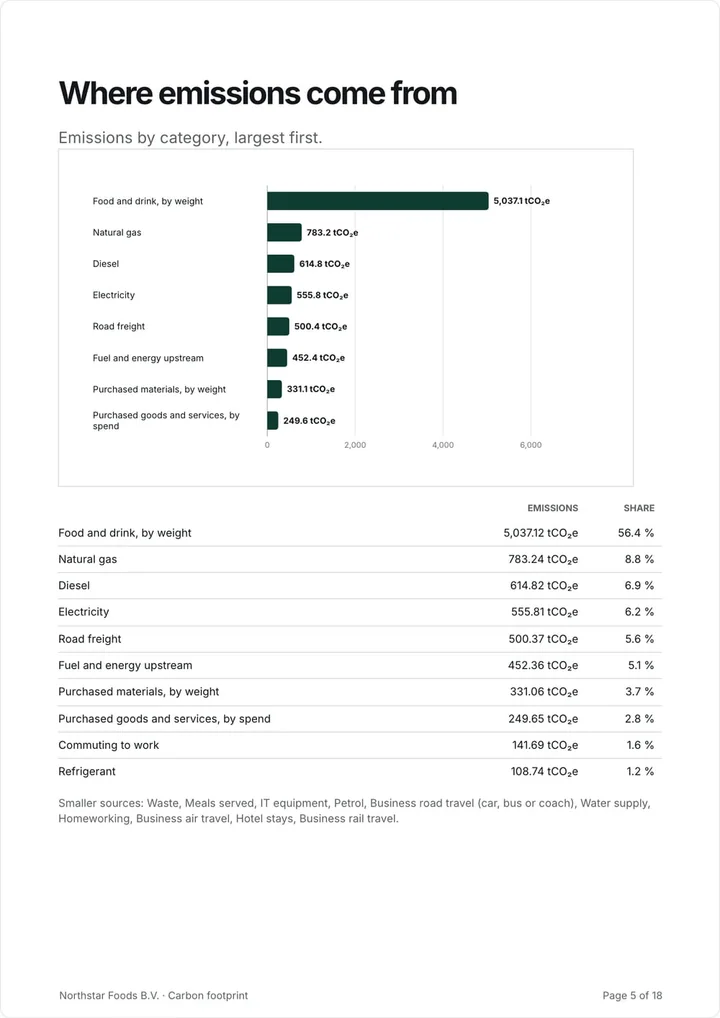
The GRI Standards are the most widely used global framework for reporting a company’s impacts on the economy, the environment and people. They are free and modular, and they need a materiality assessment to select topics. The VSME is the EU’s voluntary standard for smaller companies, with fixed disclosures and an “if applicable” test instead. Use the VSME when banks or customers ask for it or you want a short, fixed report; use GRI when your readers expect it.
What the GRI Standards are
The Global Reporting Initiative (GRI) is an independent international organisation, founded in 1997, that publishes the GRI Standards. They are free to use and are the most widely used framework for sustainability reporting by large companies worldwide. They focus on a company’s impacts on the economy, the environment and people, including human rights.
How they are built
The GRI Standards are modular. The Universal Standards apply to everyone: GRI 1 sets out the reporting principles, GRI 2 the general disclosures about the organisation, and GRI 3 how to determine and manage material topics. Sector Standards describe the likely material topics for sectors such as oil and gas, mining, agriculture and food. Topic Standards set the disclosures per topic, such as energy, emissions, waste, health and safety, training and anti-corruption.
The climate and energy Topic Standards were revised in 2025. GRI 102: Climate Change and GRI 103: Energy take effect on 1 January 2027, replacing GRI 305 on emissions and GRI 302 on energy. Early use is allowed.
Reporting with GRI
There are two ways to use the standards. Reporting “in accordance with” the GRI Standards means reporting all general disclosures in GRI 2, determining your material topics through a materiality assessment under GRI 3, reporting the Topic Standard disclosures for each material topic, publishing a GRI content index and notifying GRI. Reporting “with reference to” the standards means using selected disclosures, with a content index that says which.
What the VSME is
The VSME is the EU voluntary sustainability reporting standard for non-listed micro, small and medium-sized companies, recommended by the European Commission in 2025. Its Basic module has eleven disclosures on how the report was prepared, policies, energy and emissions, pollution, biodiversity, water, resources and waste, workforce, health and safety, pay and training, and corruption convictions. A Comprehensive module adds more. Instead of a materiality assessment, it asks you to report each disclosure if it applies to your business.
Where they overlap
The European reporting standards were written with GRI to be highly interoperable, and the VSME is derived from them. So many VSME data points have a GRI counterpart: energy use, Scope 1 and 2 emissions, waste, work accidents, workforce figures and corruption convictions. Figures you collect for one can be reused for the other.
Doing it in Greener Ahead
Sustainability reporting in Greener Ahead follows the VSME, Basic or Comprehensive, with the evidence beside every answer and the figures checked before you publish. The energy, emissions, waste and workforce figures are the same ones GRI disclosures ask for, so the work carries over if a reader later asks for GRI. It costs €995 per year with unlimited users, and you can try it free for 14 days without a card. Check the pricing page for current details.
GRI Standards and VSME compared
The main differences side by side.
| GRI Standards | VSME | |
|---|---|---|
| Published by | GRI, an independent international organisation | EFRAG, for the European Commission |
| Designed for | Organisations of any size and sector | Non-listed micro, small and medium-sized companies |
| Topics chosen by | A materiality assessment of your impacts | A fixed list with an “if applicable” test |
| Size | Universal Standards plus Sector and Topic Standards | Basic module of eleven disclosures, optional Comprehensive module |
| Emissions | Scope 1, 2 and 3 (GRI 305, from 2027 GRI 102) | Scope 1 and location-based Scope 2; Scope 3 optional |
| Format | Report with a GRI content index | Fixed structure with a digital template |
| Cost | Free | Free |
Using both
The two standards share much of the same data, so you do not have to choose forever.
- Collect energy, emissions, waste, workforce and safety figures once.
- Report the VSME Basic module for banks and customers.
- If a reader asks for GRI, map your figures to the GRI disclosures and add a content index.
- For a full GRI report, add a materiality assessment and the GRI 2 general disclosures.
- Name the standard and version you used in every report.
Sources and scope
- GRI: the GRI Standards
- GRI: linking GRI reporting to other requirements
- European Commission: 2025 VSME recommendation and standard
These resources explain a preparation workflow. Check your selected standard and recipient requirements before sharing your report.
 Joost ThissenFounder