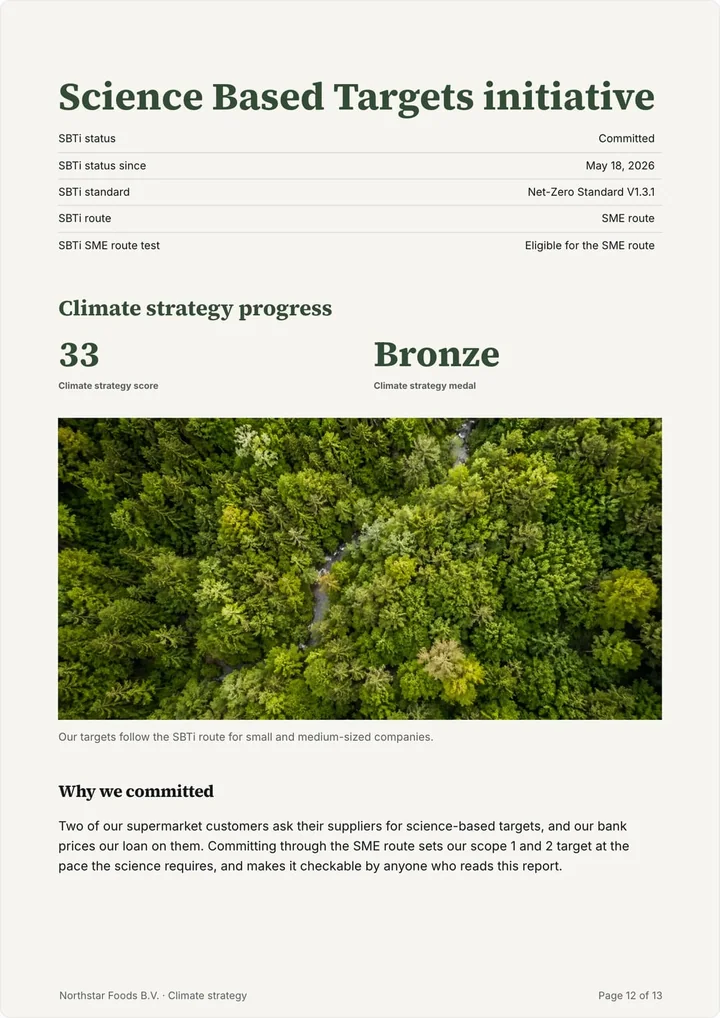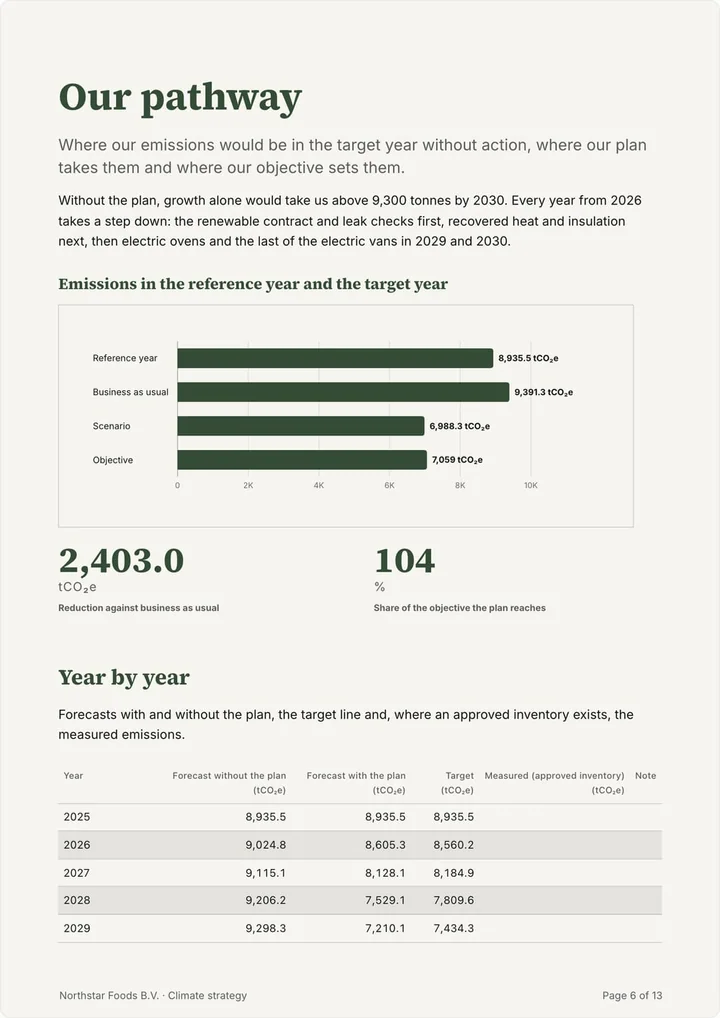
A science-based target is an emissions reduction target in line with 1.5°C, validated by SBTi Services. Companies under 10,000 tCO₂e in Scope 1 and location-based Scope 2 that meet three of four size tests can use the SME route: a near-term target for Scope 1 and 2, chosen from predefined options, plus a commitment to measure and reduce Scope 3. Start with a complete base-year footprint.
What a science-based target is
A science-based target is an emissions reduction target in line with what climate science says is needed to limit warming to 1.5°C. The Science Based Targets initiative (SBTi) sets the criteria, and its subsidiary SBTi Services checks and validates companies’ targets. There are two kinds: a near-term target, which covers the next five to ten years, and a net-zero target for 2050 at the latest.
Companies set one because their customers ask. A large company’s Scope 3 includes the emissions of its suppliers, so customers with their own science-based target increasingly want suppliers to set one too. A validated target is also a clear answer in tenders and in bank questionnaires that ask whether you have a reduction target.
The SME route
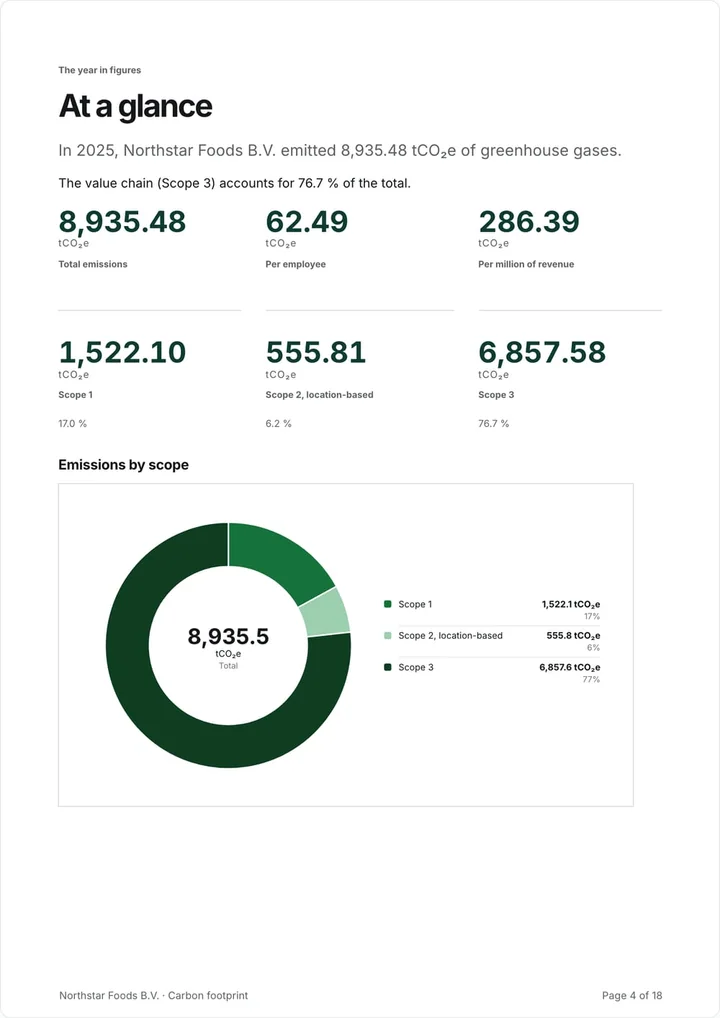
The SBTi offers a simpler validation route for smaller companies. To use it, a company must emit less than 10,000 tonnes of CO₂e across Scope 1 and location-based Scope 2, must not be a financial institution or an oil and gas company, must not fall under sector-specific SBTi criteria, and must not belong to a parent group that falls under the corporate route. It must also meet at least three of four tests: fewer than 250 employees, turnover below €50 million, total assets below €25 million, and not in a mandatory FLAG sector such as farming, forestry or food processing.
On the SME route you go straight to setting a target, without a separate commitment stage, and you choose from predefined options in SBTi Services’ Validation Portal. You set a near-term target for Scope 1 and 2. You do not have to set a Scope 3 target, but you do commit to measuring and reducing your Scope 3 emissions. SBTi Services charges a validation fee; check its website for the current amount.
What you need before you submit
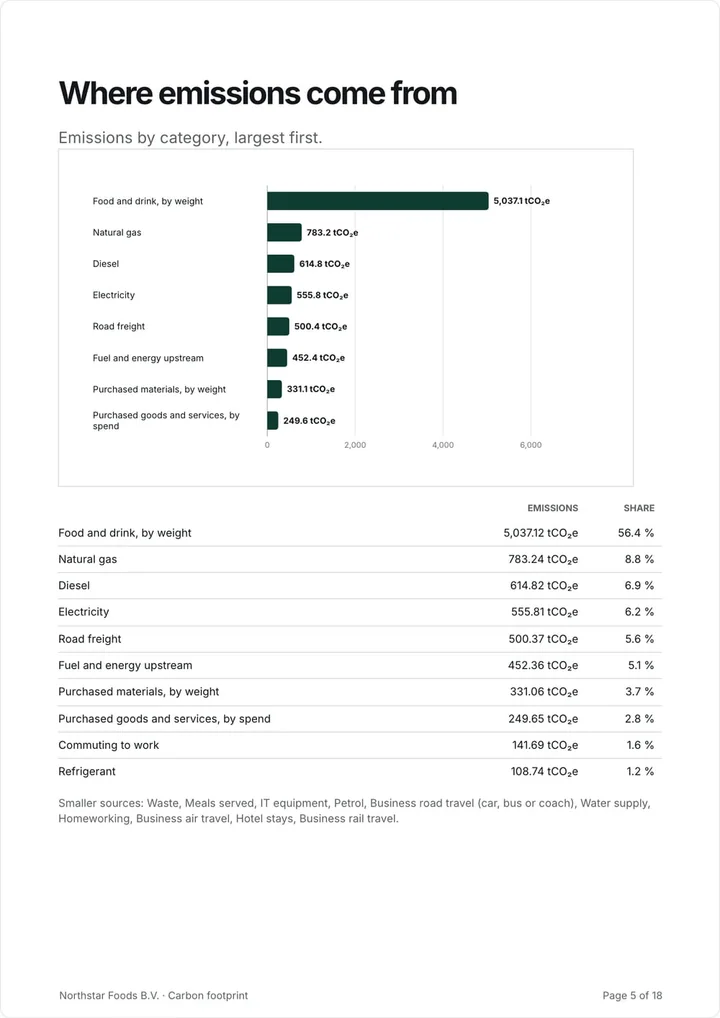
A target is only as good as the footprint under it. Before you submit, you need a complete Scope 1 and 2 inventory for a base year, calculated under the GHG Protocol, with location-based Scope 2 and, if you buy renewable electricity, market-based Scope 2 beside it. The earliest base year allowed on the SME route is 2015, and you can use your financial year instead of the calendar year.
Check your group structure too. If your company belongs to a larger group, the group’s combined figures decide which route you take. And screen your Scope 3: you will not set a target for it, but you will be asked to measure it, and it is usually the largest part of a footprint.
From footprint to validated target, step by step
The sequence is the same for most companies.
- Check the SME criteria against your group’s figures for employees, turnover, assets and emissions.
- Choose a base year with complete, reliable data, and calculate its Scope 1 and 2 footprint.
- Choose a target year five to ten years from submission, and an ambition that meets the minimum for 1.5°C.
- Submit the target through the Validation Portal and pay the fee.
- Once validated, publish the target and report your emissions and progress every year.
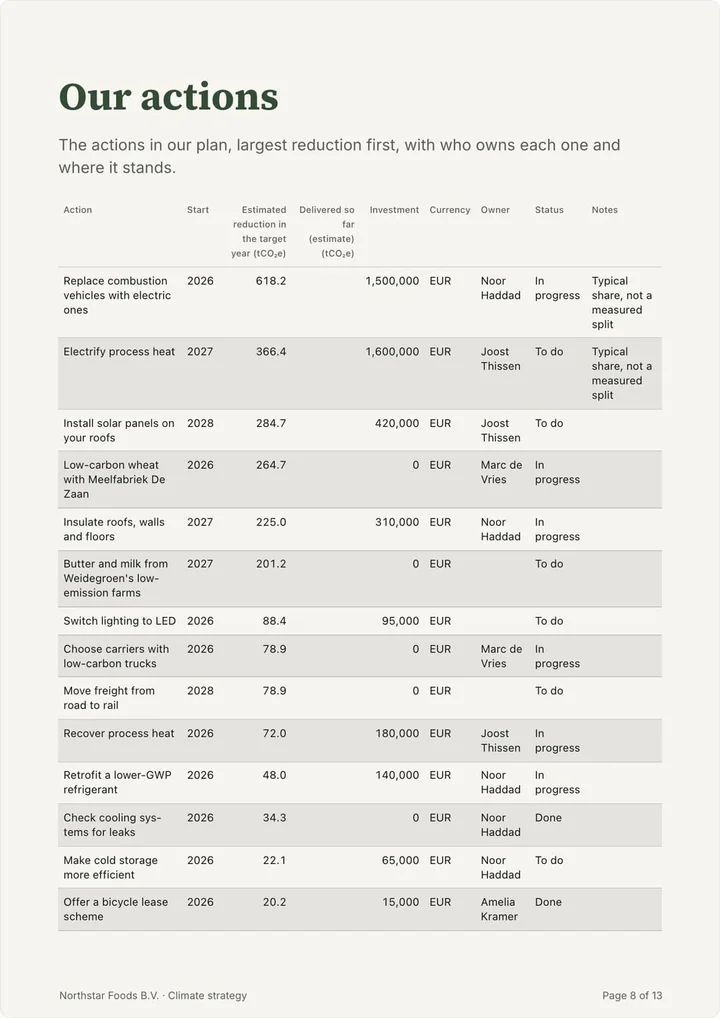
- Turn the target into a plan: which actions deliver which reductions, by when, and who owns them.
Doing it in Greener Ahead
Carbon accounting in Greener Ahead calculates your base-year footprint for Scope 1, 2 and all 15 Scope 3 categories, with the emission factor and source behind every tonne, and compares each year with the base year. It costs €1,495 per year with unlimited users, and you can try it free for 14 days without a card. Climate strategy, coming soon, adds reduction targets, an action plan and a transition plan on the same footprint. Check the pricing page for current details.
SME route or corporate route
Companies that qualify as an SME may still choose the corporate route. Most use the SME route because it is shorter.
| SME route | Corporate route | |
|---|---|---|
| Who | Companies that meet the SME criteria | All other companies, and SMEs that prefer it |
| Commitment stage | None: set the target directly | Optional commitment before the target |
| Scope 3 target | Not required; commit to measure and reduce | Required when Scope 3 is 40% or more of the total |
| How the target is set | Predefined options in the Validation Portal | Full assessment against the SBTi criteria |
| Earliest base year | 2015 | Set by the criteria in force |
Why a target is not ready to submit
These are the gaps that most often hold a submission back.
- The base year is missing months, sites or a fuel type.
- Scope 2 is reported only market-based, without the location-based figure.
- The group structure was ignored and a parent company changes the route.
- The target year is more than ten years away.
- Nobody owns the figures or the actions behind the target.
Sources and scope
These resources explain a preparation workflow. Check your selected standard and recipient requirements before sharing your report.
 Joost ThissenFounder