UK SRS S1 and S2 are the UK’s versions of the ISSB sustainability standards, published on 25 February 2026. They are voluntary unless a regulator requires them. Under the FCA’s rules of 30 September 2026, listed companies report against them on a comply-or-explain basis for periods starting on or after 1 January 2027, with one year of relief for Scope 3 and two for UK SRS S1. Their suppliers should expect more requests for emissions data.
What UK SRS is
The UK Sustainability Reporting Standards (UK SRS) are the UK’s version of the global sustainability standards of the International Sustainability Standards Board (ISSB). The Secretary of State for Business and Trade published them on 25 February 2026. UK SRS S1 sets the general requirements for disclosing sustainability-related risks and opportunities that could affect a company’s finances; UK SRS S2 sets the climate-related disclosures, including Scope 1, 2 and 3 emissions, targets and transition planning.
Publishing the standards did not make them mandatory. Any company may use them voluntarily, and the government and regulators decide separately who has to.
Listed companies: comply or explain from 2027
On 30 September 2026 the Financial Conduct Authority published its final rules for listed companies. Companies in the commercial companies, transition, non-equity shares and secondary listing categories report against UK SRS on a comply-or-explain basis for accounting periods starting on or after 1 January 2027, so the first reports appear in 2028. There is a one-year relief for Scope 3 emissions and a two-year relief for the wider UK SRS S1 disclosures.
Private companies
Whether large private companies will have to report under UK SRS is a separate decision for the government. Large companies already report energy and carbon under Streamlined Energy and Carbon Reporting (SECR), and companies above certain size thresholds give climate-related financial disclosures in their strategic report.
What it means for suppliers
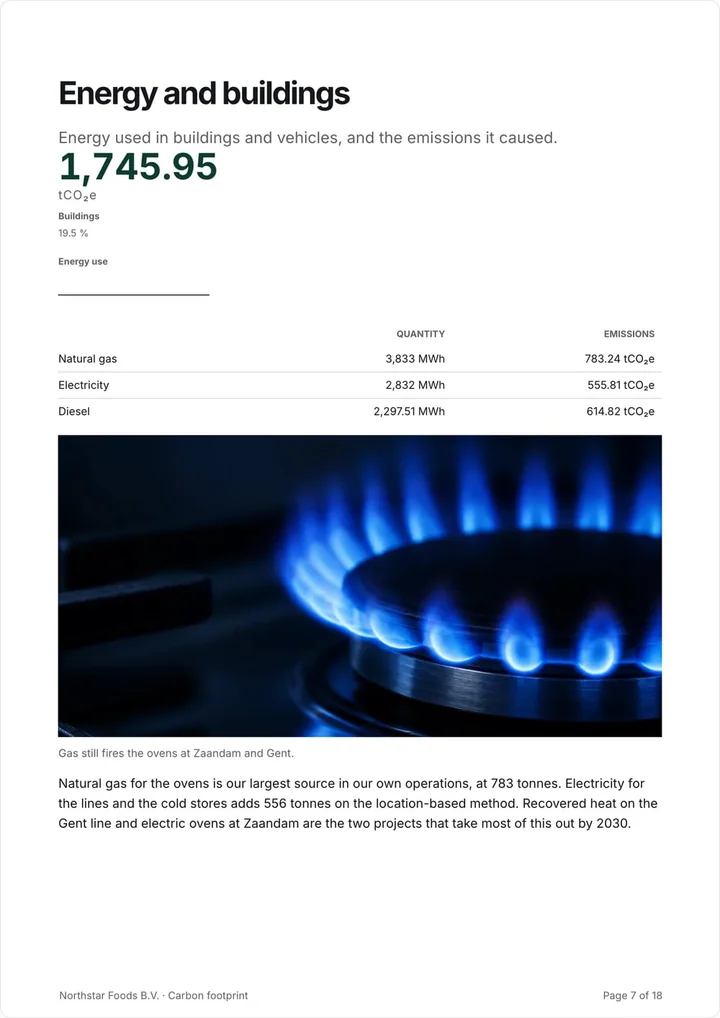
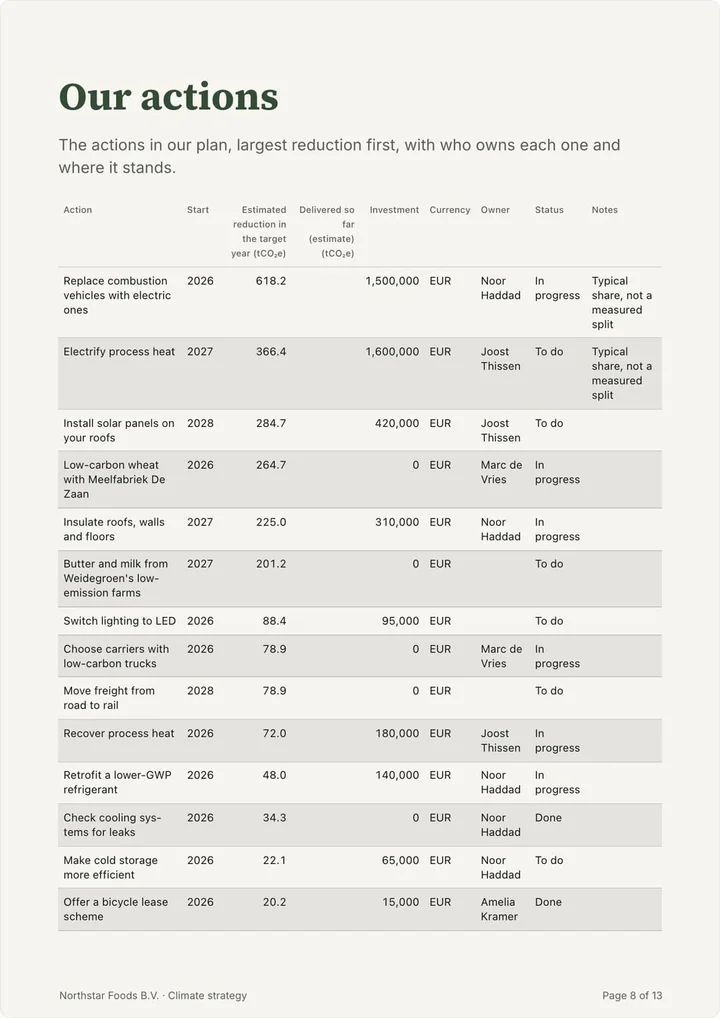
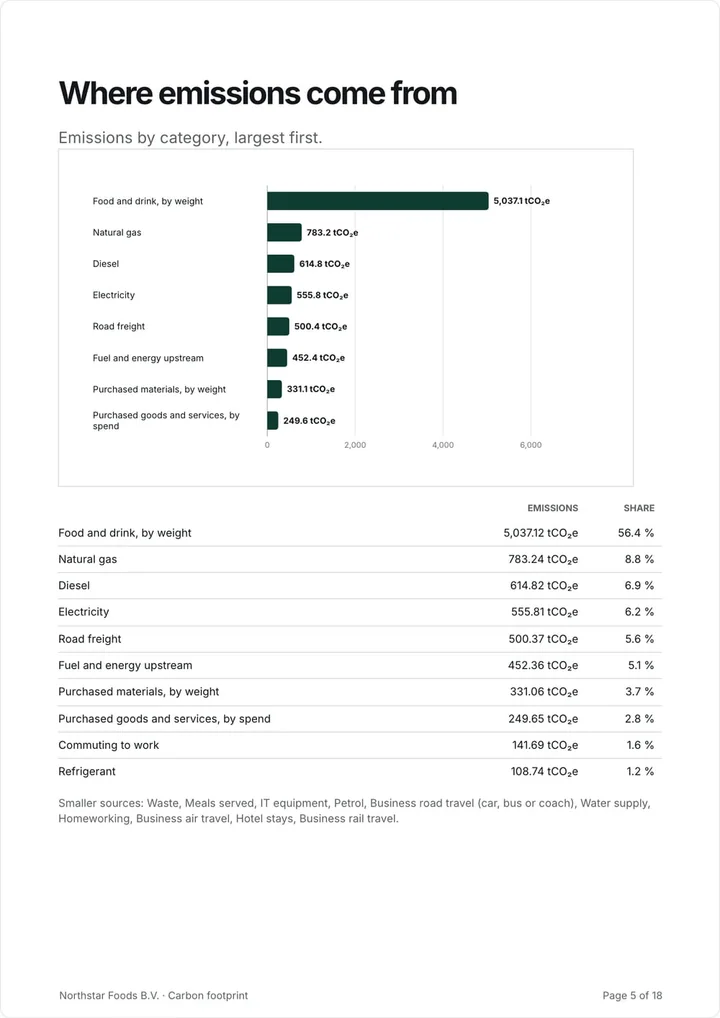
A listed company reporting under UK SRS S2 needs its Scope 3 emissions, and a large part of those are its suppliers’ emissions. Once the Scope 3 relief ends, expect more requests for your footprint, your targets and your reduction plans, whatever your size. A footprint calculated under the GHG Protocol, with Scope 1, Scope 2 and the relevant Scope 3 categories, answers those requests and also serves a Carbon Reduction Plan for public tenders.
Doing it in Greener Ahead
Greener Ahead does not prepare UK SRS disclosures. Carbon accounting in Greener Ahead calculates the footprint your customers ask for, with Scope 1, Scope 2 location-based and market-based and all 15 Scope 3 categories, and the emission factor and source behind every tonne. It costs €1,495 per year with unlimited users, and you can try it free for 14 days without a card. Check the pricing page for current details.
UK SRS at a glance
The two standards and who uses them.
| UK SRS S1 | UK SRS S2 | |
|---|---|---|
| Based on | IFRS S1 | IFRS S2 |
| Covers | Sustainability-related risks and opportunities in general | Climate-related risks and opportunities |
| Key figures | Depends on the topics | Scope 1, 2 and 3 emissions, targets, transition plans |
| Listed companies | Comply or explain, two-year relief | Comply or explain from 2027, one-year relief for Scope 3 |
| Other companies | Voluntary | Voluntary |
What a supplier can prepare now
Requests usually follow the customer’s own reporting timetable.
- Calculate a full footprint for the last financial year, with Scope 1, 2 and the relevant Scope 3 categories.
- Report Scope 2 by both the location-based and the market-based method.
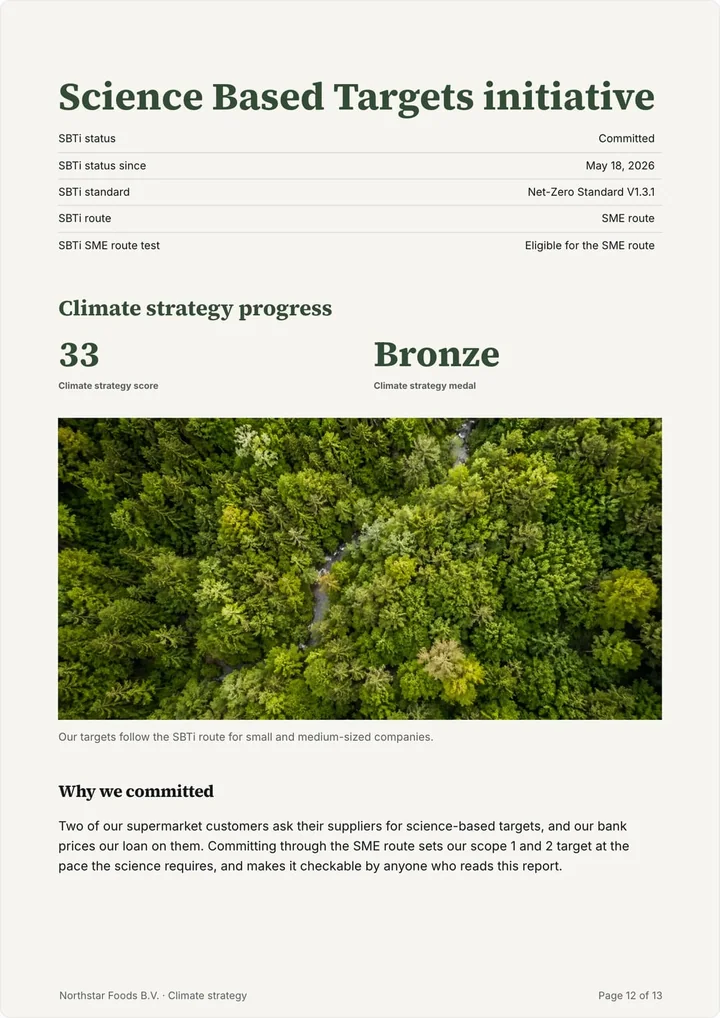
- Set a reduction target with a base year.
- Write down your method and emission factor sources.
- Keep the evidence, in case the customer’s assurance provider asks.
Sources and scope
- GOV.UK: UK Sustainability Reporting Standards
- FCA: PS26/19, aligning listed issuers’ sustainability disclosures with international standards
- GHG Protocol: Corporate Value Chain (Scope 3) Standard
These resources explain a preparation workflow. Check your selected standard and recipient requirements before sharing your report.
 Joost ThissenFounder