Greenwashing is making a product or company look better for the environment than it is. EU rules that apply from 27 September 2026 ban generic claims such as “eco-friendly” without proof of excellent performance, claims of climate neutrality based on offsets, self-made sustainability labels and whole-product claims based on one aspect. Net zero claims need a published plan that an independent expert checks. Specific, measured claims with evidence remain allowed.
What greenwashing is
Greenwashing is giving a false or exaggerated impression of how good a product or a company is for the environment. It is rarely an outright lie. More often it is a vague word such as “green” or “eco”, a claim about the whole product that is true for one part of it, offsets presented as reductions, or a label the company designed itself.
The EU rules that apply from 27 September 2026
Directive (EU) 2024/825 on empowering consumers for the green transition amends the EU rules on unfair commercial practices. Member states had to write it into national law by 27 March 2026, and the new rules apply from 27 September 2026. They cover what companies tell consumers, in advertising, on packaging, on websites and in social media. Claims between businesses fall under other rules, but many customers now apply the same test to their suppliers.
The directive adds practices that are banned in all circumstances, without the need to prove that a consumer was misled.
- Generic environmental claims such as “environmentally friendly”, “eco”, “green” or “climate friendly”, unless you can show recognised excellent environmental performance relevant to the claim.
- Claims about the whole product or the whole business when they concern only one aspect of it.
- Claims that a product has a neutral, reduced or positive effect on the climate because emissions were offset.
- Sustainability labels that are not based on a certification scheme or set up by a public authority.
- Presenting what the law requires of everyone as a special feature of your offer.
Net zero and other claims about the future
A claim about future environmental performance, such as “net zero by 2040”, is misleading under the new rules unless it is backed by clear, objective, publicly available and verifiable commitments. They must be set out in a detailed and realistic implementation plan with measurable, time-bound targets and the resources to reach them, and an independent expert must check progress regularly and make the findings available to consumers.
What happened to the Green Claims Directive
In 2023 the Commission proposed a second law, the Green Claims Directive, with detailed rules for substantiating and verifying explicit environmental claims before they are made. In June 2025 the Commission announced it intended to withdraw the proposal, and negotiations stopped. The 2024 directive does not depend on it and applies anyway.
Claims you can still make
Specific, measurable claims with evidence behind them remain allowed. “We cut our Scope 1 and 2 emissions by 18% between 2023 and 2025, calculated under the GHG Protocol” and “this box is made of 80% recycled cardboard” are claims a reader can check. If you buy carbon credits, say so separately from your reductions: you can say you financed a project, but not that your product or company is climate neutral because of it. Keep the calculation and the documents for every claim, because you may have to show them.
Doing it in Greener Ahead
Carbon accounting in Greener Ahead gives you the figures behind a claim: your footprint by scope and year, with the emission factor and source behind every tonne, compared with your base year. Offsets are kept apart from the footprint, so a reduction you report is a real reduction. It costs €1,495 per year with unlimited users, and you can try it free for 14 days without a card. Check the pricing page for current details.
Claims to drop and claims that hold up
Rewriting a vague claim usually means making it smaller and more precise.
| Instead of | Write something like | Evidence you need |
|---|---|---|
| Eco-friendly products | Our cleaning products carry the EU Ecolabel | The certificate |
| Climate-neutral company | We cut our emissions by 18% between 2023 and 2025, and separately financed a forestry project | Footprints for both years and the credit retirement records |
| Sustainable packaging | Our boxes are made of 80% recycled cardboard | Supplier specifications and purchase records |
| Net zero by 2035 | We aim for net zero by 2035; our plan, targets and the independent review are published here | The published plan and the reviewer’s findings |
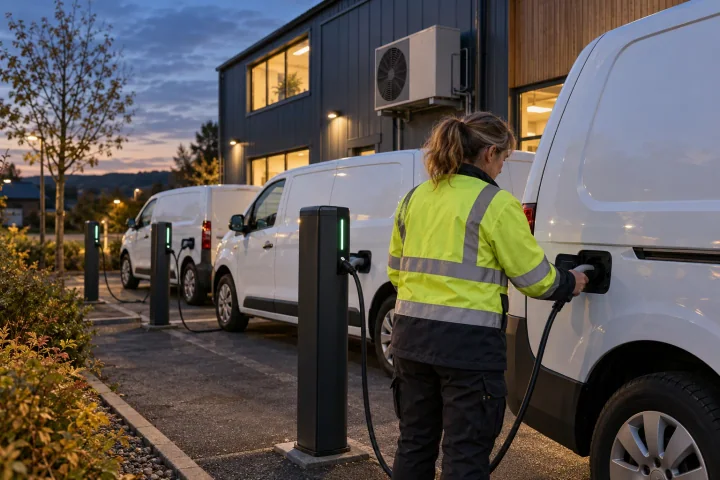
| Green delivery | City-centre deliveries are made with electric vans | Fleet list and route records |
Check every claim before you publish it
Five questions catch most problems.
- Is it specific: which product, which part, which period?
- Can you show the figure and how it was calculated?
- Does it rely on offsets? Then state the reductions and the offsets separately.
- Is the label you show certified by a third party or set up by a public authority?
- Is the benefit more than what the law already requires of everyone?
Sources and scope
- EUR-Lex: Directive (EU) 2024/825 on empowering consumers for the green transition
- European Commission: green claims
- GHG Protocol: Corporate Accounting and Reporting Standard
These resources explain a preparation workflow. Check your selected standard and recipient requirements before sharing your report.
 Joost ThissenFounder