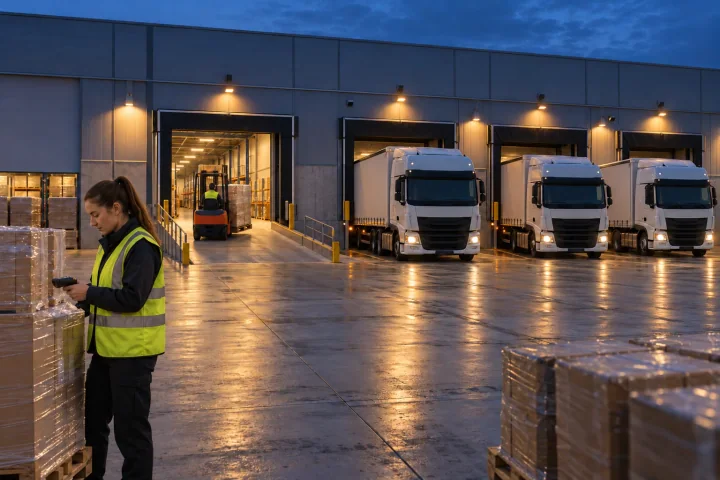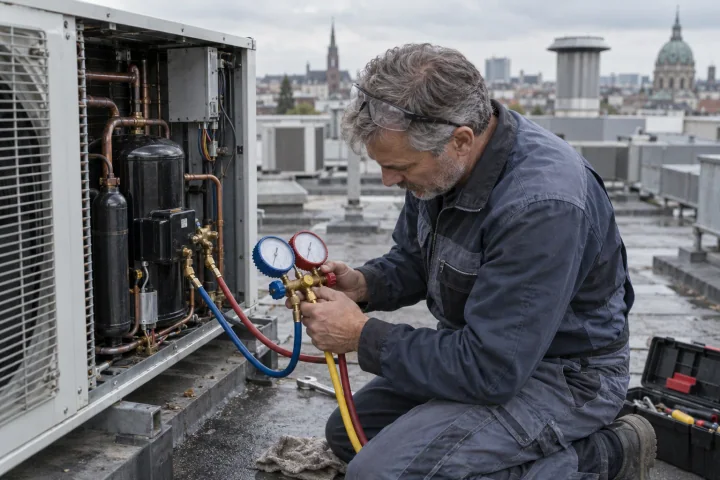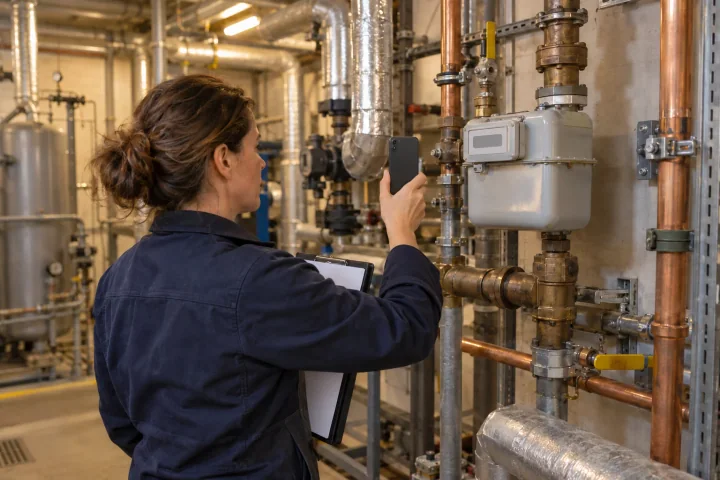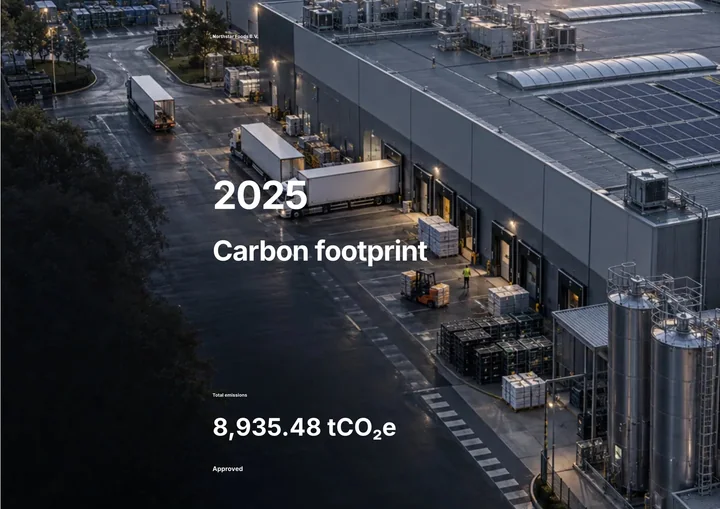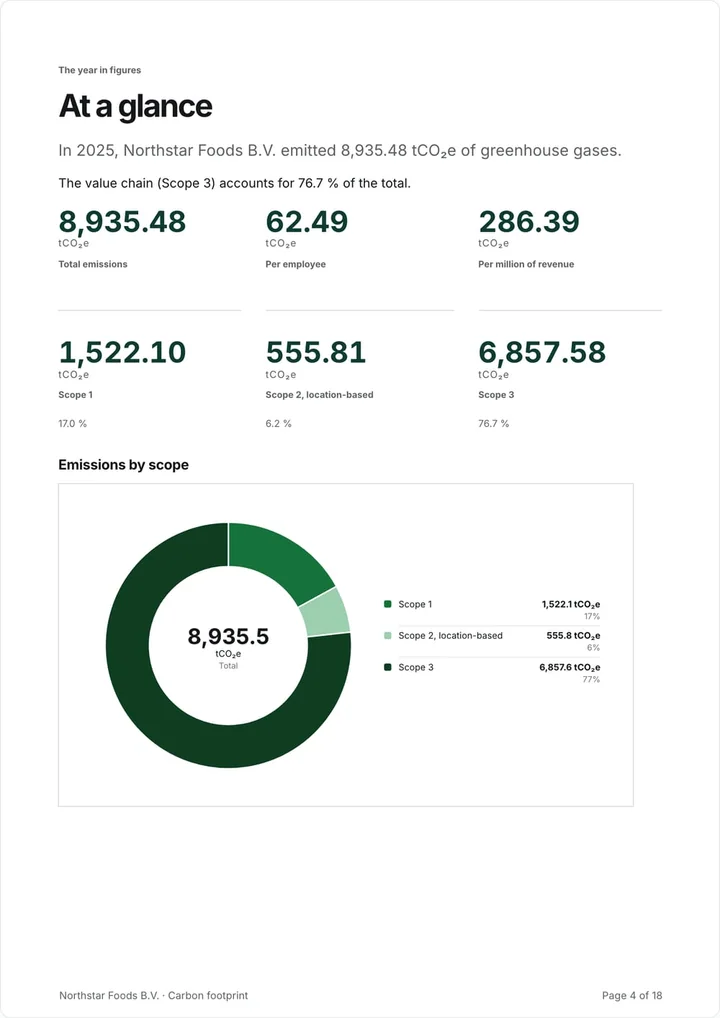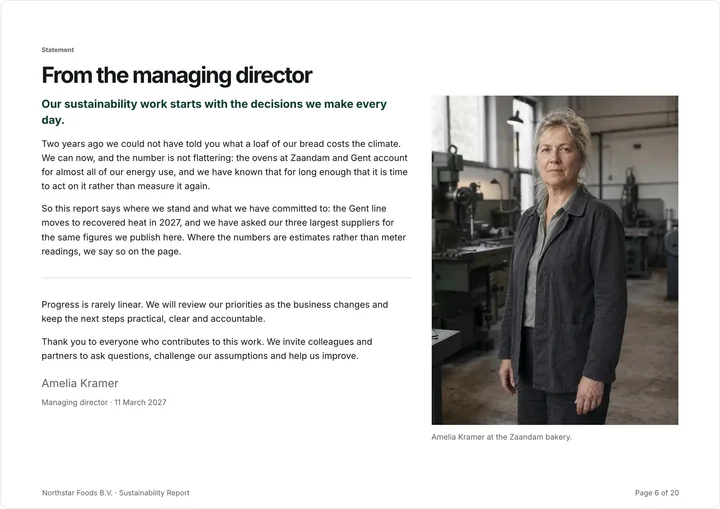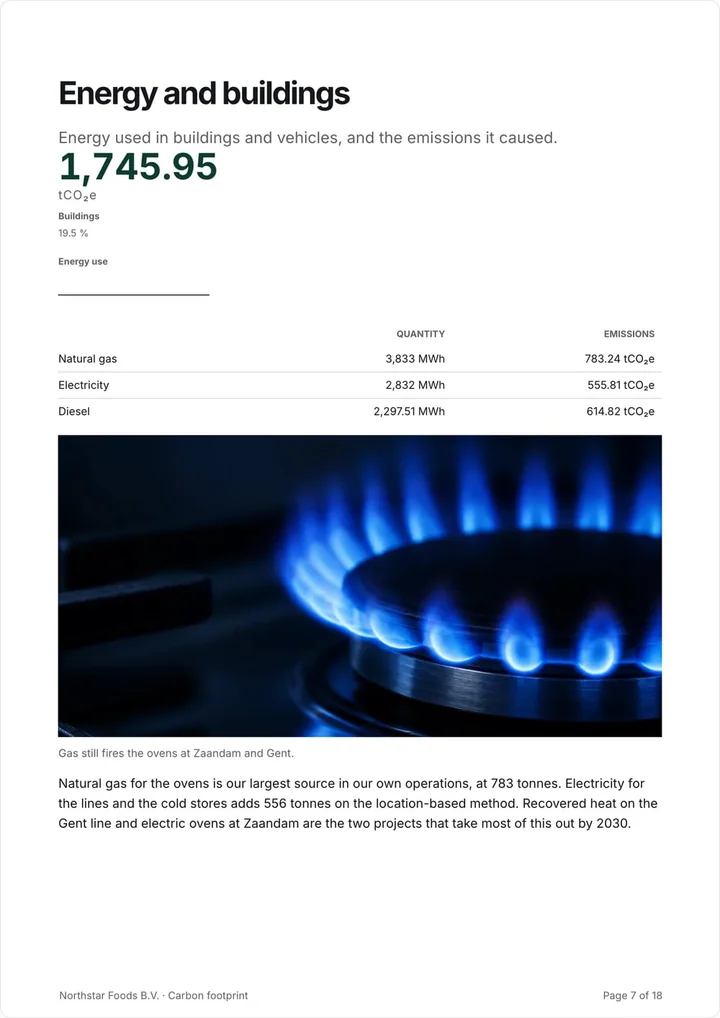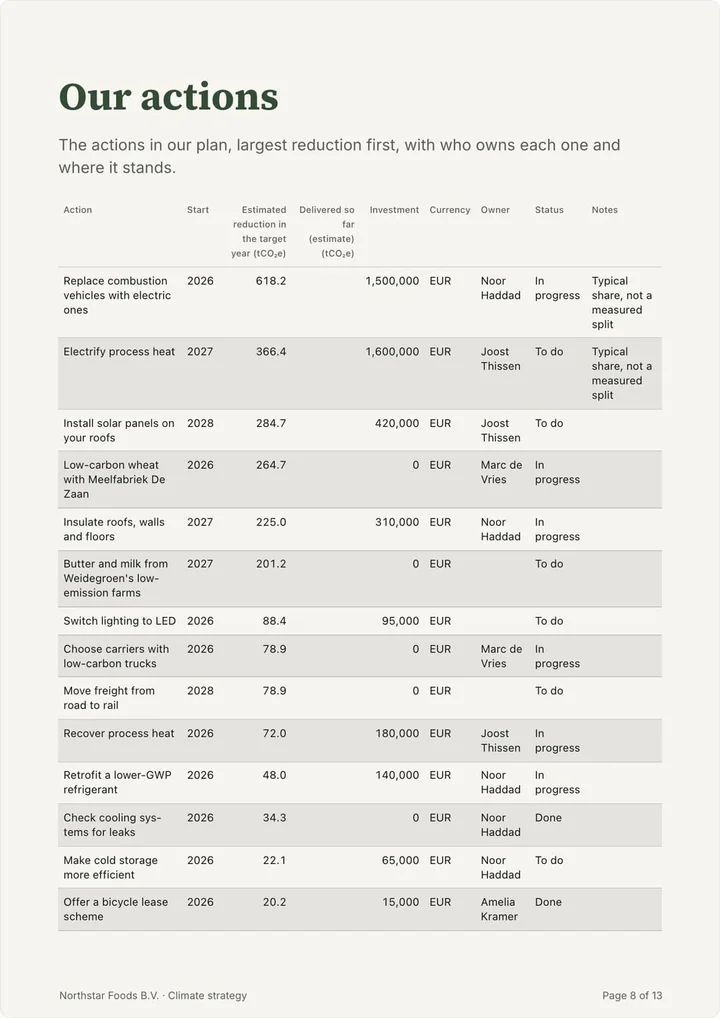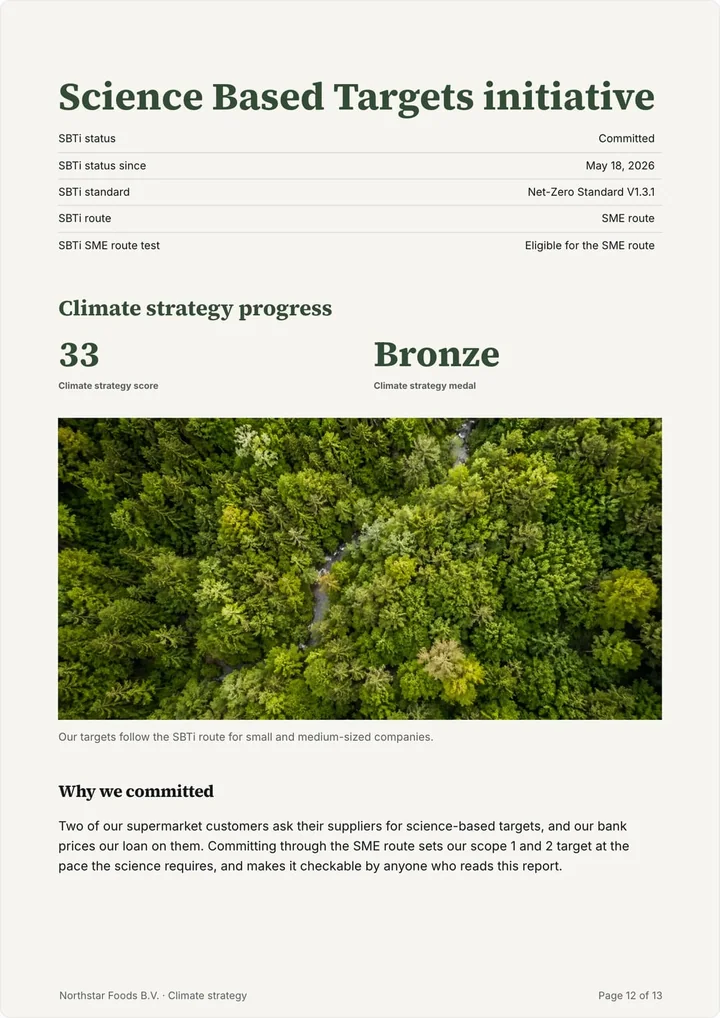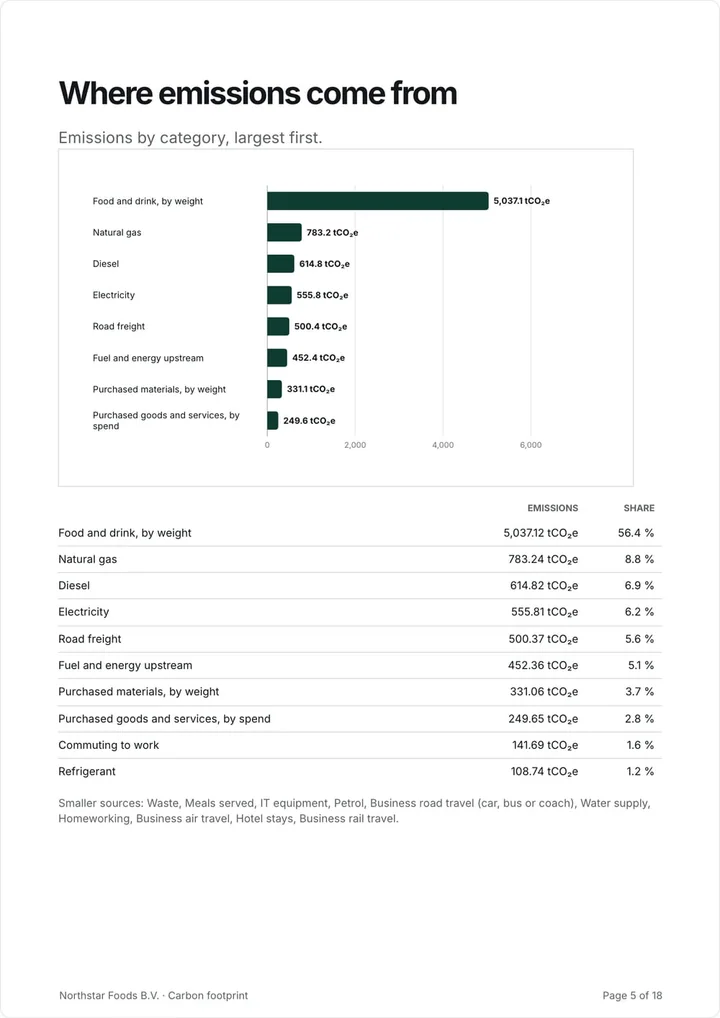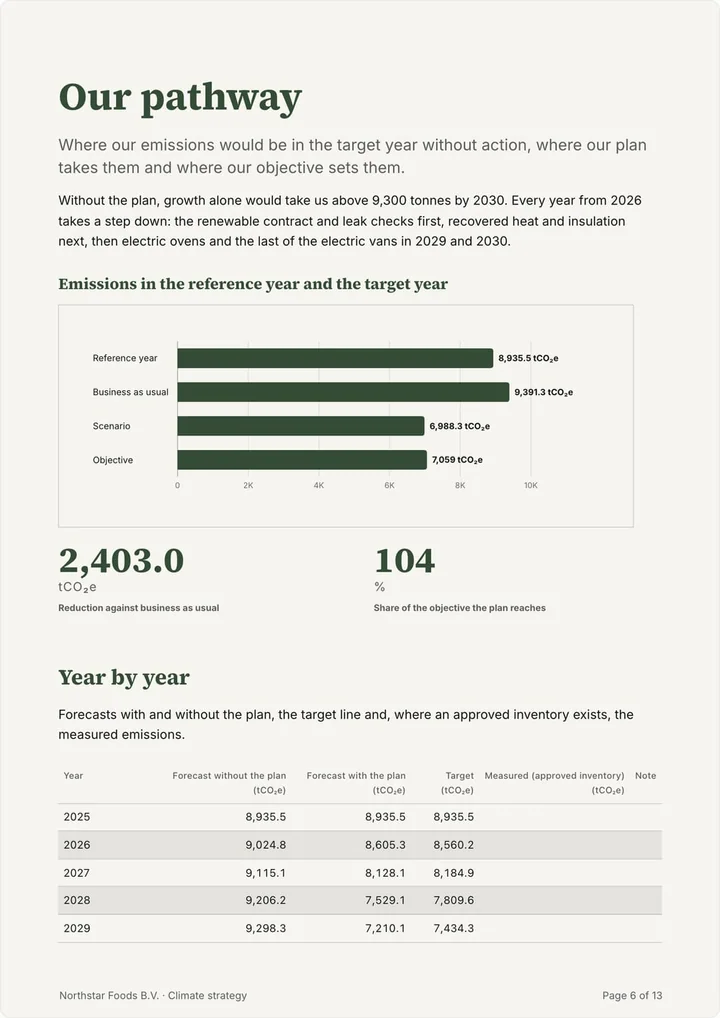
Scope 1 is the fuel you burn and the gases you release yourself, such as heating gas, vehicle diesel and refrigerant leaks. Scope 2 is the electricity, heat and cooling you buy, reported location-based and market-based. Scope 3 is every other emission in your value chain, in 15 categories from purchased goods to the use of what you sell, and is usually the largest part of the footprint.
Why emissions are split into scopes
The GHG Protocol splits a company’s greenhouse gas emissions into three scopes, so that every tonne is counted once and everyone uses the same groups. The split follows who controls the source. Scope 1 is what you burn or release yourself, Scope 2 is the energy you buy, and Scope 3 is everything else that happens in your value chain because of what you do.
One company’s Scope 1 and 2 are always part of another company’s Scope 3. The diesel your delivery van burns is your Scope 1 and your customer’s Scope 3. That overlap is why customers ask their suppliers for figures: they need them to calculate their own footprint.
Scope 1: your own fuels and processes
Scope 1 covers direct emissions from sources you own or control. For most companies that means natural gas or oil burned for heating, diesel and petrol in company vehicles, and refrigerant that leaks from air conditioning, heat pumps and cold storage. Manufacturers can also have process emissions, for example from chemical reactions, and farms have emissions from livestock and fertiliser.
You calculate Scope 1 from your own records: gas meter readings or invoices, fuel cards, and the kilograms of refrigerant topped up during maintenance.
Scope 2: the energy you buy
Scope 2 covers the electricity, heat, steam and cooling you buy from others. The emissions happen at the power plant or heating plant, but you cause them by using the energy.
Scope 2 is reported in two ways. The location-based figure uses the average emission factor of the grid where you use the electricity. The market-based figure uses what you contracted: a green electricity contract with guarantees of origin, or your supplier’s own fuel mix. Report both, because readers use them for different purposes, and many customers and target-setting schemes ask for both.
Scope 3: the rest of your value chain
Scope 3 covers all other indirect emissions, split into 15 categories: eight upstream, such as purchased goods and services, transport, waste, business travel and commuting, and seven downstream, such as the transport, use and end of life of the products you sell. For most companies Scope 3 is by far the largest part of the footprint, often several times Scope 1 and 2 together.
Scope 3 is calculated from your spend, quantities and supplier data, so it is less precise than Scope 1 and 2. Start with the categories that are large for your business and improve the data over time.
Which scopes you will be asked for
The EU voluntary standard (VSME) asks for Scope 1 and location-based Scope 2 in its Basic module; market-based Scope 2 and Scope 3 can be added where relevant. Banks usually ask for Scope 1 and 2 as well. Large customers increasingly ask for Scope 3, or for the share of your footprint that belongs to them. A complete footprint covers all three, so that you can answer each reader from the same figures.
Doing it in Greener Ahead
Carbon accounting in Greener Ahead calculates Scope 1, Scope 2 location-based and market-based, and all 15 Scope 3 categories from your invoices, meter readings and spend, with the emission factor and source behind every tonne. It costs €1,495 per year with unlimited users, and you can try it free for 14 days without a card. Check the pricing page for current details.
Everyday examples by scope
The same company has sources in all three scopes. The last column is the record you calculate from.
| Source | Scope | Data you need |
|---|---|---|
| Gas boiler for heating | Scope 1 | Gas in m³ or kWh from invoices or meter readings |
| Company cars and vans | Scope 1 | Litres of fuel from fuel cards |
| Refrigerant top-ups | Scope 1 | Kilograms refilled, from the maintenance log |
| Electricity for the office or plant | Scope 2 | kWh from invoices, and your contract or guarantees of origin |
| District heating | Scope 2 | GJ or kWh from invoices |
| Purchased materials and services | Scope 3 | Spend or quantity by category |
| Freight by carriers | Scope 3 | Tonne-kilometres or spend |
| Business travel and commuting | Scope 3 | Kilometres by mode, or a staff survey |
| Use of the products you sell | Scope 3 | Units sold and their energy use |
Sources that are easy to put in the wrong scope
These are the usual mistakes in a first footprint.
- Leased cars: Scope 1 if you control them, under the control approach most companies use.
- Electric company cars charged at the office: the electricity is Scope 2, not Scope 1.
- Fuel paid by employees and reimbursed for business trips: Scope 3 business travel, unless the car is a company car.
- Waste collected by a contractor: Scope 3, even when you pay the invoice.
- Electricity in a rented office included in the rent: still your Scope 2 if you use it; estimate it if there is no meter.
Sources and scope
- GHG Protocol: Corporate Accounting and Reporting Standard
- GHG Protocol: Scope 2 Guidance
- GHG Protocol: Corporate Value Chain (Scope 3) Standard
- European Commission: 2025 VSME recommendation and standard
These resources explain a preparation workflow. Check your selected standard and recipient requirements before sharing your report.
 Joost ThissenFounder