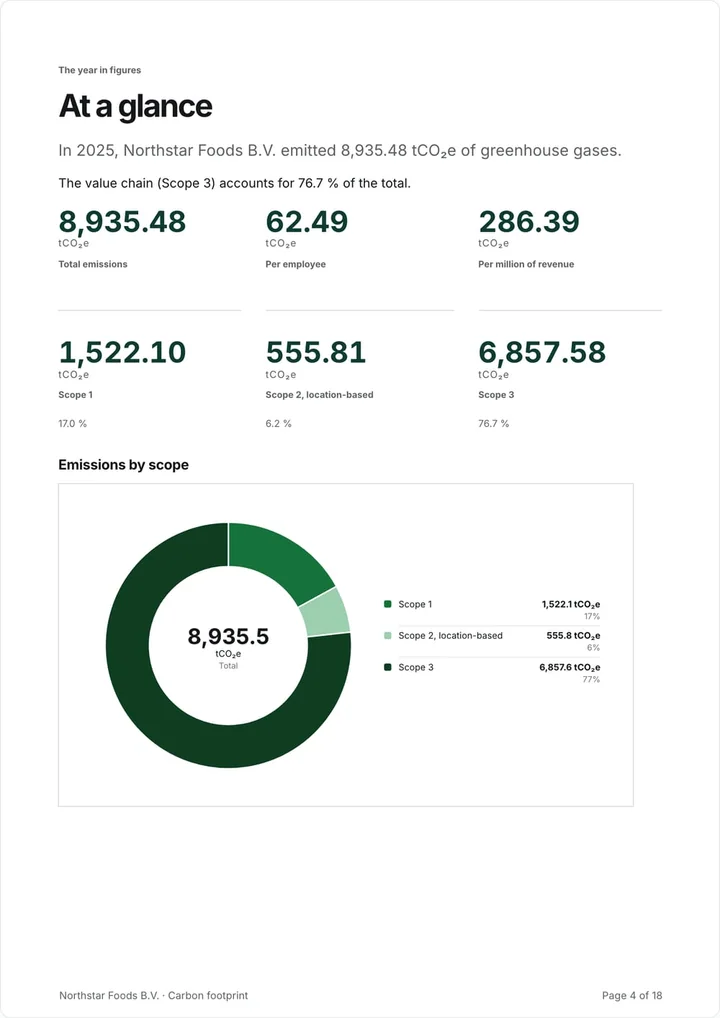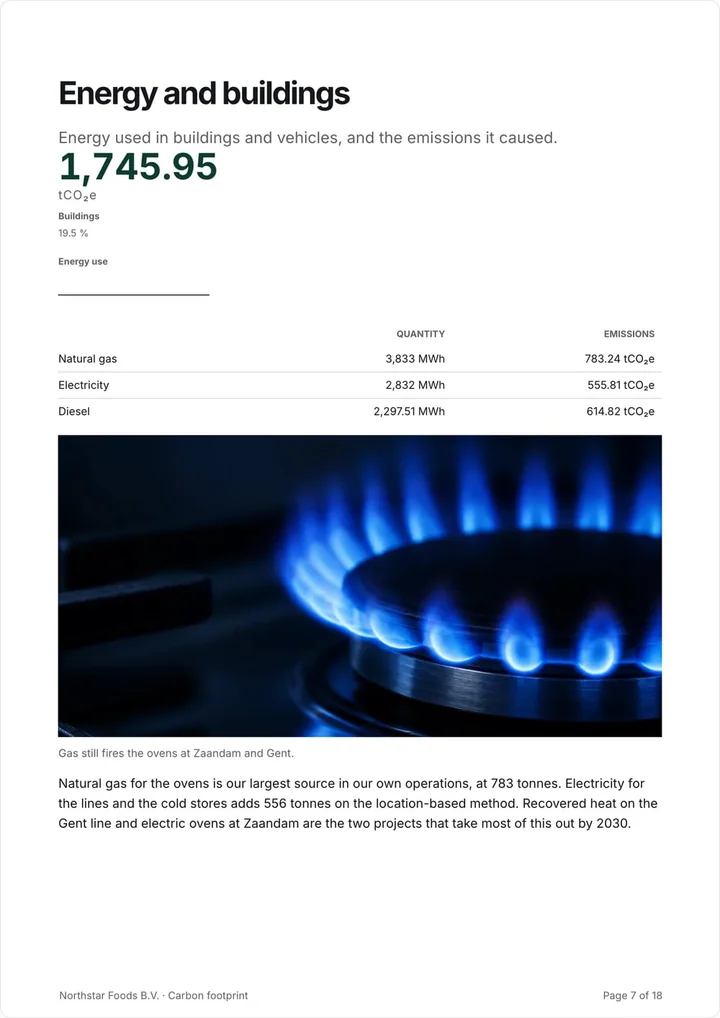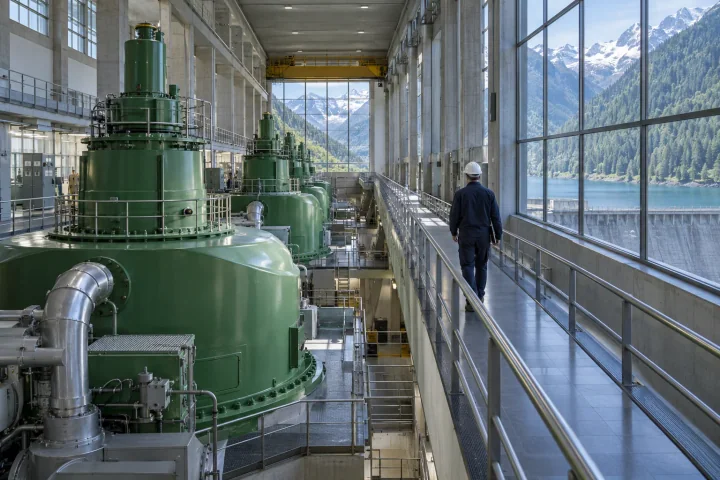
Scope 2 is the emissions from generating the electricity, heat, steam and cooling you buy. The location-based method uses the grid-average emission factor where you consume; the market-based method uses the emissions of the electricity you contracted, through guarantees of origin, power purchase agreements or supplier factors, and the residual mix for the rest. The GHG Protocol asks for both figures where such contracts exist.
What Scope 2 covers
Scope 2 is the indirect emissions from generating the electricity, steam, heat and cooling a company buys and uses. The emissions happen at the power plant or the heating plant, not on your site, but they are caused by your consumption. For offices, shops and many service companies, Scope 2 is the largest part of their Scope 1 and 2 emissions.
Two methods, two figures
The GHG Protocol Scope 2 Guidance of 2015 introduced two ways to calculate Scope 2. The location-based method uses the average emission intensity of the grid where the electricity is consumed. It shows the emissions of the system you draw power from, whatever contract you have.
The market-based method uses the emissions of the electricity you chose through contracts: guarantees of origin or other energy attribute certificates, power purchase agreements, or your supplier’s own emission factor. Consumption not covered by such instruments gets the residual mix, the emission factor of the grid after the renewable attributes sold to others have been taken out. Companies that operate where such contracts exist must report both figures.
Guarantees of origin and green tariffs
In the EU, a guarantee of origin is an electronic certificate showing that one megawatt hour was produced from renewable sources. When your supplier sells you a green tariff, it cancels guarantees of origin for your consumption. In the market-based method, that electricity gets the emission factor of its source, which is zero for wind and solar.
Without guarantees of origin or a supplier-specific factor, you use the residual mix. Because the renewable attributes have been sold to others, the residual mix is usually higher than the grid average. So a company on a standard tariff often has a higher market-based figure than location-based figure.
Quality criteria for contracts and certificates
The Scope 2 Guidance only accepts an instrument in the market-based method if it meets quality criteria. In short:
- It conveys the emission rate of the electricity it represents.
- It is the only instrument claiming that electricity, and it is cancelled or redeemed on your behalf.
- It is issued and cancelled as close as possible to the period of consumption.
- It comes from the same market as your consumption, for example within the EU’s certificate system for European sites.
Which figure your readers want
The EU voluntary standard (VSME) asks for location-based Scope 2 in its Basic module. Large-company reporting standards, CDP and most target-setting methods ask for both, and targets are often set on the market-based figure. Report both when you can, label each clearly, and use the same method from year to year.
What may change
The GHG Protocol is revising its Scope 2 Guidance. A public consultation that closed on 31 January 2026 proposed stricter rules for the market-based method, such as matching certificates to consumption by the hour and requiring the electricity to be deliverable to the grid where it is used. A second consultation is planned before a final standard, expected in 2027. Until then, the 2015 guidance applies.
Doing it in Greener Ahead
Carbon accounting in Greener Ahead calculates Scope 2 with both methods from your electricity, heat and cooling invoices, with the emission factor and source behind every tonne and your contracts and certificates as evidence beside them. It costs €1,495 per year with unlimited users, and you can try it free for 14 days without a card. Check the pricing page for current details.
Location-based and market-based compared
The two methods answer different questions.
| Location-based | Market-based | |
|---|---|---|
| Shows | The emissions of the grid you draw power from | The emissions of the electricity you chose to buy |
| Emission factor | Grid average for the country or region | Certificate, contract or supplier factor; residual mix for the rest |
| Effect of a green tariff with guarantees of origin | None | Lowers the figure, to zero for wind and solar |
| Asked for by | The GHG Protocol, the VSME Basic module, most questionnaires | The GHG Protocol where contracts exist, CDP, most target methods |
| Useful for | Comparing sites and showing energy savings | Showing the effect of your purchasing choices |
A worked example
A fictional office uses 100,000 kWh of electricity a year. With an illustrative grid-average factor of 0.30 kg CO₂e per kWh, its location-based Scope 2 is 30 tonnes. If it buys a wind tariff backed by guarantees of origin cancelled for its consumption, its market-based Scope 2 is close to zero. On a standard tariff without guarantees, with an illustrative residual mix of 0.45 kg per kWh, its market-based Scope 2 is 45 tonnes, higher than the location-based figure.
Saving 20,000 kWh lowers both figures. Switching tariff lowers only the market-based one. That is why readers want to see both.
Sources and scope
- GHG Protocol: Scope 2 Guidance
- GHG Protocol: Scope 2 public consultation (October 2025)
- EUR-Lex: Directive (EU) 2018/2001 on renewable energy
These resources explain a preparation workflow. Check your selected standard and recipient requirements before sharing your report.
 Joost ThissenFounder