SBTi targets, checked before you submit.

Climate strategy decides your route, sets the minimum on your own footprint and checks every criterion, so what you submit holds up. Only the SBTi validates.

Get started. It’s FREE!14 days. Full product.
No demo call needed.
Carbon accounting €1,495 a year.
Climate strategy €995 on top.

The SBTi's criteria, checked

Every criterion, checked before the SBTi checks it.

Your route's criteria in one place: what is met, what is not known yet and what fails, each with its clause and the step that settles it.

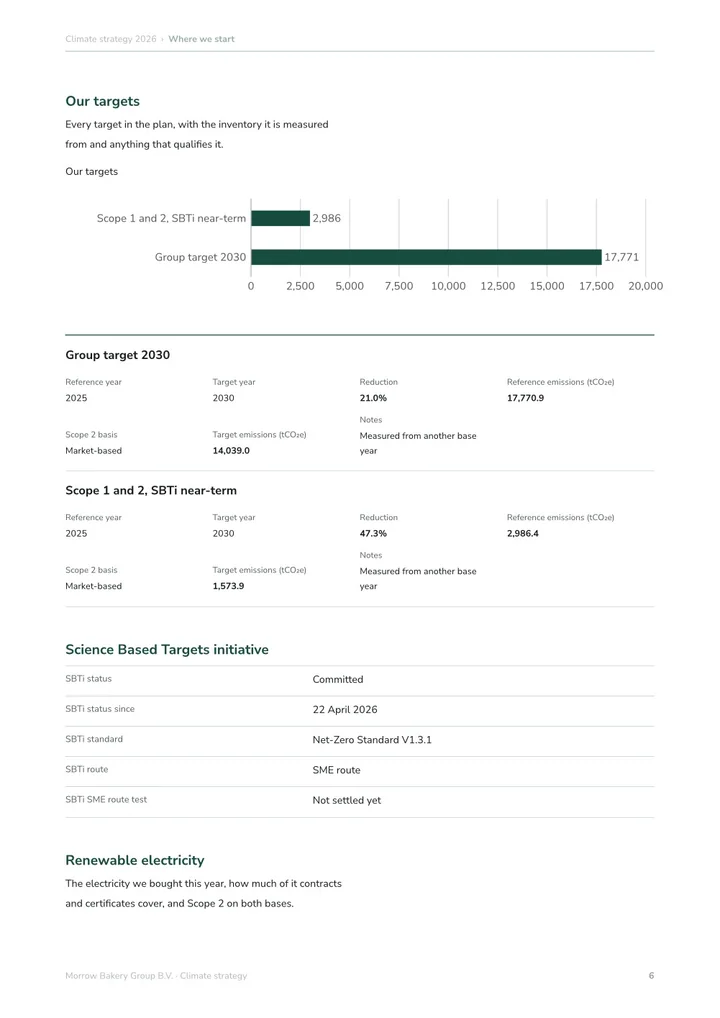
Your targets against the SBTi's minimum.

Each target you submit beside the minimum for its scopes, so a target that falls short shows by how much.

A target that comes with a plan.

Actions priced by what they cost and save, so the cut you submit has a route to it.

What the SBTi asks, and where Greener Ahead does the work.

Your emissions and your size decide the route; the figures and the checks are ready before you submit.

  1. 10,000 t

    Which route?

    Example company2,987 t
    SME routeCorporate route
    • Your route, decided on your figures
    • You fill in your company profile
  2. 4.2%

    What you set

    Its target−21% by 2030
    20252030
    • Each target against the minimum
    • You choose your target
  3. Every criterion

    Before you submit

    Its checks14 criteria
    Each with its clause
    • A workbook with every check and source
    • You submit and pay the SBTi's fee
  4. Every year

    Once validated

    Its review2032
    Validated 2027Review
    • Progress measured every year
    • You announce your target

When the rules change

31 Jan 2027Version 2.0 takes effect
31 Jan 2028The route for small companies closes

How it works

  1. Footprint

    Approve your footprint.

    Carbon accounting calculates Scope 1, 2 and 3.

  2. Route

    See which route is yours.

    The SBTi's tests, run on your own figures.

  3. Target

    Add a target at the minimum.

    Recommended on your own base year.

  4. Submit

    Submit with nothing left open.

    Every criterion checked, with its clause.

From the route to the years after validation

Your route, decided on your own figures.

The SBTi's tests run on your company profile and footprint: your emissions and each size test against its limit, the exclusions that hold, and the route they decide.

The target the SBTi would set.

From your base-year inventory, the near-term targets your route asks for, one click from being yours.

After validation, every date set.

When to announce your targets, report every year and review them, with the rules that apply from 2027.

Meet Sprout, the sustainability expert who does the work

Sprout

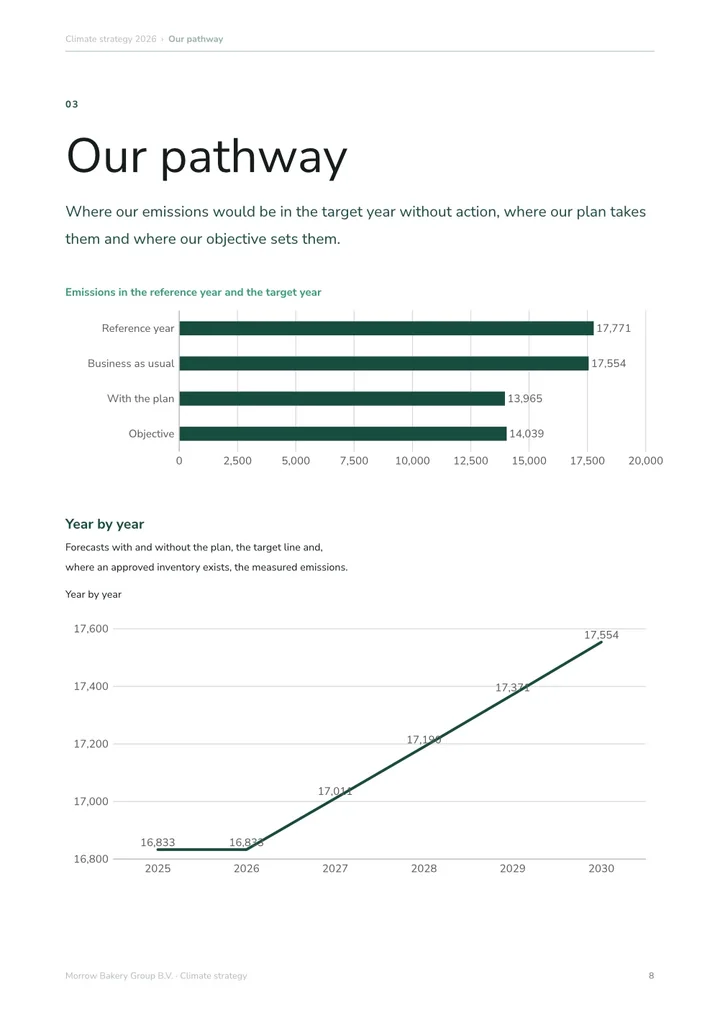
Will our plan reach our 2030 target?

Not yet. With your planned actions, 2030 lands at 5,935 tonnes, 425 tonnes above your 42% target.

202420272030+425
ActualYour planTarget
Tonnes CO₂e, base year 2024

Connect with MCP. Work in Claude, ChatGPT and more.

Add app.greenerahead.com/mcp to any MCP client and sign in.

Microsoft CopilotCursorVS Code
Fleet diesel for March
Reply to Claude…Opus 5.5

Better software. Best price. No compromises.

Trial
€014 days
Get started
What you get:
  • Every module you can buy, in full
  • Read only when the trial ends, not deleted

Prices in EUR, excluding VAT. Plans and SSO are billed annually.

Frequently asked questions

Find answers to your questions right here, and contact us if you cannot find what you are looking for.

Which SBTi route applies to us?

The route for small companies is open if your Scope 1 and location-based Scope 2 emissions are under 10,000 tonnes, you are not a financial institution or an oil and gas company, no sector method applies and no parent puts you on the corporate route, and three of these hold: fewer than 250 employees, turnover under €50 million, total assets under €25 million, not in a mandatory FLAG sector. Every other company takes the corporate route. Climate strategy reads the facts from your footprint and company profile and says which one decides.

What target do we have to set?

On the route for small companies, an absolute cut in Scope 1 and 2 of at least 4.2% for every year between your base year and your target year; Scope 3 needs no target, but you commit to measuring and reducing it. On the corporate route, the cut the SBTi's Corporate Near-Term Tool sets for Scope 1 and 2, and a Scope 3 target as well when Scope 3 is 40% or more of your total. On both, the base year is 2015 or later and a complete year, and the target year lies 5 to 10 years ahead, or is 2030.

Our customer asks for an SBTi target. What can we show while we wait?

Validation takes time, so some large customers accept a target that has been submitted, or a commitment with a plan, until the SBTi approves it. Check what yours accepts. Climate strategy gives you the target, the checks behind it and the plan that reaches it, ready to share.

What changes with version 2.0?

The SBTi's Corporate Net-Zero Standard V2.0 takes effect on 31 January 2027 and replaces today's routes with Category A and B. The route for small companies stays open to new submissions until 31 January 2028. Climate strategy shows how your targets read under the 2.0 rules today, so you can decide when to submit.

How do we submit, and how long does it take?

You submit through the SBTi's validation portal and pay its fee. For the route for small companies, the SBTi says publication typically follows around 60 business days after you submit. Climate strategy prepares what the submission asks for and keeps the date you plan to submit on.

What does the SBTi charge?

For a near-term target on the route for small companies, $1,250 below €5 million turnover and $2,000 from €5 million, in the SBTi's price list effective 5 January 2026; the corporate route has its own prices in the same list. The fee is paid to the SBTi and is not part of Greener Ahead's price.