Sunday 11 October 2026 is the date in the recast Energy Efficiency Directive by which every company using more than 10 TJ of energy a year, about 2.78 GWh, must have carried out its first energy audit. A directive does not bind companies directly, though. The date that applies to you comes from your national law, and in most large EU markets that date is not 11 October.
France has the directive's dates in force. Germany, the Netherlands and Poland are still changing their laws. On 1 October the Commission sent Italy and Spain, together with Greece and Malta, a reasoned opinion for not fully transposing the directive.
What the directive says
- Energy use decides, not company size. The test is average annual energy consumption over the previous three years, all energy carriers together. The old rule, which covered large companies by headcount and turnover, goes.
- Above 10 TJ: a first energy audit by 11 October 2026, then at least every four years, unless the company runs an energy management system. Companies that already audit keep their four-year cycle.
- Above 85 TJ, about 23.6 GWh: a certified energy management system by 11 October 2027.
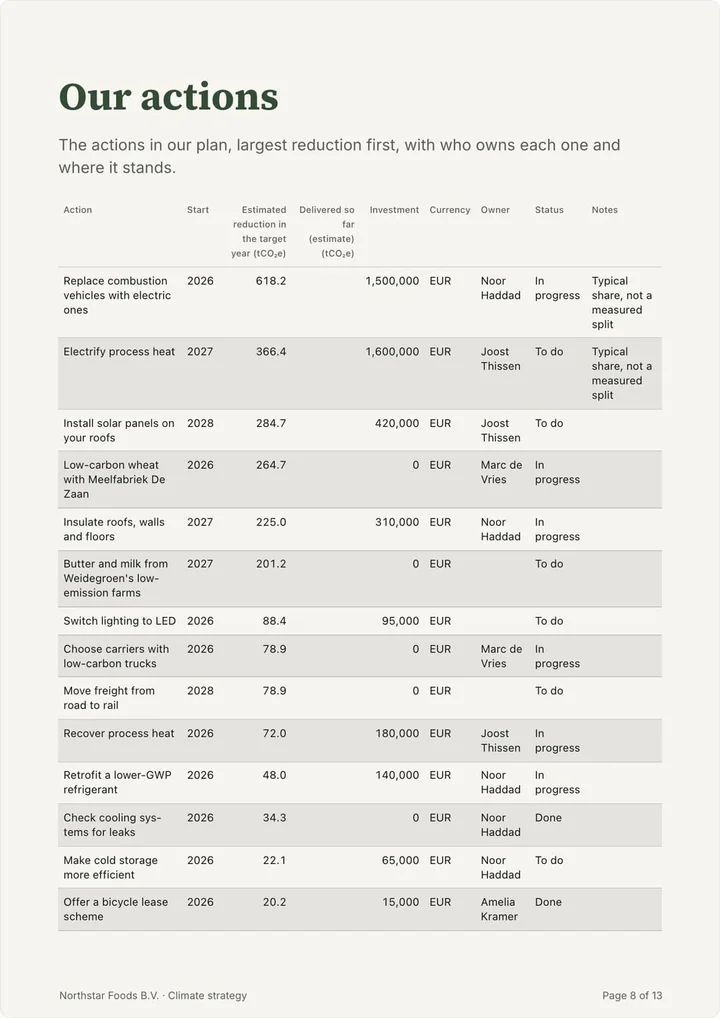
- An action plan: the company turns the audit recommendations into a concrete plan for management. The plan and the rate at which recommendations are implemented are published in the annual report.
Member States had to transpose these rules by 11 October 2025.
Where each country stands on 5 October 2026
| Country | Audit threshold | First audit for newly covered companies | Status |
|---|---|---|---|
| France | 2.75 GWh | 11 October 2026 | In force since 1 January 2026; a certified energy management system above 23.6 GWh by 11 October 2027 |
| Germany | 2.77 GWh in the bill | 12 months after becoming covered, and not before 12 months after the law takes effect | Government bill in the Bundestag since 16 September; until it passes, the current duty for large companies applies |
| Netherlands | 10 TJ | 1 April 2028 | New rules expected after the first quarter of 2027; the current audit duty for large companies continues; proof of an energy management system due 11 October 2027 |
| Poland | 2.78 GWh in the draft | Set by the final act | Draft act UC77 still in government review; the current audit duty for large companies applies |
| Italy | Not yet set | Not yet set | Reasoned opinion from the Commission on 1 October 2026 |
| Spain | Not yet set | Not yet set | Reasoned opinion from the Commission on 1 October 2026 |
The German bill also raises the threshold for an energy management system from 7.5 GWh to 23.6 GWh. The government estimates that about 7,868 companies would no longer need one, and that about 18,290 companies would have to carry out energy audits.
Who is newly covered
Because the test is now energy use, the group of companies changes. A manufacturer with 120 staff and a gas-fired process can be covered for the first time. A large company that mostly runs offices can drop out once its country's new law applies.
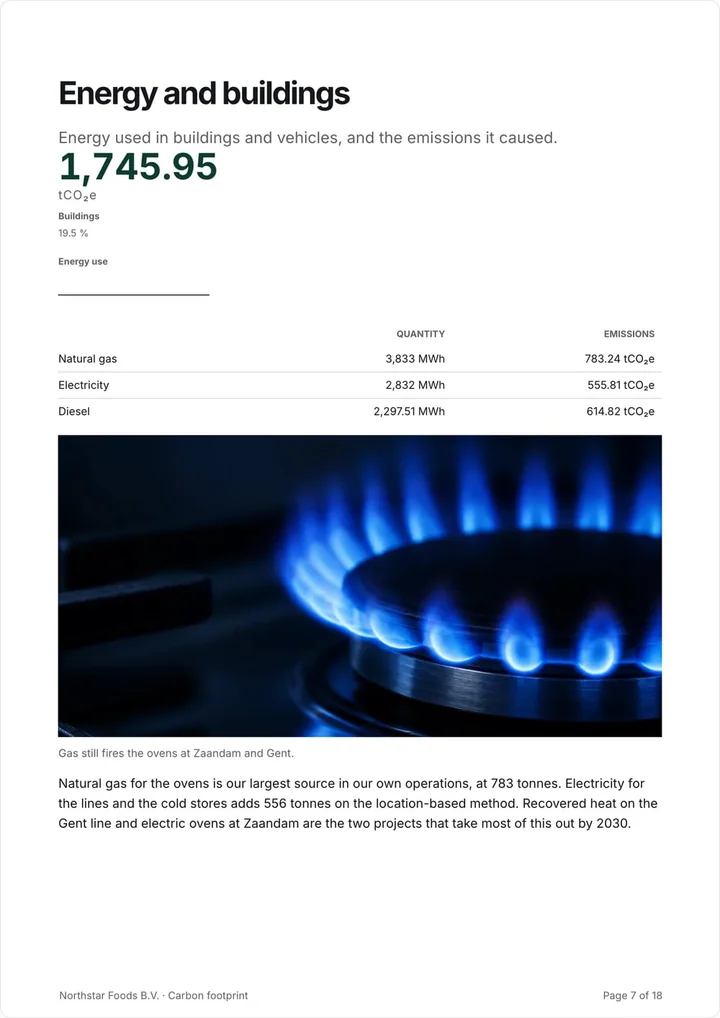
10 TJ is 2,778 MWh. Count all final energy from a full year of invoices: electricity and gas in kWh, heating oil and vehicle fuel converted to kWh, district heat. A litre of diesel holds about 10 kWh. A company that uses 1.1 GWh of electricity, 1.3 GWh of gas and 50,000 litres of diesel uses about 2.9 GWh, just above the threshold. The test uses the average of three years, so one unusual year does not decide it.
What to do now
- Work out your three-year average in kWh across all energy carriers, from invoices and meter readings.
- Check your national law, not the directive. In France, a newly covered company above 2.75 GWh needs its first audit done by 11 October. In Germany, the Netherlands and Poland, newly covered companies have more time.
- Use that time. An audit needs reliable energy data, ideally for a full year, and auditors get busy close to deadlines.
- Plan ahead above 23.6 GWh. A certified energy management system by October 2027 takes more than a year to set up.
Our guide to the EU energy audit obligation explains what an audit covers and how to count energy use, and the guide to ISO 50001 covers the alternative. Greener Ahead does not carry out energy audits. Carbon accounting in Greener Ahead records energy use per site and energy carrier in kWh, which shows where you stand against the thresholds, and turns it into Scope 1 and 2 emissions.
 Joost Thissen