There is no single best ESG reporting software: the right one depends on who does the work, which standards you report under and how far each figure must be traced. Tools fall into five kinds: spreadsheets, a consultant with a tool, carbon accounting tools, enterprise ESG suites and modular reporting platforms. Shortlist by kind, then test each tool with your own bill, supplier invoice and customer question, and check for named emission factors, an audit trail, Scope 3 depth, the standard version, the published price and the trial terms.
What does ESG reporting software do?
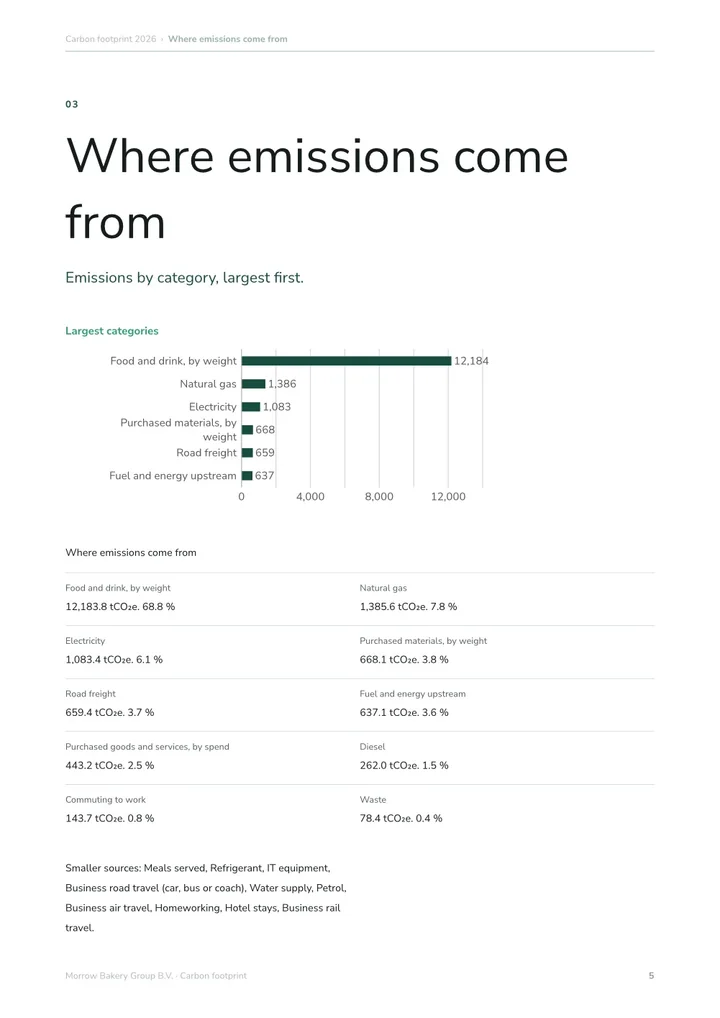
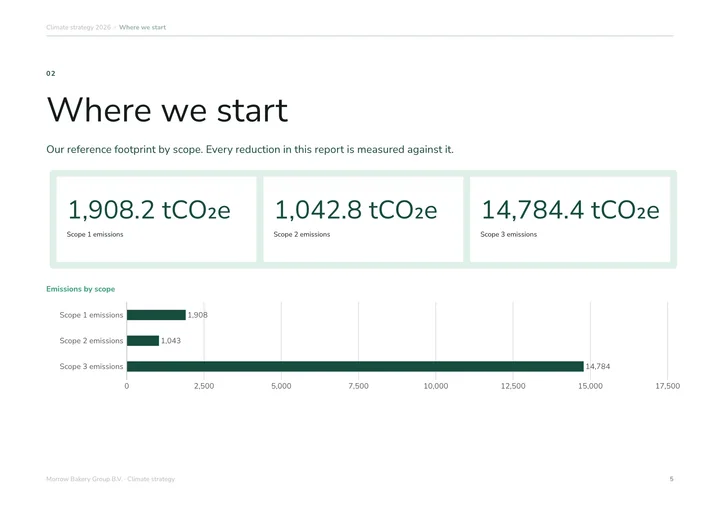
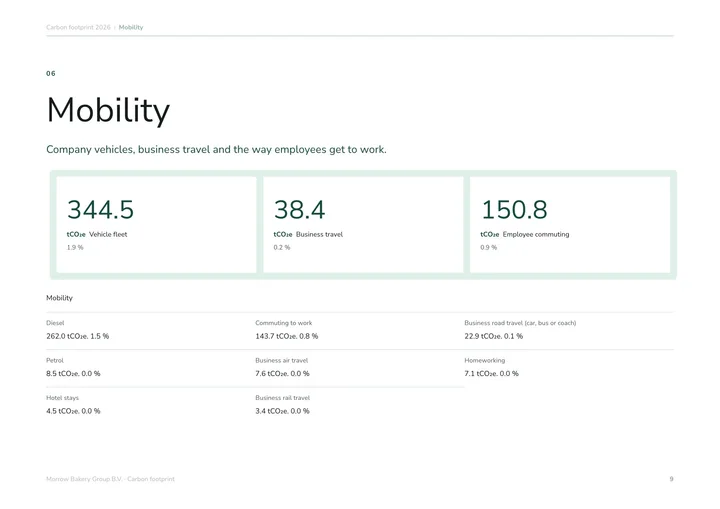
ESG reporting software collects a company’s sustainability data, calculates figures such as the carbon footprint, and turns them into a report for a standard or a reader: the VSME for customers and banks, the ESRS under the CSRD, a French BEGES or a supplier questionnaire. Carbon accounting software does the calculation part: Scope 1, 2 and 3 emissions from your energy, fuel and purchases.
Most comparison lists online are written by a vendor that ranks itself first. We make Greener Ahead too, so this guide compares kinds of tool rather than brands, and gives you questions that work on any of them, ours included.
The five kinds of tool
The market falls into five groups. They differ less in features than in who does the work, how prices are set and how far a figure can be traced.
- Spreadsheets and templates: free and flexible, and fine for a first footprint kept by one person. They have no factor updates, version history or evidence links of their own, so the work grows with every site, person and year.
- A consultant with their own tool: you hand over data and receive a report. This helps when you lack the time or know-how in the first year, but the method and the files often stay with the consultant, so the second year starts from the same place.
- Carbon accounting tools: built for the footprint, often with strong Scope 3 coverage and factor libraries. They usually stop at the emissions, so a VSME or ESRS report needs another tool or a manual step.
- Enterprise ESG and EHS suites: broad platforms for large groups, often grown out of health, safety and environmental management. They are powerful and configurable, usually with prices on request, a setup project and licences per module or per user.
- Modular reporting platforms for mid-sized companies: the carbon calculation and one or more reporting standards in one place, often with published prices. Check how deep each module goes, because breadth can come at the cost of depth.
What to check, whatever you choose
These checks separate a tool you can defend in front of an assurer, a customer or a bank from one that only produces a good-looking report.
- Named emission factors: which datasets, which edition, and whether every line shows its factor and source. A footprint built on unnamed or averaged factors is hard to defend.
- An audit trail: whether you can go from a reported tonne to the bill or record behind it, and see who changed what and when.
- Scope 3 depth: which of the 15 categories are calculated from your own records, which are estimated from spend, and which you have to enter yourself.
- Standards and versions: which standards it covers, which version, such as the revised ESRS of 2026 or the 2023 version, and how quickly it followed the last change.
- Data intake: whether it reads bills and invoices for you, connects to your accounting or payroll system, or only takes uploads in its own format.
- Assurance: whether your assurer can have their own access, and whether the evidence sits beside each figure.
- Price: a published annual price or a quote, charges per user or per entity, setup fees, and what a second standard costs.
- Trial and exit: whether you can try it with your own data, whether a card is needed, and whether you can export everything if you leave.
- AI features: whether the tool shows you what it proposes and lets you approve or undo it, and whether every figure stays traceable to a record.
Test it on a real task
A demo shows the best path; a trial with your own data shows the real one. Take one energy bill, one supplier invoice and one question from a customer questionnaire, and do the same three tasks in each tool on your shortlist. Time each one, note where you got stuck, and check that you can trace the result back to the document.
Record what you see in the worksheet on this page. A capability you could not find in the trial counts as missing until the vendor shows it to you.
When a spreadsheet is still enough
If one person reports one site once a year, nobody asks for evidence and the reader is a single customer, a careful workbook is fine. Software starts to pay off when several people enter data, when an assurer or a bank wants to see the source of a figure, when factor datasets publish new editions, or when the same data has to serve several standards.
Where Greener Ahead fits
Greener Ahead is a modular reporting platform. Carbon accounting calculates Scope 1, 2 and 3 under the GHG Protocol with factors from 22 published datasets, including the UK government’s DESNZ factors, ADEME, Ember and CEDA by Watershed, and every line shows its factor, source and edition. Nine Scope 3 categories are calculated from your records; the other six come in from a study you add. Bills are read for you, and Moneybird, Odoo, Nmbrs, Google Drive, OneDrive and SharePoint can be connected.
Voluntary Sustainability Reporting (VSME) costs €995 a year, Carbon accounting €1,495, Climate strategy €995 on top and CSRD reporting €4,995, with bundles from €2,995, all excluding VAT, with unlimited users and no setup fee. You can try it free for 14 days without a card; after the trial your workspace becomes read-only and you can still export what you prepared. Put it through the same tests as the others.
The five kinds of tool side by side
Typical patterns, not rules: tools within each group differ, so check every one on your shortlist.
| Kind of tool | Good for | Factors and audit trail | Price and setup | Watch out for |
|---|---|---|---|---|
| Spreadsheet or template | A first footprint kept by one person | Whatever you enter by hand, with no history | Free, apart from your time | Errors and versions multiply with each site, person and year |
| Consultant with a tool | A first year without the time or know-how in house | Depends on the consultant; ask for the files | Day rates or a fixed project fee | The method and data may stay with the consultant |
| Carbon accounting tool | A detailed footprint, including Scope 3 | Usually strong factor libraries | Annual licence, sometimes on request | A VSME or ESRS report often needs another tool |
| Enterprise ESG or EHS suite | Large groups with many sites and frameworks | Configurable and often deep | Usually on request, with a setup project | Cost and time to configure for a mid-sized company |
| Modular reporting platform | Mid-sized companies reporting to customers, banks or under the CSRD | Varies; ask for the named sources | Often published, per module | How deep each module goes |
Questions to ask in a demo
Ask each vendor to show rather than tell, with your own data where possible.
| Question | A good answer shows |
|---|---|
| Which emission factor does this line use? | The dataset, its edition and the factor, on the line itself |
| Where does this tonne come from? | The way from the total to the record and the document behind it |
| Who changed this figure, and when? | A log with the person, the date and the old and new value |
| Which Scope 3 categories do you calculate? | Which come from records, which from spend and which you enter |
| Which version of the standard is this? | The exact version, such as the revised ESRS of 2026, and when it changed |
| How does our data get in? | Bills read for you, connectors to your systems, or a template upload |
| Can our assurer see the evidence? | Their own access, with the evidence beside each figure |
| What will we pay in the second year? | One total for your users, entities and modules |
| What happens if we stop? | A full export of figures and evidence in open formats |
Sources and scope
- GHG Protocol: Corporate Value Chain (Scope 3) Standard
- EFRAG: Voluntary Sustainability Reporting Standard for non-listed SMEs (VSME)
- EUR-Lex: Commission Delegated Regulation (EU) 2026/1563 amending the ESRS
These resources explain a preparation workflow. Check your selected standard and recipient requirements before sharing your report.
 Joost ThissenFounder