Under section 54 of the Modern Slavery Act 2015, every organisation that carries on business in the UK with turnover of £36 million or more must publish a statement each financial year on the steps it took to prevent slavery and human trafficking in its business and supply chains. The board approves it, a director signs it, and it goes on the website with a homepage link. A bill introduced in June 2026 would make six content areas, the registry and a six-month deadline mandatory.
Who must publish one
Section 54 of the Modern Slavery Act 2015 requires every commercial organisation that supplies goods or services and carries on business in the UK, with a total turnover of £36 million or more, to publish a slavery and human trafficking statement for each financial year. Turnover includes that of subsidiaries. Organisations based abroad are covered if they carry on business in the UK. A parent can publish one group statement covering its subsidiaries in scope.
What the law requires
The statement sets out the steps the organisation took during the financial year to make sure that slavery and human trafficking are not taking place in its supply chains or its own business. Legally, it may also say that no steps were taken, but customers and the public will read that badly. A company’s board must approve the statement and a director must sign it. It is published on the organisation’s website, with a link in a prominent place on the homepage.
The six recommended areas
The Act lists areas a statement may cover, and government guidance recommends covering all of them:
- The organisation’s structure, business and supply chains.
- Its policies on slavery and human trafficking.
- Its due diligence processes in its business and supply chains.
- The parts of its business and supply chains where there is a risk, and the steps taken to assess and manage it.
- How effective its actions are, measured against suitable indicators.
- The training on slavery and human trafficking available to its staff.
Timing and the registry
Government guidance asks organisations to publish within six months of the end of their financial year, and to submit the statement to the government’s Modern Slavery Statement Registry, where anyone can search it. Both are currently recommendations, not legal duties.
The changes proposed in 2026
The Immigration and Asylum Bill, introduced on 30 June 2026, would amend section 54. It would make the six areas mandatory on a comply or explain basis, require statements to be published within six months of the year end and submitted to the registry, extend the duty to public bodies, and give the Home Office powers to impose financial penalties. The bill is still before Parliament, and its details can change.
Writing a credible statement
Describe what you actually did this year, not general values. Name the high-risk categories in your supply chain, such as cleaning, construction, agriculture, textiles or electronics, say how you checked suppliers there, what you found and what you changed, and give figures: suppliers assessed, audits carried out, staff trained, concerns reported. Next year, report progress against the same indicators.
Doing it in Greener Ahead
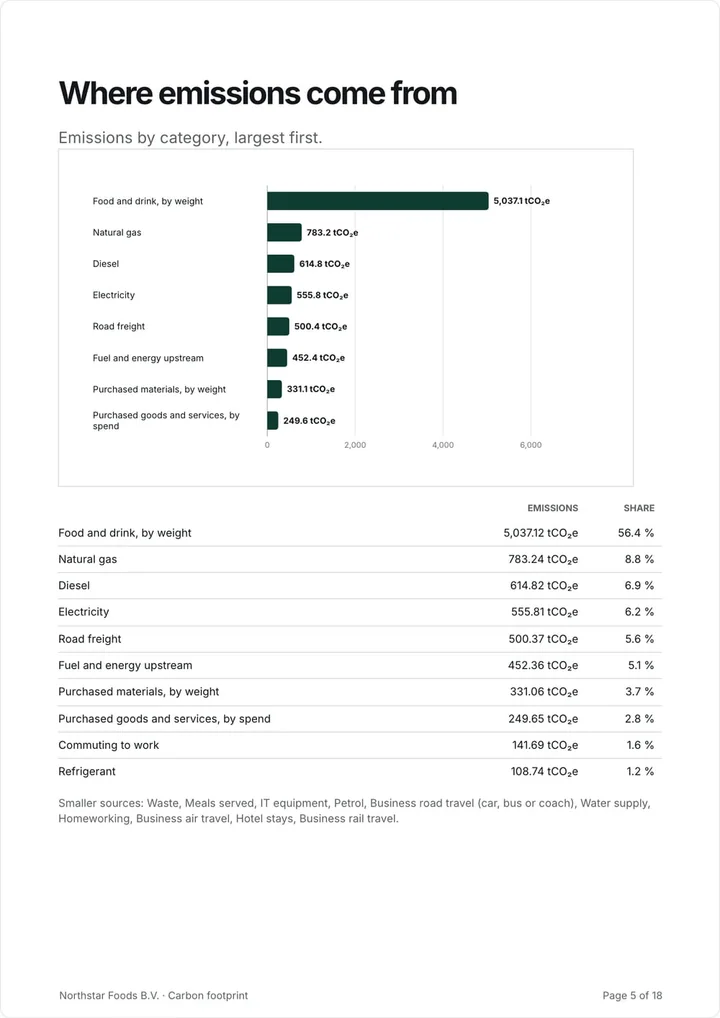
Greener Ahead does not write modern slavery statements. Carbon accounting in Greener Ahead lets you send requests to your suppliers, who answer in a portal of their own, which gives you an overview of your supply chain by supplier and category. Sustainability reporting records your policies and workforce figures in a VSME report. Carbon accounting costs €1,495 and Sustainability reporting €995 per year, both with unlimited users and a free 14-day trial without a card. Check the pricing page for current details.
The statement at a glance
Current rules and the 2026 proposals.
| Rule | Now | Proposed in the 2026 bill |
|---|---|---|
| Who | Turnover of £36 million or more, business in the UK | Also public bodies |
| Content | Six areas recommended | Six areas mandatory, comply or explain |
| Approval | Board approval, director signature | Director declares it accurate |
| Timing | Within six months recommended | Within six months required |
| Registry | Recommended | Required |
| Enforcement | Injunction | Financial penalties |
Before the board approves it
Check these points.
- It covers this financial year, not a general commitment.
- It names the high-risk parts of the supply chain and what was done there.
- It gives figures you can repeat next year.
- It covers all subsidiaries in scope, or each publishes its own.
- The homepage link and the registry entry are ready for the day it is published.
Sources and scope
- legislation.gov.uk: Modern Slavery Act 2015, section 54
- GOV.UK: Transparency in supply chains, statutory guidance
- GOV.UK: Modern Slavery Statement Registry
These resources explain a preparation workflow. Check your selected standard and recipient requirements before sharing your report.
 Joost ThissenFounder