ETS2 is the EU’s second emissions trading system, covering CO₂ from fuel used in buildings, road transport and smaller industry. Fuel suppliers, not fuel users, buy the allowances, from 2028 after a one-year delay, and pass the cost on in fuel prices. Price safeguards release extra allowances above about €45 per tonne in 2020 prices. At €60 per tonne it adds about €0.16 to a litre of diesel and €0.012 to a kWh of gas.
What ETS2 is
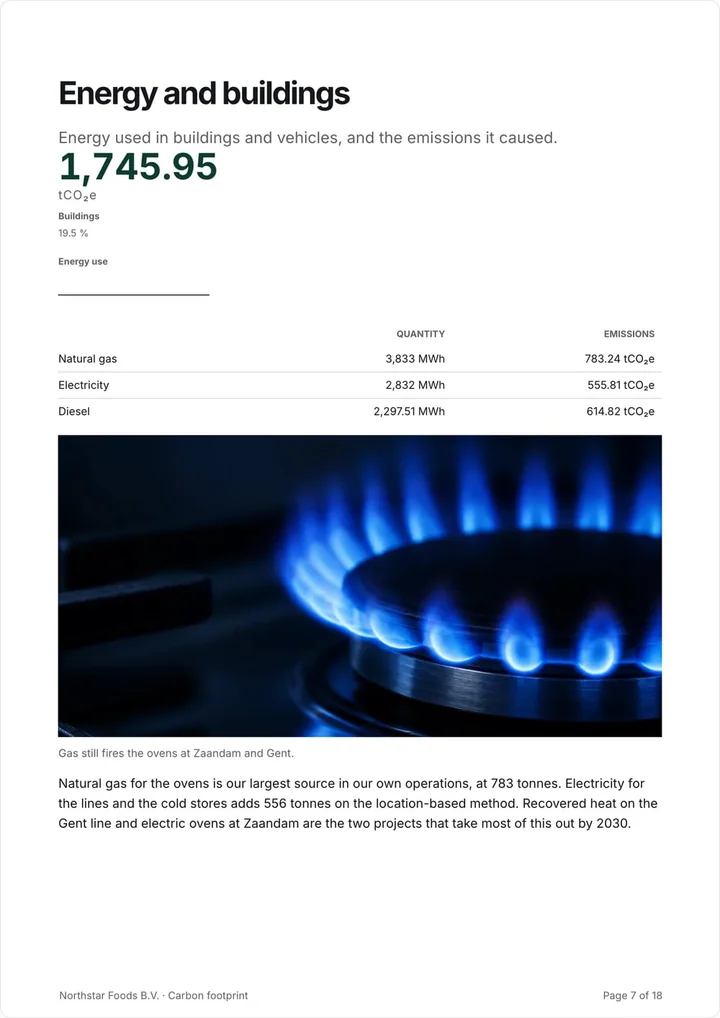
ETS2 is a second EU emissions trading system, set up by Directive (EU) 2023/959 alongside the existing one for power plants and heavy industry. It covers the CO₂ from fuels burned in buildings, road transport and smaller industry that the first system does not cover. That includes the natural gas and heating oil for offices, shops and workshops, and the diesel and petrol in company vehicles.
Who pays, and when
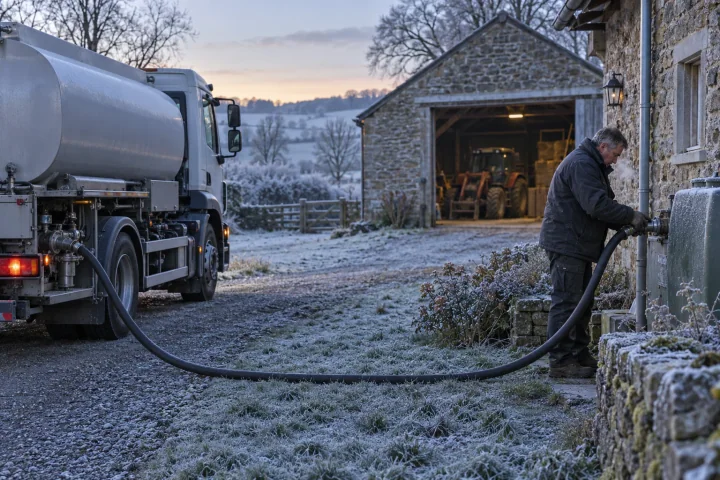
Companies using the fuel do not trade allowances themselves. The obligation sits upstream, with the fuel suppliers that release fuel for consumption. They have monitored and reported their emissions since 2025. In November 2025 the EU agreed to postpone the start of allowance trading and surrender by one year, to 2028. From then on suppliers buy allowances for the fuel they sell, and the cost reaches customers through fuel prices.
Price safeguards
To avoid a price shock, ETS2 has a market stability reserve that releases extra allowances when prices rise too fast or above €45 per tonne in 2020 prices. In June 2026 the EU agreed to strengthen it so that more allowances can be released in the first years. Countries with a national carbon price, such as Germany, run it until ETS2 starts. Part of the revenue goes into the Social Climate Fund, which supports vulnerable households, microenterprises and transport users.
Estimating the cost
Burning a litre of diesel emits about 2.65 kg of CO₂, a litre of heating oil about 2.7 kg, and a kWh of natural gas about 0.2 kg. At €60 per tonne, that adds about €0.16 to a litre of diesel and €0.012 to a kWh of gas, before VAT. A company that uses 40,000 litres of diesel and 300,000 kWh of gas a year emits about 166 tonnes of CO₂ from them, which would cost about €10,000 a year at that price. Check your national situation: some countries already have a carbon price or tax on these fuels.
What to do now
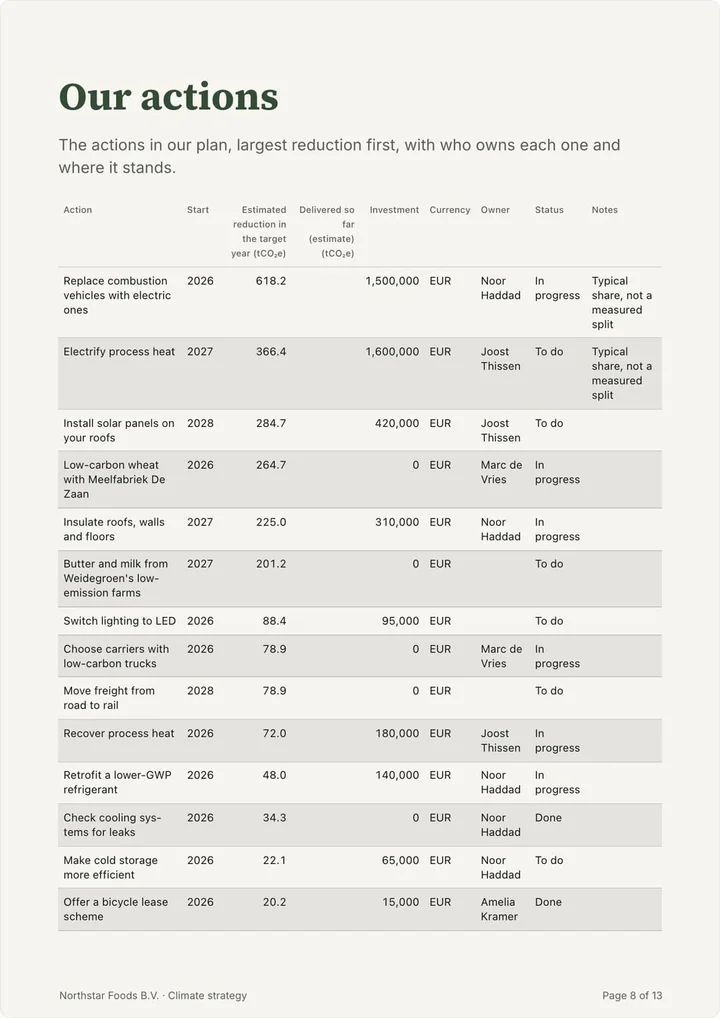
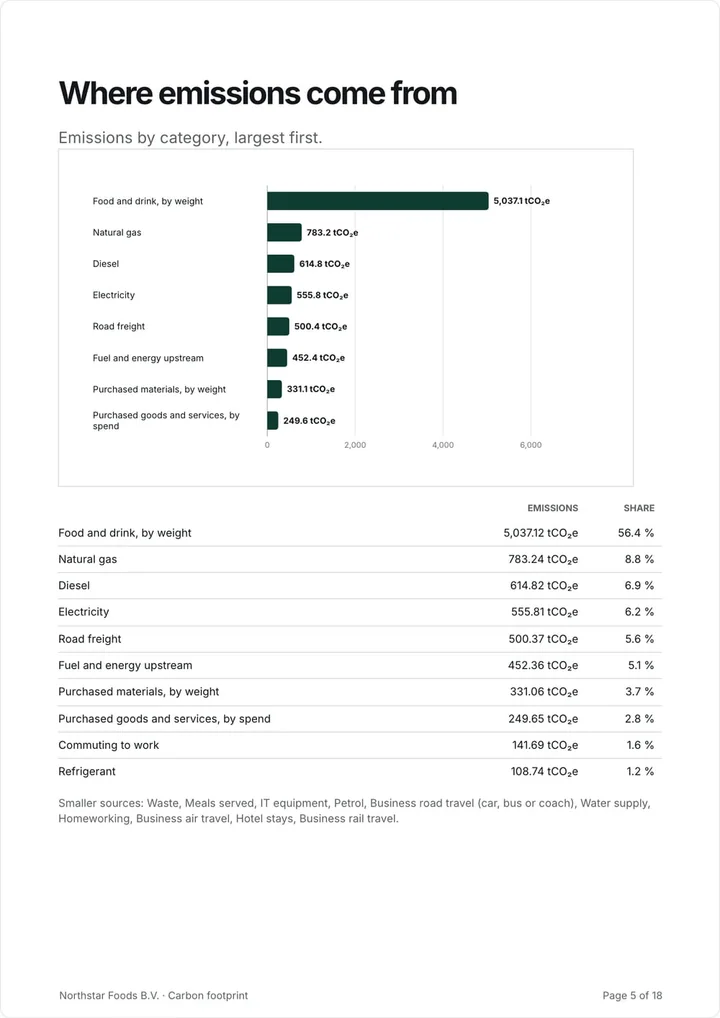
Start by knowing your fuel use: litres per vehicle and kWh of gas and heating oil per site, from invoices and fuel cards. Those are your Scope 1 emissions and the base for the estimate. The cheapest tonnes to avoid are usually the same as before ETS2: better insulation and heating controls, heat pumps when a boiler is due for replacement, and electric vans and cars when the fleet is renewed.
Doing it in Greener Ahead
Carbon accounting in Greener Ahead calculates the emissions from your gas, heating oil and fuel use per site and vehicle from invoices and fuel cards, with the source behind every tonne, and compares every year with the last: the figures you need to estimate the ETS2 cost. It costs €1,495 per year with unlimited users, and you can try it free for 14 days without a card. Climate strategy, coming soon, adds the measures available to you with their cost and saving. Check the pricing page for current details.
Estimated ETS2 cost per unit of fuel
Rounded figures before VAT, for direct CO₂ from burning the fuel.
| Fuel | CO₂ per unit | At €45 per tonne | At €60 per tonne | At €80 per tonne |
|---|---|---|---|---|
| Diesel | About 2.65 kg per litre | €0.12 per litre | €0.16 per litre | €0.21 per litre |
| Petrol | About 2.3 kg per litre | €0.10 per litre | €0.14 per litre | €0.18 per litre |
| Heating oil | About 2.7 kg per litre | €0.12 per litre | €0.16 per litre | €0.22 per litre |
| Natural gas | About 0.2 kg per kWh | €0.009 per kWh | €0.012 per kWh | €0.016 per kWh |
Steps to an estimate
A first estimate takes an afternoon.
- Add up a year of diesel and petrol from fuel cards, per vehicle.
- Add up a year of gas and heating oil from invoices, per site.
- Multiply by the CO₂ per unit to get tonnes.
- Multiply the tonnes by two or three carbon prices to see the range.
- Compare the result with what fleet renewal or a heat pump would save.
Sources and scope
- European Commission: ETS2, buildings, road transport and additional sectors
- EUR-Lex: Directive (EU) 2023/959 amending the EU emissions trading directive
- European Commission: agreement on safeguards for the new emissions trading system, June 2026
These resources explain a preparation workflow. Check your selected standard and recipient requirements before sharing your report.
 Joost ThissenFounder