ESRS E1 is the climate change standard of the ESRS. In the revised version of 2026 it has eleven disclosures: the transition plan (E1-1), climate risks and scenario analysis (E1-2), resilience (E1-3), policies (E1-4), actions (E1-5), targets (E1-6), energy consumption and mix (E1-7), gross Scope 1, 2 and 3 emissions (E1-8), removals and carbon credits (E1-9), internal carbon pricing (E1-10) and anticipated financial effects (E1-11). The revised numbers apply from financial year 2027; in the 2023 version, emissions were E1-6.
What is ESRS E1?
ESRS E1 is the climate change standard of the European Sustainability Reporting Standards. A company that reports under the CSRD applies it when climate change is a material topic in its double materiality assessment, which it is for most companies, because almost every business uses energy and causes emissions.
This guide follows the revised ESRS, Commission Delegated Regulation (EU) 2026/1563. They enter into force on 10 November 2026, apply to financial years starting on or after 1 January 2027, and renumber the E1 disclosures. A report, a questionnaire or an assurer may still use the 2023 numbers, so both are shown below.
The eleven E1 disclosures
Each disclosure requirement has its own code. The first six describe how the company manages climate change; E1-7 to E1-11 hold the figures.
Which version applies in which year?
For financial year 2026, a company may use the 2023 ESRS as last amended, the 2023 ESRS with a set of reliefs from the revised version, or the revised ESRS, and must say which. From financial year 2027 only the revised ESRS apply. Since Directive (EU) 2026/470, the CSRD applies to companies with more than 1,000 employees and a net turnover above €450 million, so check first whether your company reports at all.
Where the figures come from
Most of the work in E1 is the figures in E1-7 and E1-8, and they come from records you already have.
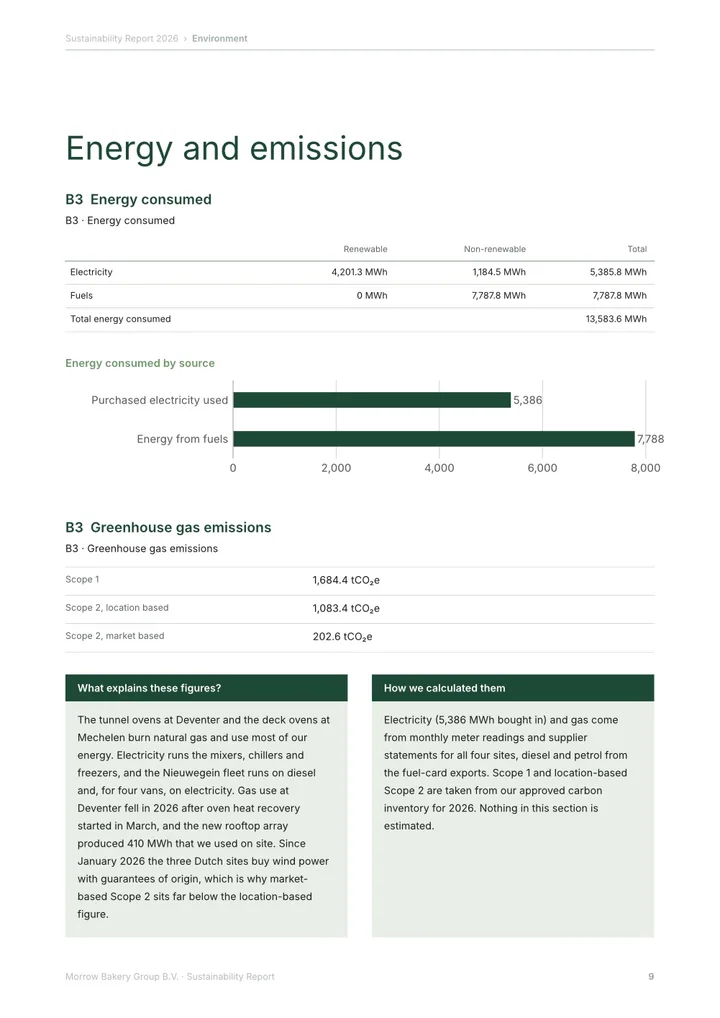
- Energy (E1-7): electricity, gas, heat and fuel from invoices, meter readings and fuel cards, in MWh, split into fossil, nuclear and renewable. Companies in high climate impact sectors split the fossil part further by fuel.
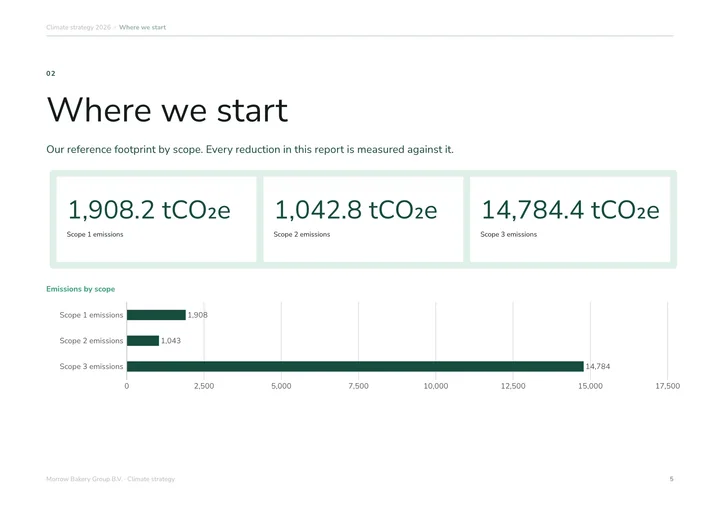
- Scope 1 (E1-8): fuel burned on site and in vehicles, and refrigerant top-ups, with the share covered by the EU emissions trading system if you have installations in it.
- Scope 2 (E1-8): purchased electricity, heat and cooling, both location-based and market-based, so your contracts and guarantees of origin matter.
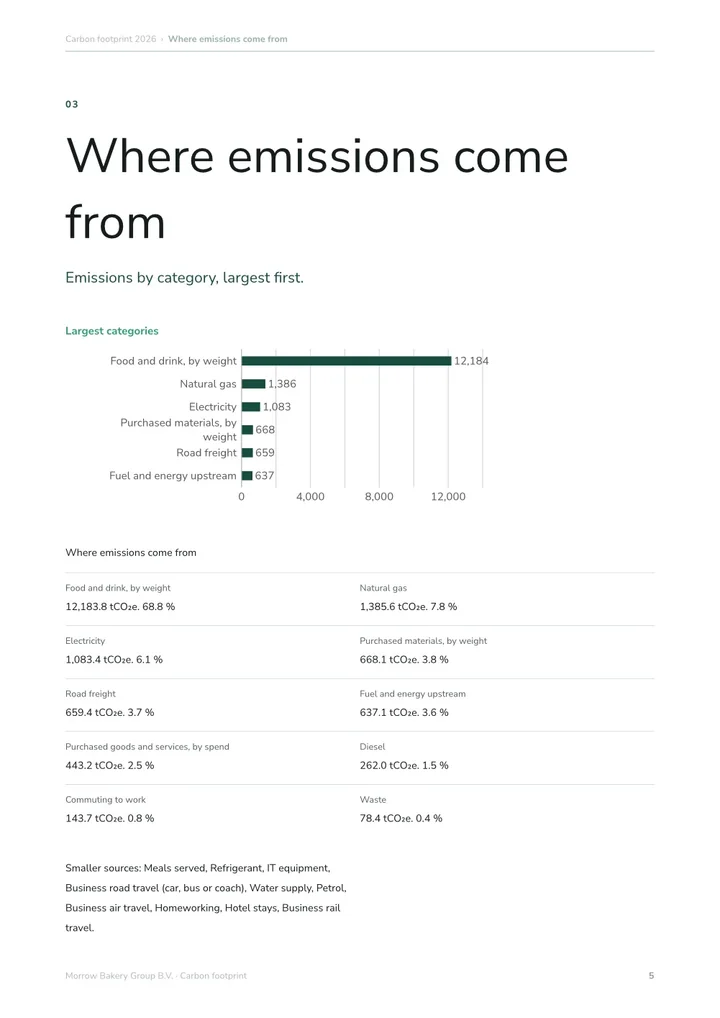
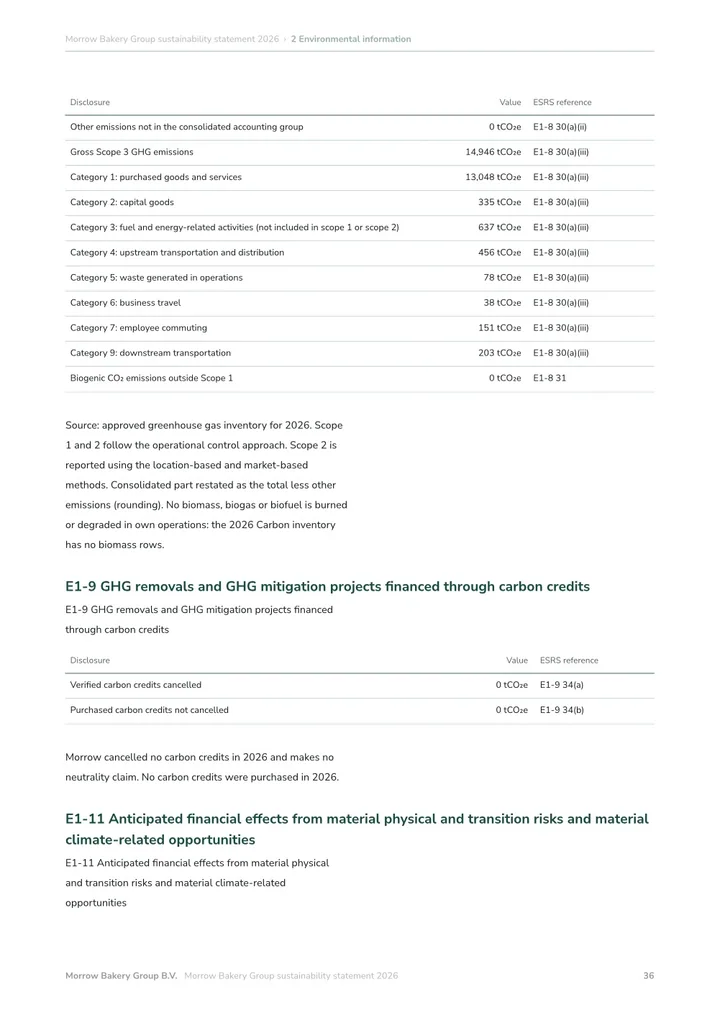
- Scope 3 (E1-8): each significant category, as a total and per category, usually starting with purchased goods, transport and business travel.
- Biogenic CO₂ (E1-8): emissions from burning or degrading biomass, reported separately from Scope 1.
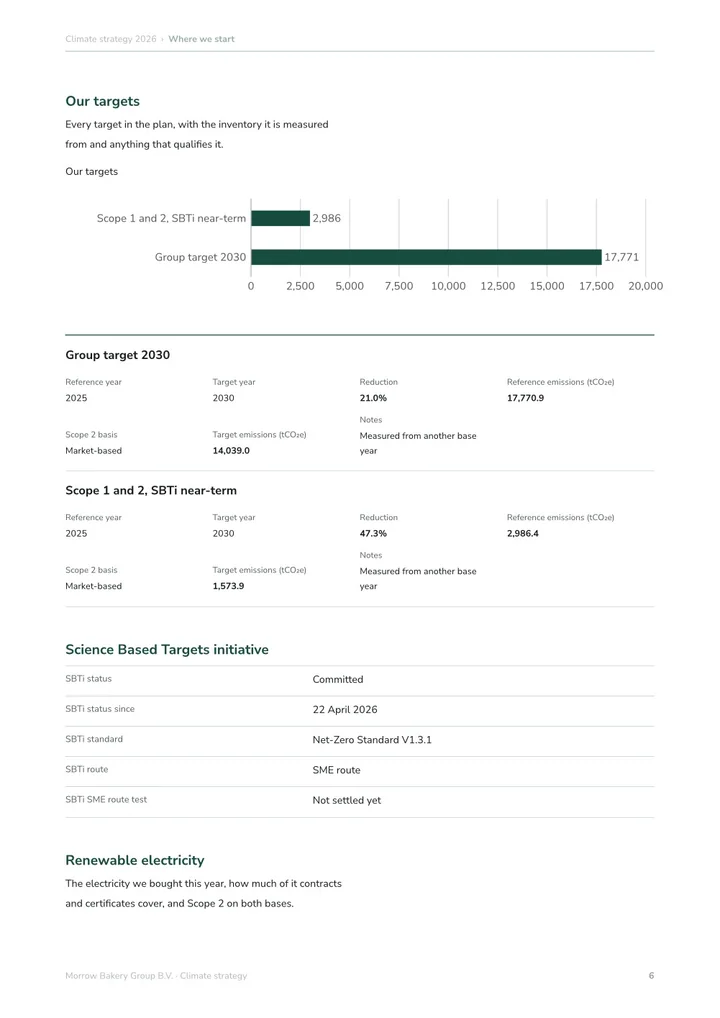
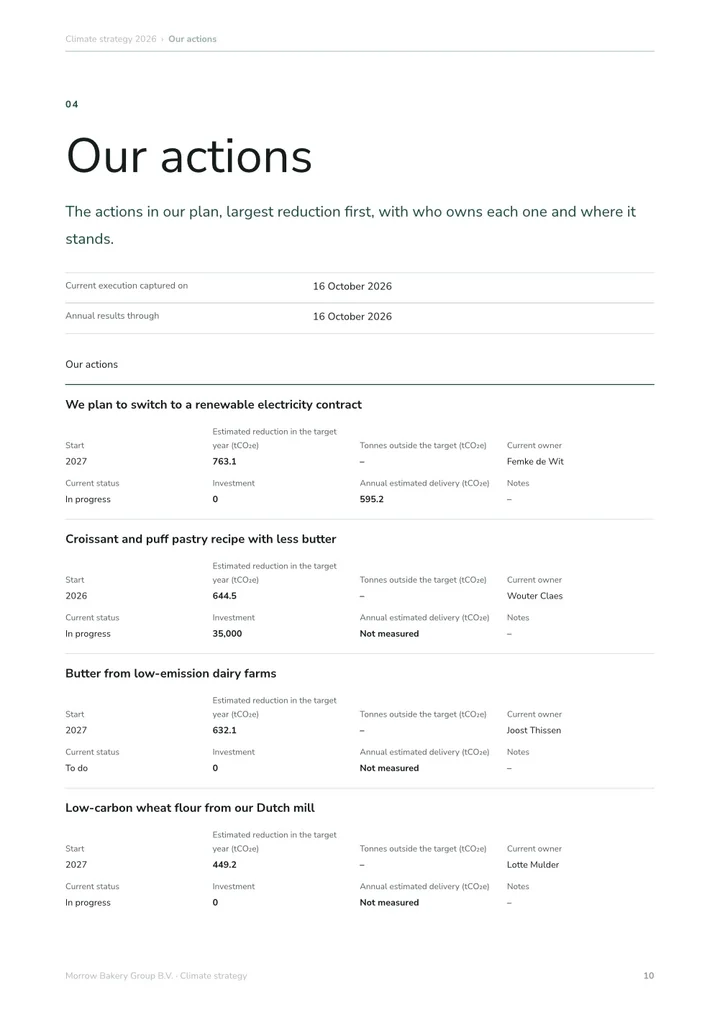
- Targets and actions (E1-6 and E1-5): absolute reduction targets per scope, and actions by decarbonisation lever with the reductions achieved and expected.
The reporting boundary
The revised ESRS use financial control as the default boundary, as defined in the GHG Protocol, and allow equity share or operational control instead. Scope 1 and 2 are split between the consolidated accounting group and any other emissions outside it. The GHG Protocol, Commission Recommendation (EU) 2021/2279 or ISO 14064-1 may be used for the calculation, but where they differ the ESRS take precedence.
Doing it in Greener Ahead
CSRD reporting in Greener Ahead starts from your double materiality assessment and, when climate change is material, asks for the E1 disclosures under the revised ESRS, with the evidence beside every answer for your assurer. With Carbon accounting, your approved footprint fills the E1 emissions disclosures, so you calculate once, and Climate strategy holds the targets that E1-6 reports. CSRD reporting costs €4,995 per year, Carbon accounting €1,495 and Climate strategy €995, with bundles that cost less, all with unlimited users. You can try them free for 14 days without a card. Check the pricing page for current details.
The E1 disclosures at a glance
Revised ESRS, Commission Delegated Regulation (EU) 2026/1563.
| Code | Disclosure | What it asks for |
|---|---|---|
| E1-1 | Transition plan for climate change mitigation | Targets, decarbonisation levers, key actions, investments and funding, and approval by the management bodies |
| E1-2 | Climate risks and scenario analysis | Whether each material risk is physical or transition, and how exposure and sensitivity were assessed |
| E1-3 | Resilience | What the resilience analysis means for strategy and the business model |
| E1-4 | Policies | Mitigation and adaptation policies |
| E1-5 | Actions and resources | Key actions by decarbonisation lever, with reductions achieved and expected |
| E1-6 | Targets | Absolute reduction targets for Scope 1, 2 and 3, and whether they are science-based |
| E1-7 | Energy consumption and mix | Total energy in MWh, split into fossil, nuclear and renewable |
| E1-8 | Gross Scope 1, 2 and 3 emissions | Tonnes of CO₂e by scope, Scope 2 both ways, significant Scope 3 categories, biogenic CO₂ separately |
| E1-9 | Removals and carbon credits | Removal projects, and credits bought or planned, apart from the inventory |
| E1-10 | Internal carbon pricing | How a carbon price is used in decisions, and the average price per tonne |
| E1-11 | Anticipated financial effects | Assets at physical and transition risk, and climate-related opportunities |
From the 2023 numbers to the revised ones
The revised ESRS renumber E1, because two new disclosures on risks and resilience come first.
| Topic | 2023 ESRS | Revised ESRS |
|---|---|---|
| Transition plan | E1-1 | E1-1 |
| Climate risks and scenario analysis | In ESRS 2 | E1-2 |
| Resilience | In ESRS 2 | E1-3 |
| Policies | E1-2 | E1-4 |
| Actions and resources | E1-3 | E1-5 |
| Targets | E1-4 | E1-6 |
| Energy consumption and mix | E1-5 | E1-7 |
| Gross Scope 1, 2 and 3 emissions | E1-6 | E1-8 |
| Removals and carbon credits | E1-7 | E1-9 |
| Internal carbon pricing | E1-8 | E1-10 |
| Anticipated financial effects | E1-9 | E1-11 |
Sources and scope
- EUR-Lex: Commission Delegated Regulation (EU) 2026/1563 amending the ESRS
- GHG Protocol: Corporate Accounting and Reporting Standard
- EFRAG: European Sustainability Reporting Standards (ESRS)
These resources explain a preparation workflow. Check your selected standard and recipient requirements before sharing your report.
 Joost ThissenFounder