Under the German Energy Efficiency Act, companies using on average more than 7.5 GWh of final energy a year must run a certified energy or environmental management system, and companies above 2.5 GWh must publish confirmed implementation plans for all economic savings measures within three years. Waste heat must be avoided or reused, and data centres have their own rules. A June 2026 government bill would raise the management system threshold to about 23.6 GWh and simplify the plans.
What the EnEfG is
The Energy Efficiency Act (Energieeffizienzgesetz, EnEfG) came into force in November 2023 and puts the EU Energy Efficiency Directive into German law. Its obligations for companies depend on their total final energy consumption: electricity, gas, heating oil, fuels and district heat together, averaged over the last three completed calendar years.
Energy or environmental management above 7.5 GWh
Companies with an average annual consumption above 7.5 GWh must run a certified energy management system under ISO 50001 or an environmental management system under EMAS. Companies above the threshold when the law came into force had until 18 July 2025; companies that cross it later have 20 months. The system must at least record energy flows, process temperatures and waste heat, identify technically feasible savings and waste heat measures, and assess their economics under DIN EN 17463.
Implementation plans above 2.5 GWh
Companies above 2.5 GWh must draw up concrete, feasible implementation plans for all savings measures identified as economic and publish them within three years. A measure counts as economic if it reaches a positive net present value within half of its useful life, for measures with a useful life of up to 15 years. A certifier, environmental verifier or energy auditor must confirm that the plans are complete and correct before publication. Trade secrets may be left out.
Waste heat and data centres
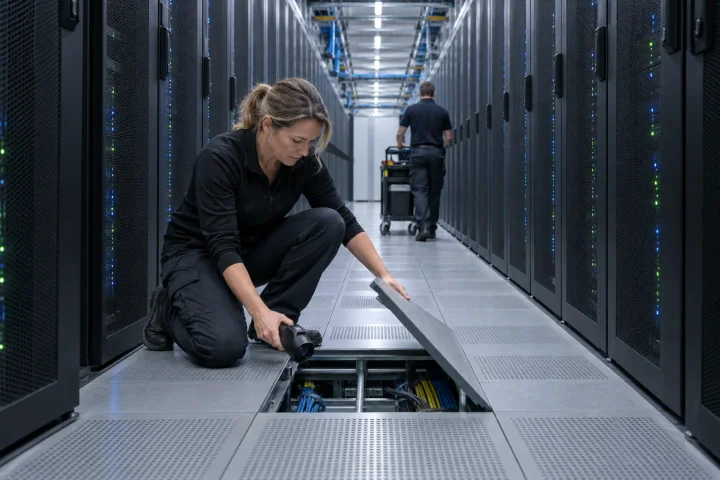
Companies must avoid waste heat and reuse it where that is technically possible and reasonable, and companies above 2.5 GWh report information on their waste heat for a public platform. Data centres above a size threshold face their own rules on energy efficiency, waste heat reuse and renewable electricity.
What the 2026 bill would change
On 24 June 2026 the federal cabinet adopted a bill to revise the EnEfG and the Energy Services Act. It would raise the threshold for a mandatory management system to about 23.6 GWh, replace the current energy audit duty for large companies with an audit duty for companies above about 2.77 GWh without a management system, simplify the implementation plans and drop the external confirmation, and relax several data centre requirements. The Bundestag and Bundesrat still have to pass it, and the details can change. Until then, the current law applies.
Doing it in Greener Ahead
Greener Ahead is not an energy management system and does not certify under ISO 50001. Carbon accounting in Greener Ahead records your energy consumption per site and energy carrier from invoices and meter readings, turns it into Scope 1 and 2 emissions with the source behind every tonne, and compares every year with the last, which shows whether your measures work. It costs €1,495 per year with unlimited users, and you can try it free for 14 days without a card. Check the pricing page for current details.
EnEfG obligations by consumption
What applies at which level of annual final energy consumption under the current law.
| Consumption (three-year average) | Obligation | Deadline |
|---|---|---|
| Above 2.5 GWh | Concrete implementation plans for all economic savings measures, confirmed and published | Within three years of certification or audit |
| Above 2.5 GWh | Report waste heat information for the public platform | Each year |
| Above 7.5 GWh | Certified energy management (ISO 50001) or environmental management (EMAS) | 18 July 2025, or 20 months after crossing the threshold |
| All companies | Avoid waste heat and reuse it where possible and reasonable | Ongoing |
Checking which obligations apply
A short check for the current year.
- Add up electricity, gas, oil, fuels and district heat for each of the last three calendar years, across all sites.
- Take the average and compare it with 2.5 GWh and 7.5 GWh.
- List the savings measures from your audit or management system with cost, saving and useful life.
- Mark which ones are economic under the law’s test.
- Follow the 2026 bill: thresholds and deadlines may change before your next plan is due.
Sources and scope
- Gesetze im Internet: Energy Efficiency Act, section 8
- Gesetze im Internet: Energy Efficiency Act, section 9
- EUR-Lex: Directive (EU) 2023/1791 on energy efficiency
These resources explain a preparation workflow. Check your selected standard and recipient requirements before sharing your report.
 Joost ThissenFounder