Dutch employers with 100 or more employees report each year before 1 July the kilometres their employees travelled for business and for commuting in the previous year, by mode of transport and fuel, in the RVO portal. RVO calculates the CO₂. A proposed amendment raises the threshold to 250 employees from the 2026 year; everyone with 100 or more employees still reported on 2025.
What the WPM obligation is
Since 2024, Dutch employers with 100 or more employees must report each year on the business travel and commuting of their employees. The obligation comes from the Environmental Activities Decree under the Environment and Planning Act and is known as the reporting obligation for work-related mobility (werkgebonden personenmobiliteit, WPM). The government uses the data to check whether employers are reducing the CO₂ emissions of work-related travel.
Who reports, and by when
Every organisation registered with the Chamber of Commerce with 100 or more employees reports before 1 July on the previous calendar year: before 1 July 2026 on 2025. You report in the online portal of the Netherlands Enterprise Agency (RVO), logging in with eHerkenning.
The government has proposed to raise the threshold to 250 employees with effect from 1 January 2026. If that is adopted, organisations with fewer than 250 employees no longer report from the 2026 year onwards. They still had to report on 2025.
What you report
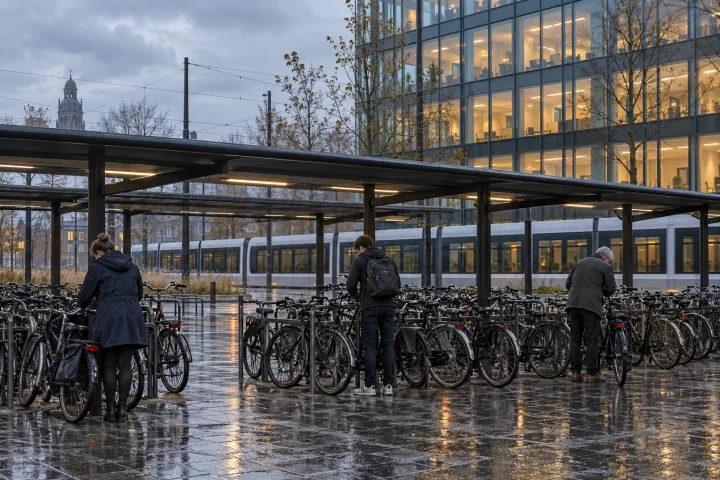
You report the kilometres your employees travelled, split into business travel and commuting, by mode of transport and by fuel or energy type: petrol, diesel, electric, hybrid, public transport, bicycle and so on. RVO calculates the CO₂ emissions from those figures; you do not have to calculate them yourself.
Collecting the data
The business travel kilometres usually come from expense claims, fuel cards, lease company reports and travel agency statements. Commuting is harder, because employees travel in their own way: a travel allowance administration helps, and a short employee survey fills the gaps. Collect the data per month or quarter rather than in June, and keep the method the same each year so the figures can be compared.
What may follow
The reporting obligation was set up with the option of a CO₂ ceiling for business travel if employers together do not reduce emissions enough, and a possible ceiling for commuting later. The government is evaluating the first period in 2026. Whatever the outcome, the same kilometres are Scope 3 categories 6 and 7 in your carbon footprint, which customers and banks increasingly ask for.
Doing it in Greener Ahead
Greener Ahead does not file the WPM report. Carbon accounting in Greener Ahead collects business travel and commuting as part of your footprint: employees answer a short commuting survey without an account, and the result shows kilometres and emissions by mode of transport and fuel, the figures you enter in the RVO portal. It costs €1,495 per year with unlimited users, and you can try it free for 14 days without a card. Check the pricing page for current details.
What to report and where it comes from
The figures RVO asks for, and the usual sources.
| Data | Split by | Usual source |
|---|---|---|
| Business travel by car | Fuel or energy type | Fuel cards, lease reports, mileage claims |
| Business travel by public transport | Train, bus, tram, metro | Business travel cards, expense claims |
| Business flights | Distance | Travel agency statements |
| Commuting by car | Fuel or energy type | Travel allowance records, employee survey |
| Commuting by public transport, bicycle or on foot | Mode | Employee survey, travel allowance records |
Making next year easier
A few habits keep the June rush short.
- Collect the kilometres per quarter instead of once a year.
- Run the commuting survey at the same time each year with the same questions.
- Record which method and sources you used.
- Check the employee count on the reference date, in case the threshold changes.
- Use the same figures in your carbon footprint, as Scope 3 categories 6 and 7.
Sources and scope
- RVO: reporting work-related mobility (WPM)
- Rijksoverheid: draft amendment raising the WPM threshold from 100 to 250 employees
- GHG Protocol: Technical Guidance for Calculating Scope 3 Emissions
These resources explain a preparation workflow. Check your selected standard and recipient requirements before sharing your report.
 Joost ThissenFounder