The German federal cabinet approved a bill on 12 August 2026 that keeps the national CO₂ price on heating and transport fuel in a corridor of €55 to €65 per tonne in 2027, the same as in 2026. It is the third amendment to the Fuel Emissions Trading Act (Brennstoffemissionshandelsgesetz, BEHG), and it follows a decision of the coalition committee in May.
The reason is the EU calendar. Germany's national system was designed to hand over to the EU's second emissions trading system, ETS2, which was due to start in 2027. In March 2026 the EU moved that start to 2028. Without a change, 2027 would have been a year without the price corridor, in a system meant to end.
What the bill does
- 2027: certificates are auctioned within the same corridor as in 2026, at a minimum of €55 and a maximum of €65 per tonne of CO₂.
- 2028: the national obligation ends for fuels that fall under ETS2 from 1 January 2028, so the same fuel is not priced twice.
- Next steps: the Bundesrat and the Bundestag have to pass the bill, and it has to be in force before 1 January 2027 to set next year's price.
The price per tonne since 2021
| Year | Price |
|---|---|
| 2021 | €25 |
| 2022 and 2023 | €30 |
| 2024 | €45 |
| 2025 | €55 |
| 2026 | €55 to €65, auctioned |
| 2027, under the bill | €55 to €65, auctioned |
| From 2028 | EU ETS2 price |
What it adds to fuel and heating bills
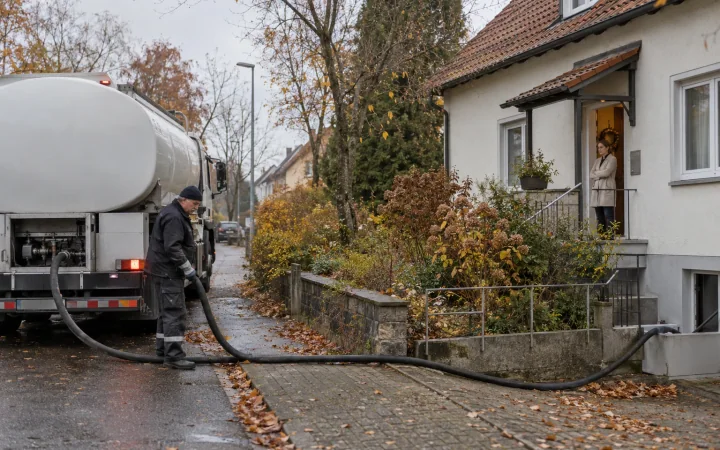
A litre of diesel produces about 2.65 kg of CO₂ when burned, a litre of heating oil about 2.7 kg and a kWh of natural gas about 0.2 kg. At €55 per tonne the CO₂ price adds about 15 cents to a litre of diesel or heating oil and about 1.1 cents to a kWh of gas, before VAT. At €65 it is about 17 cents and 1.3 cents. For budgeting, 2027 therefore looks like 2026.
What 2028 may bring
ETS2 is a market, so its price is not fixed in advance. The EU agreed in June 2026 to strengthen its market stability reserve, which releases more allowances when the price rises above €45 per tonne in 2020 prices. That level is close to today's German price, so companies in Germany face a smaller step in 2028 than companies in countries that have no national CO₂ price yet.
The useful work now is to know your fuel use in litres and kWh per site and vehicle, and to price it at a few levels. Our guide to Germany's CO₂ price covers the cost sharing with landlords and the truck toll, and the guide to ETS2 explains the EU system that follows. Carbon accounting in Greener Ahead turns fuel invoices and fuel cards into tonnes of CO₂ per site and vehicle.
 Joost Thissen